CA45-B6R3K107T Tantalum Capacitor Sourcing: Cost-Cutting Tactics and Verified Substitute Options
Expert guide on CA45-B6R3K107T Tantalum Capacitor Sourcing: Cost-Cutting Tactics and Verified Substitute Options. Technical specs, applications, sourcing tips for engineers and buyers.
The New Reality of Tantalum Capacitor Supply and Why the CA45-B6R3K107T Matters Now
Tantalum capacitors have always walked a tightrope between performance and supply risk. The raw material is concentrated in a handful of geopolitically sensitive regions, and refining capacity is limited. Over the past two years, that tightrope has narrowed further. Lead times for molded chip tantalums stretched to 20 weeks and beyond, while prices for common values oscillated with ore availability and logistics disruptions. Recent coverage by EE Times underscores that passive component availability remains volatile, and design teams are being forced to qualify second sources earlier than ever.
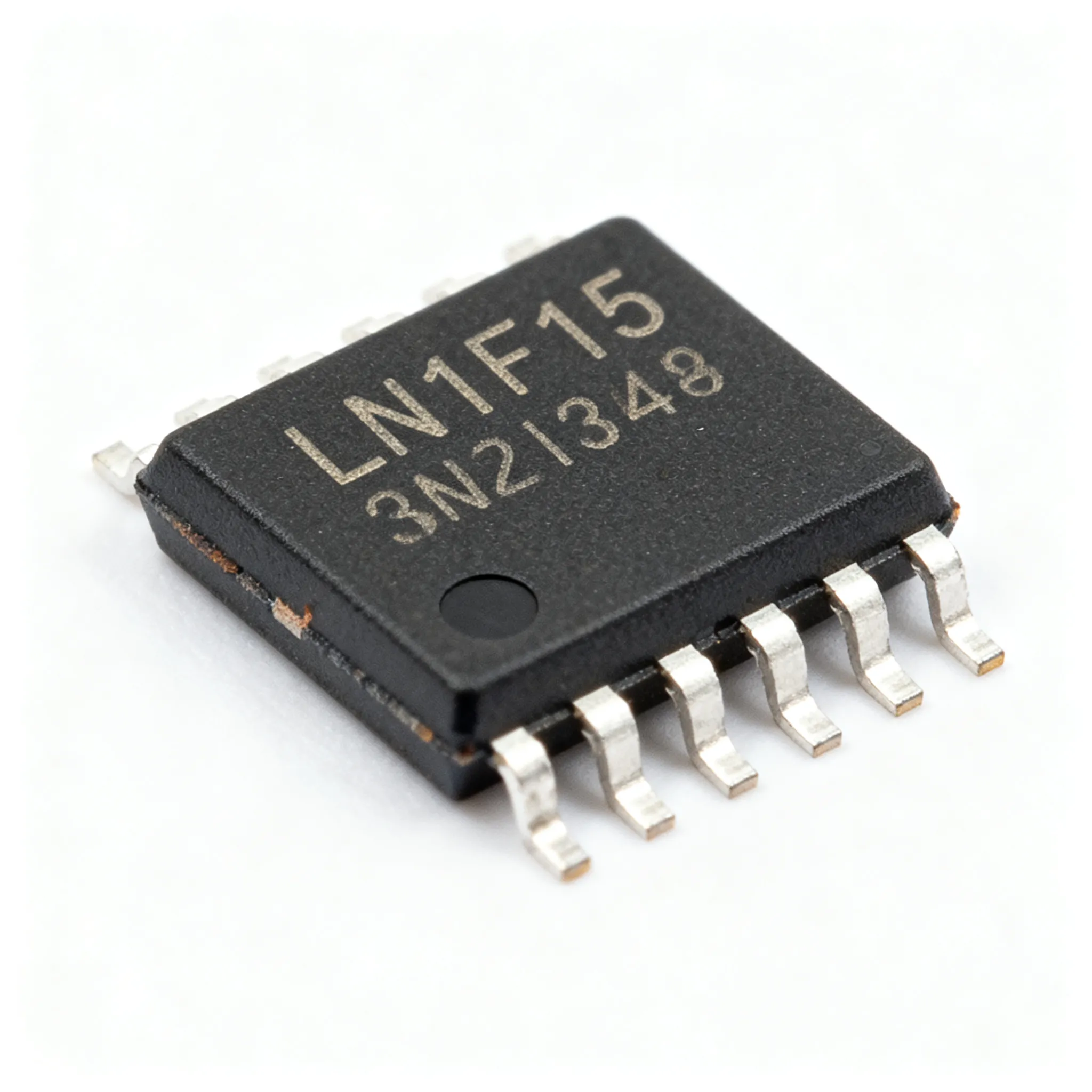
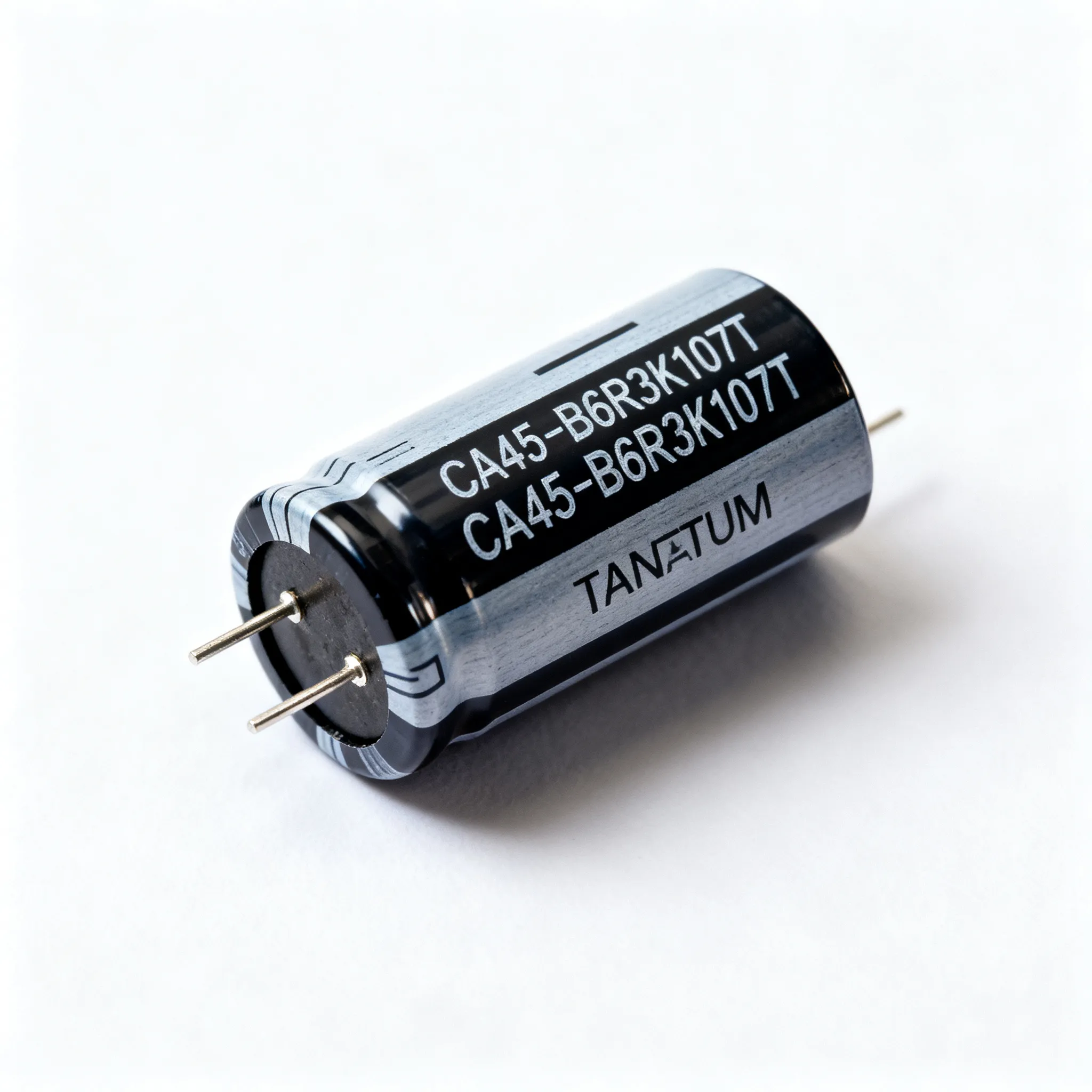
Against this backdrop, a single part number keeps surfacing in bill-of-materials reviews: the CA45-B6R3K107T. It’s a 100 µF, 6.3 V, B-case (3528 metric) tantalum chip capacitor that appears in power management circuits across industrial controls, USB hubs, embedded modules, and battery-powered IoT devices. Its combination of moderate capacitance, low voltage, and compact footprint makes it a go-to for bulk decoupling on 5 V and 3.3 V rails. But when that one line item shows a 22-week lead time, the entire production schedule can stall.
Procurement teams are now asking two questions: “Can we get this part faster without paying a premium?” and “What can we drop in if the primary source dries up?” Answering those questions requires a clear understanding of the part’s electrical and mechanical identity, a shortlist of verified substitutes, and a sourcing playbook that balances cost, reliability, and compliance. That’s exactly what this article delivers.
How to Read the CA45-B6R3K107T Marking and What Every Character Means for Your Design
The CA45-B6R3K107T designation follows a structured naming convention common to many Asian-manufactured tantalum chips. Breaking it down eliminates guesswork when you’re comparing datasheets or searching distributor databases.
- CA45 – Series identifier, indicating a general-purpose molded tantalum chip with a MnO₂ cathode and epoxy encapsulation.
- B – Case size code. “B” corresponds to the EIA 3528 metric footprint (3.5 mm × 2.8 mm). This is the critical mechanical parameter for drop-in substitution.
- 6R3 – Rated DC voltage: 6.3 V. The “R” acts as a decimal point.
- K – Capacitance tolerance: ±10%.
- 107 – Capacitance value in picofarads: 10 followed by 7 zeros = 100,000,000 pF = 100 µF.
- T – Termination finish and packaging. Typically indicates 100% matte tin (lead-free) terminations on tape and reel, but always verify with the manufacturer’s datasheet.
While the marking tells you the headline specs, the real interchangeability story lives in the fine print. The table below captures the key electrical and mechanical parameters that determine whether a substitute will work in your circuit without a board respin.
| Parameter | Typical Value / Range | Notes |
|---|---|---|
| Capacitance | 100 µF ±10% (K tolerance) | Measured at 120 Hz, 25 °C |
| Rated DC Voltage | 6.3 V | Derate by 50% for high-reliability applications (operating voltage ≤3.15 V) |
| ESR (100 kHz) | 1.5 Ω – 2.5 Ω typical | Varies by manufacturer; lower ESR versions exist in some series |
| Leakage Current (DCL) | ≤ 6.3 µA (0.01 CV) | After 2–5 minutes at rated voltage, 25 °C |
| Dissipation Factor | ≤ 8% at 120 Hz | Typical for MnO₂ tantalum |
| Operating Temperature | -55 °C to +125 °C | Voltage derating required above 85 °C per manufacturer curves |
| Case Size (EIA) | 3528-21 (B case) | 3.5 mm × 2.8 mm; height typically 1.9 mm |
| Termination | Tin-plated nickel barrier | Compatible with standard reflow profiles; verify solder fillet per IPC-A-610 |
When you’re qualifying an alternate, don’t stop at capacitance and voltage. ESR and leakage current directly influence regulator stability and battery drain in sleep modes. The B-case footprint is standardized, but the width and length of the termination pads can differ by a few tenths of a millimeter between vendors. That’s enough to change the solder fillet shape and, in high-vibration environments, the long-term joint reliability. Always pull the recommended land pattern from the specific manufacturer’s datasheet and cross-check it against your PCB library.
Verified Substitutes That Match the CA45-B6R3K107T Footprint and Electrical Profile
Several major tantalum capacitor manufacturers offer B-case, 100 µF, 6.3 V parts that are electrically and mechanically compatible with the CA45-B6R3K107T. The table below compares three widely available series from Vishay, Kemet, and AVX. All three are drop-in candidates, but subtle differences in ESR and ripple current rating can tip the scales in a specific application.
| Comparison Metric | Vishay 293D Series (e.g., 293D107X96R3B2TE3) | Kemet T491 Series (e.g., T491B107K006AT) | Selection Criteria & Failure Boundary |
|---|---|---|---|
| Capacitance / Voltage | 100 µF, 6.3 V | 100 µF, 6.3 V | Both match the nominal rating; verify tolerance (K = ±10%) |
| ESR (100 kHz, 25 °C) | 1.5 Ω typical | 2.0 Ω typical | Lower ESR in Vishay part may improve transient response but can reduce phase margin in legacy LDO designs tuned for higher ESR |
| Ripple Current (100 kHz) | ~280 mA RMS | ~240 mA RMS | Higher ripple current capability in 293D helps in switching converter output filters |
| Temperature Range | -55 °C to +125 °C | -55 °C to +125 °C | Identical; both require voltage derating at elevated temperatures |
| Leakage Current | 6.3 µA max | 6.3 µA max | Negligible difference for most applications |
| Case Size / Footprint | B case (3528-21) | B case (3528-21) | Mechanically interchangeable; confirm pad layout with vendor land pattern |
You’ll notice I haven’t included the AVX TAJ series in the table, but it’s another valid alternative (TAJB107K006RNJ). Its typical ESR sits around 2.2 Ω, and ripple current is comparable to the Kemet T491. The key takeaway: all three families are mature, widely stocked, and supported by authorized distributors. When you’re in a pinch, the part with the shortest lead time wins—but you must still verify that the ESR delta won’t upset your control loop.
What about MLCCs? A common cost-cutting temptation is to replace the tantalum with a 100 µF, 6.3 V multilayer ceramic capacitor in a 1210 or 1206 package. It’s physically possible, but electrically risky. MLCCs lose 50–80% of their rated capacitance under DC bias, so a 100 µF, 6.3 V X5R capacitor might deliver only 30 µF at a 5 V rail. You’d need to upsize the voltage rating to 10 V or 16 V and accept a larger case size. Ceramics also lack the self-healing mechanism of MnO₂ tantalums, so a crack can lead to a short-circuit failure. Finally, the ultra-low ESR of an MLCC can cause oscillation in LDOs designed for the moderate ESR of a tantalum. If you must go ceramic, add a series resistor to mimic the tantalum ESR and run a full stability analysis.
Where the CA45-B6R3K107T Lives on the Board and What Happens When You Substitute It
The CA45-B6R3K107T is not a specialty part. It’s a workhorse. You’ll find it in three common circuit locations, each with its own sensitivity to ESR, surge current, and leakage.
| Application Circuit | Critical Parameter | Substitution Risk & Mitigation |
|---|---|---|
| LDO output capacitor (e.g., 3.3 V rail) | ESR range for stability (typically 0.1 Ω – 2 Ω) | Replacing with a lower-ESR tantalum or MLCC can cause oscillation. Check the LDO datasheet for the stable ESR region and measure output with a step load. |
| USB VBUS decoupling (5 V) | Surge current withstand, capacitance retention | Hot-plug events expose the cap to high inrush currents. Tantalums handle surge well; MLCCs may crack. If substituting, verify surge rating (typically 1 A minimum for 100 µF). |
| Buck converter output filter | Ripple current rating, ESR | Lower ESR reduces output ripple but may alter loop compensation. Ensure the substitute’s ripple current rating meets the converter’s RMS output current. |
| Battery-powered IoT sensor node | Leakage current (sleep mode) | Higher leakage current in a substitute can drain a coin cell prematurely. Measure DCL at operating temperature; 6.3 µA is typical, but some lots may drift higher. |
In one real-world case, an engineer swapped the CA45-B6R3K107T on a 3.3 V LDO output with a low-ESR ceramic and watched the rail oscillate at 50 kHz. The fix was a 0.5 Ω series resistor, but the board spin could have been avoided by sticking with a tantalum that kept ESR inside the LDO’s stable window. The lesson: substitution isn’t just about matching capacitance and voltage; it’s about preserving the impedance profile the original designer counted on.
Sourcing Playbook: How to Lock in Cost Savings Without Sacrificing Reliability
Smart sourcing for the CA45-B6R3K107T starts long before the shortage hits. Here’s a practical playbook that blends engineering qualification with procurement strategy.
- Build an approved vendor list (AVL) with at least three sources. Include the original CA45 series and at least two of the verified substitutes from Vishay, Kemet, or AVX. Qualify them electrically on a representative board, not just on paper.
- Use distributor parametric search to identify in-stock alternatives. Platforms like Digi-Key and Mouser let you filter by capacitance, voltage, case size, and ESR. Set up alerts for when inventory drops below your safety stock threshold.
- Negotiate multi-source contracts. Don’t tie yourself to a single manufacturer. Even if you award 70% of volume to the lowest bidder, keep 30% with a second source to maintain leverage and supply continuity. Many distributors offer price breaks for committed volumes across multiple compatible part numbers.
- Watch for counterfeit devices. Tantalum capacitors are a known target. Buy only from authorized distributors. When a deal looks too good to be true—especially from independent brokers—it probably is. Perform incoming inspection: check lot codes, date codes, body dimensions, and ESR against a known good sample. X-ray inspection can reveal internal construction anomalies.
- Align assembly processes with IPC-A-610 Class 2 or 3 requirements. When you switch suppliers, the termination finish and solderability profile may shift slightly. Run a small pilot build and inspect solder joints for proper fillet formation. A minor change in termination width can affect the heel fillet and long-term reliability under thermal cycling.
- Leverage mixed-BOM sourcing. If you’re struggling to meet minimum order quantities (MOQs) for a single part, consider consolidating your tantalum capacitor spend with a distributor that offers flexible MOQs across multiple line items. IC-Online specializes in mixed BOM procurement, allowing you to combine the CA45-B6R3K107T with other passives to reach volume thresholds without overstocking.
CA45-B6R3K107T Sourcing FAQ: Answers for Engineers and Buyers
Q: What are the exact dimensions and pad layout for the CA45-B6R3K107T B case, and are there any footprint variations among suppliers?
The B case measures 3.5 mm × 2.8 mm with standard terminations; most manufacturers adhere to the EIA 3528 metric footprint. However, always verify the land pattern from the specific datasheet, as slight variations in termination width can affect solder fillet quality. A 0.2 mm difference in pad width can change the fillet shape from acceptable to marginal under IPC-A-610 criteria.
Q: Can I replace the CA45-B6R3K107T with a ceramic MLCC of the same capacitance and voltage?
Possibly, but MLCCs have significant capacitance drop under DC bias and lack the self-healing of tantalums. You’ll need to upsize the voltage rating (e.g., use a 10 V or 16 V MLCC) and check for piezoelectric effects in high-vibration environments. Also verify ESR compatibility—many LDOs and converters expect the moderate ESR of a tantalum, and an ultra-low ESR ceramic can cause instability.
Q: How do I verify that a substitute tantalum capacitor is not counterfeit?
Buy from authorized distributors. Check lot codes and manufacturer date codes for consistency. Perform X-ray inspection for internal construction anomalies, and compare ESR with a known good sample. Visual inspection for consistent marking and body dimensions is a quick first step. If the price is 60% below market, treat it as suspect.
Q: What is the typical lead time for CA45-B6R3K107T right now, and which alternative has the shortest lead time?
Lead times fluctuate; currently 16–24 weeks for many tantalum chips, but some substitutes like the Vishay 293D or Kemet T491 series may be available from stock at certain distributors. Always check real-time inventory through authorized channels. Setting up backorder notifications and maintaining buffer stock of a qualified alternate can insulate you from the worst of the cycle.
Q: Are there any reliability concerns when substituting with a different manufacturer’s equivalent?
Ensure the substitute meets the same surge current and derating guidelines (typically 50% voltage derating for tantalums). Perform accelerated life testing if the application is safety-critical. Differences in ESR and ripple current rating can impact thermal performance—a part with higher ESR will run hotter under the same ripple current, potentially reducing field life.
Q: Does the CA45-B6R3K107T have any conflict mineral compliance issues?
Tantalum is a conflict mineral. Reputable manufacturers provide CMRT (Conflict Minerals Reporting Template) declarations. When sourcing alternatives, request the same documentation to maintain compliance with Dodd-Frank Section 1502 and ensure ethical supply chain practices. Most major suppliers publish their CMRT reports on their websites or provide them upon request.
References & Further Reading
- EE Times – Ongoing coverage of passive component supply chain dynamics.
- IPC-A-610 – Acceptability of Electronic Assemblies, the reference for solder joint quality.
- Vishay 293D Series – Datasheets and application notes for molded tantalum chip capacitors.
- Kemet T491 Series – Commercial-grade MnO₂ tantalum capacitors.
- AVX TAJ Series – General-purpose tantalum chip capacitors.
- Digi-Key Electronics – Parametric search and real-time inventory for tantalum capacitors.
- Mouser Electronics – Authorized distributor with multi-source tantalum capacitor stock.
- IC-Online – Mixed BOM procurement and flexible MOQ sourcing for electronic components.