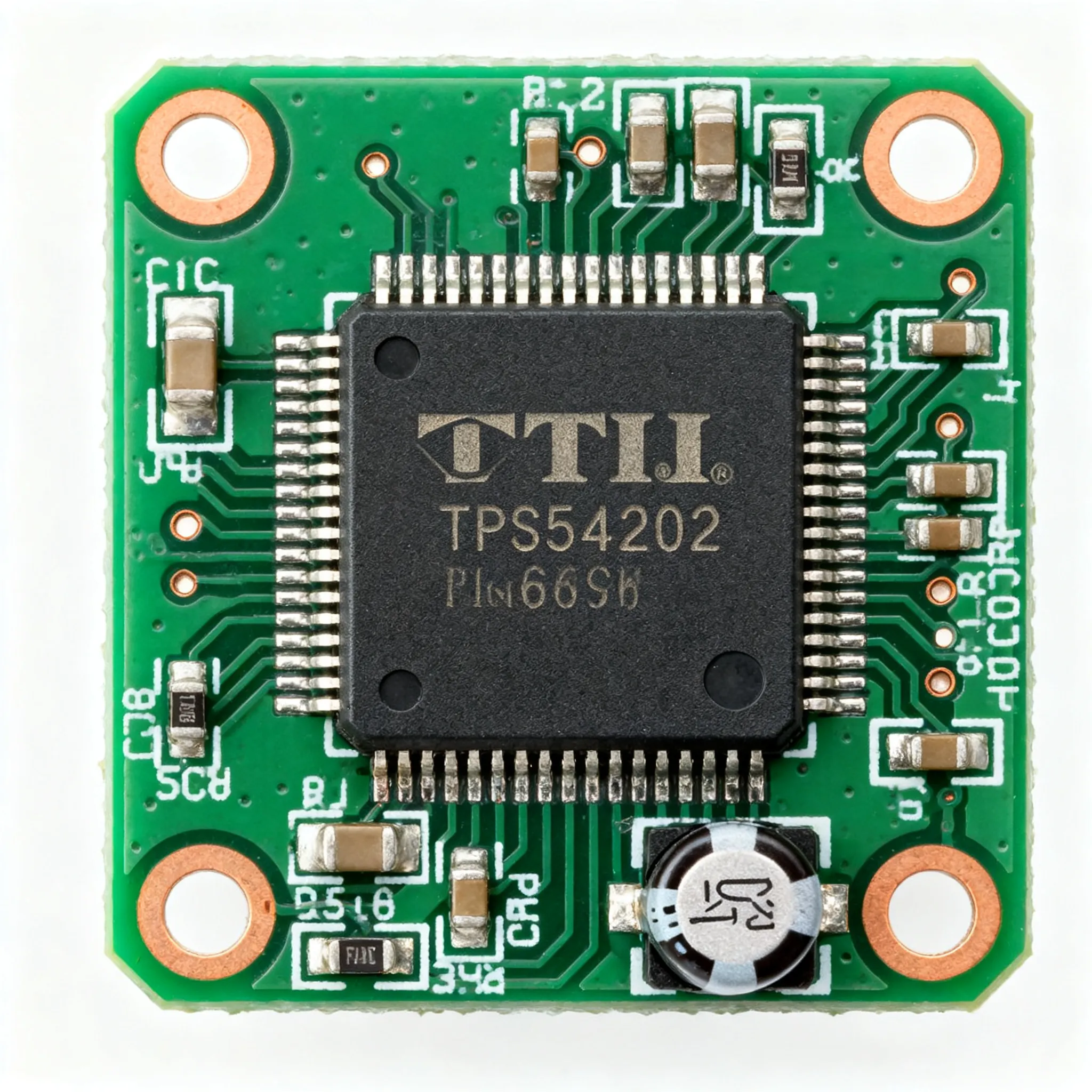
Comparing Surface Mount vs. Through-Hole PCB Assemblies
Printed circuit boards (PCBs) are key parts of electronics today, and the way you assemble PCB assemblies affects how well they work. Surface mount technology (SMT) is popular because it’s fast and small. Through-hole assembly is still used when strength and reliability are needed.
Printed circuit boards (PCBs) are key parts of electronics today, and the way you assemble PCB assemblies affects how well they work. Surface mount technology (SMT) is popular because it’s fast and small. Through-hole assembly is still used when strength and reliability are needed.
Many companies now prefer surface mount technology for their PCB assemblies. The SMT market is expected to grow significantly. It may increase from $6.61 billion in 2025 to $9.53 billion by 2030. This growth is due to more smartphones, car electronics, and IoT devices. SMT is cheaper for making many items quickly, while through-hole is better for testing ideas and making small amounts.
Key Takeaways
-
Surface Mount Technology (SMT) is quick and less expensive for big production. It fits more parts on smaller boards, perfect for gadgets like smartphones.
-
Through-Hole Technology (THT) gives strong and dependable connections. It works well for tough projects like cars and airplanes.
-
SMT uses machines, cutting labor costs and mistakes. Machines place many parts fast, making it great for large production.
-
THT is simple to fix or change by hand. This is helpful for testing and prototypes, where changes happen often.
-
Think about your project’s needs when picking SMT or THT. SMT is best for small designs, while THT is better for strength and durability.
Overview of Surface Mount Technology and Through Hole Technology
What is Surface Mount Technology?
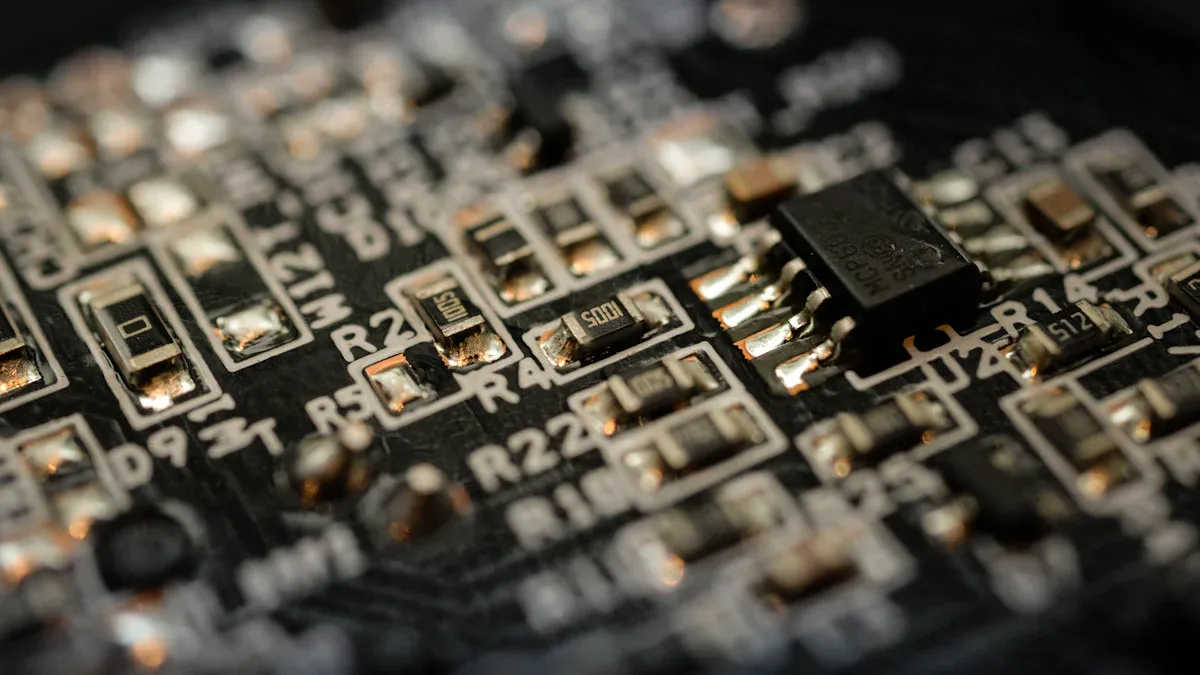
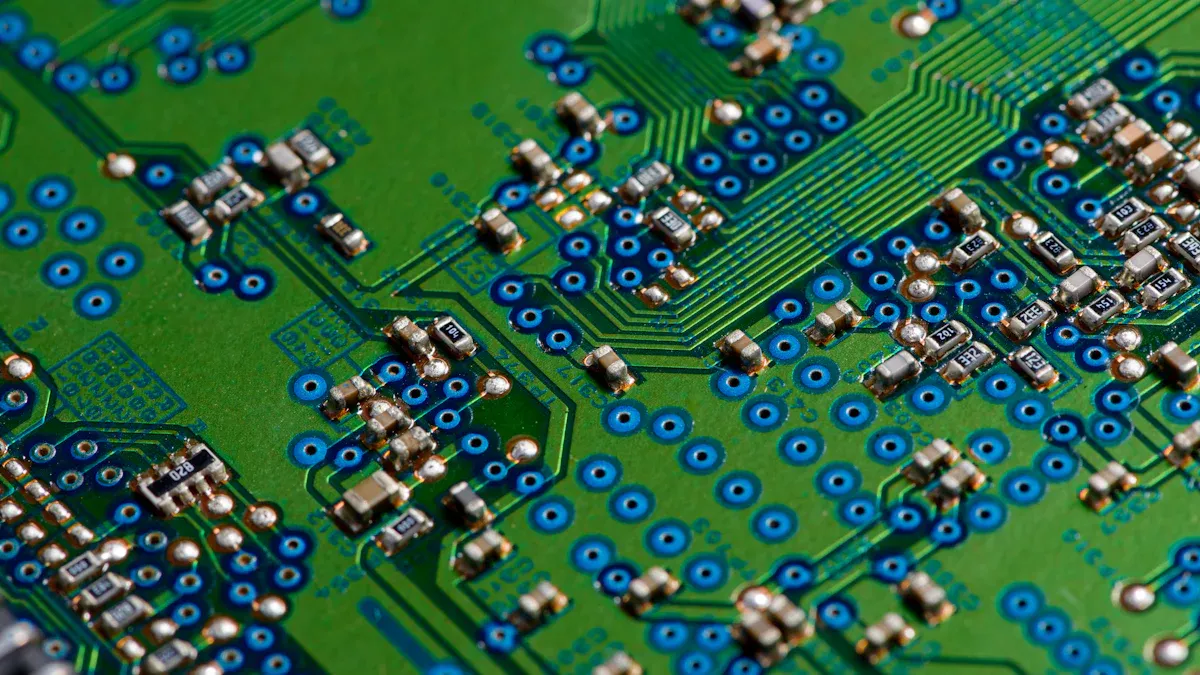
Surface mount technology (SMT) is a way to attach parts directly to a circuit board. It doesn’t need holes, so it’s quicker and easier. SMT became popular in the 1980s because it works well for small boards and automated machines.
Parts like resistors and capacitors used in SMT are tiny. These small parts help make lightweight and compact electronics. SMT is great for making lots of products quickly and cheaply.
What is Through Hole Technology?
Through hole technology (THT) is an older method for building circuit boards. It uses drilled holes to hold parts, which are then soldered in place. THT started in the mid-1900s and was good for strong connections and hand assembly.
Even though THT isn’t as common now, it’s still useful for tough and reliable designs. You’ll see THT in powerful electronics, rough conditions, and test models. Its strength makes fixing and testing circuits easier during development.
Key Characteristics of SMT and THT
SMT and THT have special features that fit different needs. Here’s a comparison:
|
Feature |
Surface Mount Technology (SMT) |
Through Hole Technology |
|---|---|---|
|
How Parts Are Attached |
On top of the board |
Inside drilled holes |
|
Size of Parts |
Smaller |
Bigger |
|
How Many Parts Fit |
More parts |
Fewer parts |
|
Assembly Method |
Done by machines |
Done by hand |
|
Placement Options |
Both sides of the board |
One side only |
|
Cost |
Cheaper |
More expensive |
SMT is better for small boards and saving space, while THT is stronger and easier to fix. Many devices use both methods to work their best.
Advantages and Disadvantages of Surface Mount Technology
Benefits of Surface Mount Assembly
Surface mount technology has many benefits for making electronics today. One big advantage is fitting more parts on a circuit board. The small size of surface mount parts helps make tiny devices. This is important for things like smartphones and IoT gadgets.
Another benefit is how fast machines can assemble surface mount parts. Machines can place up to 25,000 parts every hour. A line with four machines can handle 100,000 parts per hour. This speed saves time and lowers costs for big projects. Using machines also reduces mistakes, making products more reliable.
Surface mount technology works well for high-frequency uses too. Shorter part leads mean less signal interference, improving performance. It also creates less waste, which is better for the environment compared to through-hole methods.
Limitations of Surface Mount Technology
Even with its benefits, surface mount technology has some downsides. The small parts are more fragile and can break easily. This is a problem for products that need to be very strong.
Setting up surface mount assembly costs more because of special equipment. This is fine for making lots of items but not for small projects. Testing and checking these tiny parts is also harder. Advanced tools are needed, which makes it more expensive and complicated.
Advantages and Disadvantages of Through Hole Technology
Benefits of Through Hole Technology
Through-hole technology has many advantages, especially for strong and reliable designs. Here are the main benefits:
-
Durable Connections: Parts go through drilled holes and are soldered underneath. This makes strong bonds, perfect for products like cars and airplanes.
-
Mechanical Stability: It gives great support to parts in shaky or rough conditions.
-
Ease of Manual Adjustments: You can easily adjust or replace parts by hand. This is helpful for testing or fixing circuits.
-
High-Power Handling: It handles heavy electrical loads well, making it good for powerful systems.
-
Improved Thermal Management: These parts help spread heat better, keeping circuits cooler.
Tip: Use through-hole technology if your project needs strong and tough connections.
Limitations of Through Hole Technology
Even with its strengths, through-hole technology has some downsides to think about:
|
Limitation |
Description |
|---|---|
|
Drilled holes take up more space, leaving less room for other parts. This can lower how well the circuit works. |
|
|
Labor-Intensive Assembly |
It takes more time and effort to assemble than surface mount methods. This makes it costlier for making lots of items. |
|
Signal Distortion |
Longer part leads can mess with signals in fast systems like computers or phones. |
|
Environmental Concerns |
Drilling holes creates waste, and older solder materials can be harmful. Lead-free solder is safer but harder to use because it melts at higher temperatures. |
Also, through-hole technology uses up space on multilayer boards because of the holes. This limits design options for small or complex circuits.
Note: Through-hole assembly is strong but not ideal for modern, high-speed devices where surface mount technology works better.
Side-by-Side Comparison of SMT and THT in PCB Assemblies
Cost Difference Between SMT and THT
When looking at costs, SMT and THT differ a lot. SMT is cheaper for making many items quickly. It skips drilling holes and uses less manual work. Machines in SMT lower costs, making it great for things like phones and gadgets.
THT, however, costs more because it needs more work. Drilling holes and soldering by hand take extra time and effort. For small projects, the cost difference might not matter much. But for big productions, the higher cost of THT becomes important.
Here’s how SMT has improved cost savings in real examples:
|
Case Study |
Key Results |
|---|---|
|
Consumer Electronics Manufacturer |
|
|
Defect rates dropped from 2% to 0.02%. |
|
|
New models launched 65% faster. |
|
|
Labor costs cut by 78% per unit. |
|
|
Automotive Electronics Supplier |
First-pass success rate rose from 92% to 99.7%. |
|
Warranty claims fell by 83%. |
|
|
Medical Device Startup |
Production grew from 100 to 5,000 units monthly. |
|
Time-to-market reduced from 18 months to 7 months. |
Tip: For large-scale production, SMT saves both time and money.
Durability and Reliability
THT is best for strength and reliability. Its parts go through holes and are soldered firmly. This makes it great for cars, planes, and tough environments. It also handles heat well, lasting longer in harsh conditions.
SMT parts are smaller but not as strong. They attach to the board’s surface, which can break under stress. While SMT works well for high-frequency tasks, it’s less durable in rough conditions.
Here’s a comparison of reliability:
|
Assembly Type |
Advantages |
Disadvantages |
|---|---|---|
|
SMT |
Works well in high-frequency tasks; automated for quality. |
Can break under physical or heat stress. |
|
THT |
Strong and handles stress well. |
Long leads may lower performance in fast systems. |
Note: Use THT for projects needing strength in tough conditions.
Assembly Process and Complexity
SMT uses machines, making it fast and efficient. Machines place parts on the board, and ovens handle soldering. This allows SMT to fit many parts into small designs.
THT needs people to insert parts into holes, then solder them. This takes more time and effort, especially for big projects. Bending leads and drilling holes also make it harder to assemble.
Here’s a detailed look at the processes:
|
Metric |
SMT (Surface Mount Technology) |
THT (Through-Hole Technology) |
|---|---|---|
|
Soldering Method |
Uses wave soldering |
|
|
Component Placement |
Machines place parts automatically |
People insert parts by hand |
|
Assembly Efficiency |
Faster, supports parts on both sides |
Slower, usually one side only |
|
Lead Forming Requirement |
No need to bend leads |
Leads must be bent and inserted |
|
Complexity of Layout |
Fits small and complex designs |
Limited by lead placement and board design |
Takeaway: SMT is faster and better for big projects, while THT works well for small, strong designs.
Application Suitability
When picking between surface mount technology and through hole technology, think about what your project needs. Each method has special strengths for different uses.
Surface mount technology is best for small, fast, and efficient designs. It helps make tiny gadgets like smartphones, tablets, and smartwatches. Parts can go on both sides of the board, saving space. This lets you add more features to smaller devices. It’s also great for high-frequency tools, like communication devices, because shorter leads stop signal problems.
Meanwhile, through hole technology is better for strong and reliable designs. It works well in tough places like cars, planes, or factories. Parts are soldered through the board, so they stay steady during vibrations or stress. This method is also handy for testing and prototypes. You can easily swap or fix parts while developing.
Here are some real-world examples of how these methods are used:
-
Consumer Electronics: Surface mount is common in making electronics. It speeds up production by handling many boards at once. For example, a project using a solder paste printer cut production time while keeping quality high.
-
Automotive and Aerospace: Through hole is used in cars and planes. Its strong connections handle extreme heat and shaking well.
-
Medical Devices: Surface mount is ideal for medical tools. It supports small, light designs, perfect for portable or wearable devices.
Tip: Use surface mount for small, fast designs. Pick through hole for strength and durability.
By knowing what each method does best, you can choose wisely. Whether you need small and efficient or strong and tough, matching the method to your project ensures success.
Factors to Think About When Picking Between SMT and THT
Needs for Specific Applications
Choosing between surface mount and through hole depends on your project. Surface mount technology is great for small designs and making many items fast. It lets parts go on both sides of the board, saving space. This is perfect for gadgets like phones, tablets, and smartwatches.
Through hole technology is better for projects needing strength and reliability. Its soldered parts stay steady, even in tough conditions. This makes it ideal for cars, planes, and factory machines. If your project faces rough environments or uses lots of power, through hole is the stronger choice.
Here’s a simple comparison of how each fits different needs:
|
Requirement |
Surface Mount Technology |
Through Hole Technology |
|---|---|---|
|
Compact Design |
Great |
Limited |
|
Tough Conditions |
Okay |
Excellent |
|
High-Power Use |
Limited |
Excellent |
|
Testing and Prototypes |
Hard |
Easy |
Tip: Pick surface mount for small, fast designs. Use through hole for strength and reliability.
Trends and Future Ideas
The PCB world is changing fast with new tech and demands. Surface mount technology leads because it supports tiny designs and automated assembly. By 2035, PCB assembly could be worth $117.5 billion. This growth comes from IoT gadgets, electric cars, and 5G tech.
New ideas like using artificial intelligence (AI) are also shaping the future. AI helps factories work faster, cut costs, and make better products. For example, places like Terran Orbital in California use AI for advanced PCB assembly.
Eco-friendly materials are another big trend. Companies now use biodegradable parts to cut down on waste. These materials help the planet and lower costs too.
Key things driving the industry include:
-
Growth in electric cars and smart driving systems.
-
Expanding IoT and factory automation.
|
Year |
Market Value (USD Million) |
Growth (%) |
Key Drivers |
|---|---|---|---|
|
2025 |
70,800 |
5.1 |
More gadgets, cars, healthcare tools, and telecom devices. |
|
2035 |
Need for smaller, energy-saving devices, 5G, IoT, and electric cars. |
Note: Stay ahead by using trends like AI and eco-friendly materials in your PCB projects.
Budget and How Much You’ll Make
Your budget and how many items you need affect your choice. Surface mount technology costs less for making lots of items. Machines do most of the work, cutting labor costs and waste. This makes it great for big projects.
Through hole technology costs more because it needs more handwork. For small projects or testing, this might not matter. But for bigger jobs, the higher cost adds up.
Making more items can lower costs. Large runs spread setup costs over many units, making each one cheaper. This is why surface mount technology is often the best choice for saving money.
|
Evidence |
Explanation |
|---|---|
|
Making more items lowers the cost per unit. |
Bigger production spreads costs, making each item cheaper. |
|
SMT saves on labor and materials. |
SMT is cheaper for large-scale production. |
|
Setup costs spread over more units in big runs. |
Larger runs help manage budgets better, affecting the choice of method. |
Takeaway: For big projects, surface mount saves money. Through hole works well for small jobs or when strength matters.
Both surface mount and through hole methods have special benefits. Surface mount is ideal for small, high-volume items like phones and smart gadgets. Through hole is better for tough conditions, like in cars or planes. Think about your project’s needs, such as cost, strength, and use, before deciding. Knowing these methods helps you make reliable and effective circuit boards.
FAQ
What’s the big difference between SMT and THT?
SMT puts parts on the board’s surface. THT uses holes to hold parts. SMT is quicker and fits small designs. THT is stronger and works well in tough places.
Can a PCB use both SMT and THT?
Yes, using both is normal. SMT is great for small, fast parts. THT is better for strong, high-power parts.
Why is SMT good for making many items?
SMT uses machines to build things faster. This lowers work costs and saves time. Its tiny parts make small designs, perfect for big projects.
Is THT better for testing ideas?
Yes, THT is easier to change and fix. Its bigger parts and hand-soldering make it simple to adjust during testing.
Which method is kinder to the environment?
SMT is better for the planet. It makes less waste since no holes are drilled. Its small parts also use fewer materials.