Integrated Circuit Breakers with Surge Protection: How They Safeguard Modern Electronics
Power surges can damage electronics, leading to expensive repairs or failure. Circuit breakers with surge protection guard devices by blocking extra electricity. They also absorb dangerous voltage spikes to prevent harm. These breakers do two important jobs: stop overloads and protect from surges. They are a dependable, all-in-one way to keep electronics safe. At home, work, or factories, these devices help equipment run well and last longer.
Power surges can damage electronics, leading to expensive repairs or failure. Circuit breakers with surge protection guard devices by blocking extra electricity. They also absorb dangerous voltage spikes to prevent harm. These breakers do two important jobs: stop overloads and protect from surges. They are a dependable, all-in-one way to keep electronics safe. At home, work, or factories, these devices help equipment run well and last longer.
Key Takeaways
-
-
Circuit breakers with surge protection do two important jobs. They stop overloads and guard against voltage spikes to keep electronics safe.
-
-
These breakers make things safer by stopping damage from power surges. This saves money on repairs and helps devices last longer.
-
Pick breakers with features like live monitoring and auto shut-off. These help find problems early and make everything safer.
-
Surge protection is very important for homes and businesses. It stops surprise power surges and keeps electronics working well.
-
Always buy certified circuit breakers with surge protection. Certification means they are safe and reliable, giving you confidence in your electrical systems.
What Are Circuit Breakers with Surge Protection?
Definition and Purpose
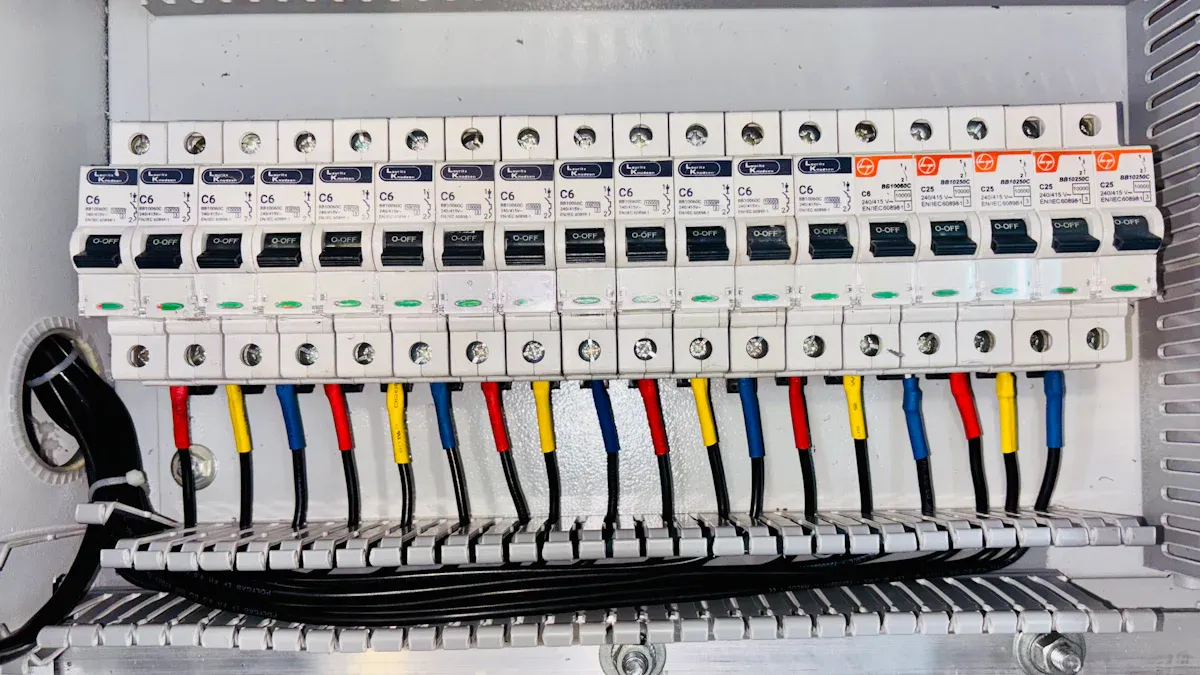
Circuit breakers with surge protection do two important jobs in one. They stop electricity flow during overloads or short circuits. At the same time, they protect electronics from harmful voltage spikes. These devices keep electrical systems and gadgets safe from damage. Surge protection devices (SPDs), also called surge arresters, send extra voltage to the ground. This keeps your electronics safe and working well. Their design ensures they work effectively every time.
Key Features and Advantages
Circuit breakers with surge protection have many benefits compared to regular ones.
-
Dual Functionality: They stop overcurrent and block dangerous voltage surges.
-
Enhanced Safety: A breaker in front of the surge protector adds safety.
-
Compact Design: Combining two functions saves space and is easy to install.
-
Reliability: They work consistently to prevent electrical problems.
-
Longevity: By stopping damage, they help your devices last longer.
How They Differ from Traditional Circuit Breakers
Regular circuit breakers only stop electricity during overloads or short circuits. They don’t handle voltage spikes. Circuit breakers with surge protection do more. They include SPDs to manage sudden voltage surges. This makes them better for protecting modern electronics. Their dual protection is perfect for today’s sensitive devices.
How Circuit Breakers with Surge Protection Work
How Circuit Protection Works
Circuit protection devices watch and control electricity flow in systems. They stop damage from too much current or short circuits. If there’s a problem, like an overload, the breaker cuts off power fast. This quick action keeps devices safe from overheating or fires.
Modern breakers with surge protection offer extra features. These include live monitoring, automatic shut-off, and remote control. Here's how these features help:
|
Feature |
What It Does |
|---|---|
|
Live Monitoring |
Checks voltage and current changes and sends alerts for surges. |
|
Automatic Shut-Off |
Quickly stops power to prevent harm from surge currents. |
|
Data Tracking |
Saves power data for study, helping improve safety and quality. |
|
Remote Control |
Lets users check and manage power using phones or tablets. |
These features make circuit protection safer and better, especially where power quality matters.
How Surge Protection Works
Surge protectors stop sudden high voltage from damaging electronics. Surges can happen due to lightning, outages, or system switches. The surge protector absorbs or redirects extra energy. This ensures only safe voltage reaches your devices.
Research shows surge protectors are key in lightning safety systems. They handle sudden voltage changes well, protecting sensitive equipment. For example, SPDs lower the impact of voltage spikes but need good care. An IEEE study says SPD failure rates can hit 30% during big surges if not maintained.
The need for surge protection is growing fast. In 2022, the market for surge protection devices was worth $2.89 billion. It’s expected to grow by 6.8% yearly from 2023 to 2030. This shows how important it is to protect electronics from sudden voltage changes.
Important Parts of Surge Protection
Circuit breakers with surge protection rely on key parts to work well. Two main parts are the Metal Oxide Varistor (MOV) and Gas Discharge Arrester:
|
Part |
What It Does |
|---|---|
|
Metal Oxide Varistor (MOV) |
Changes resistance to block extra voltage while letting normal current through. |
|
Gas Discharge Arrester |
Uses gas to send extra current to the ground during surges, then returns to normal when safe. |
The MOV is the first defense against high voltage. It adjusts resistance to handle spikes and protect devices. The Gas Discharge Arrester helps by safely sending extra current to the ground during big surges. Together, they create a strong system to keep electronics safe.
Knowing how these parts work shows the smart design of surge-protected breakers. They mix circuit protection and surge control to give reliable safety for electrical systems.
Benefits of Circuit Breakers with Surge Protection
Stopping Damage to Electronics
Power surges can seriously harm your electronics. Sudden voltage spikes, like those from lightning or outages, can overload circuits and ruin parts. Circuit breakers with surge protection act like shields. They absorb or redirect extra energy before it reaches your devices. This keeps your electronics safe during unexpected power problems.
Take the example of a home in Acton, Massachusetts. The owners skipped installing whole-house surge protection. Sadly, a lightning strike caused $11,000 in damage to their devices. Installing a surge protection system usually costs less than $1,000. This shows how surge protectors save money and prevent big losses.
These breakers combine circuit and surge protection for reliable safety. They stop overcurrents and handle voltage spikes, keeping your devices running smoothly.
Improving Safety and Dependability
Circuit breakers with surge protection make electrical systems safer by solving many risks. They stop overcurrents, control surges, and lower the chance of accidents. Modern breakers also have advanced features like arc flash protection and ground fault detection. These features make systems even safer.
Here’s how these features improve reliability:
|
Safety Feature |
How It Helps |
|---|---|
|
Arc Flash Protection |
Lowers the chance of electrical accidents |
|
Ground Fault Detection |
Stops shocks and prevents fires |
|
Real-time Diagnostics |
Improves safety and system performance |
|
Predictive Maintenance |
Reduces unexpected problems and risks |
These features keep systems stable and working well. Real-time diagnostics let you check performance, while predictive maintenance fixes issues early. Together, they create a safer space for homes, offices, or factories.
Helping Devices Last Longer
Voltage spikes and electrical faults can wear out your devices faster. Circuit breakers with surge protection help your electronics last longer. They stop overcurrents and control surges, reducing damage to sensitive parts.
The rising demand for these devices shows their value in protecting electronics. They prevent problems that often cause devices to fail. Using these breakers clearly helps extend the life of your electronics.
Buying these breakers saves money over time. You avoid costly repairs and replacements, making them a smart choice for protecting your devices.
Applications of Circuit Breakers with Surge Protection
Residential Use
At home, these breakers keep your electronics safe. Smart devices like thermostats, cameras, and assistants need protection. Power surges can harm them, but these breakers stop that. They also help your gadgets last longer by preventing damage.
More people now care about electrical safety. Using these breakers avoids costly repairs and lowers fire risks. Their small size makes them easy to add to home panels. This improves safety without taking up much space.
Commercial and Office Settings
Businesses need steady power to work well. Offices, malls, and hospitals rely on electricity for systems like servers and medical tools. These breakers protect equipment from voltage spikes, avoiding downtime.
They also make workplaces safer by stopping electrical dangers. Features like live monitoring help spot problems early. Fixing issues quickly keeps your business running smoothly and safely.
Industrial Applications
Factories and plants need strong systems for heavy power use. These breakers protect machines and workers from overloads and surges. They stop damage that could cause costly delays or failures.
These breakers handle more power than regular ones. They act fast during surges, saving equipment and cutting repair costs. Using them keeps factories running safely and efficiently.
|
Key Drivers |
Description |
|
|---|---|---|
|
Residential |
Smart home tech, safety awareness |
More smart devices and need for surge protection at home. |
|
Commercial |
Reliable power needs |
Stops downtime and protects office and mall equipment. |
|
Industrial |
Machine and worker safety |
Handles high power and tough conditions in factories. |
In factories, these breakers protect both people and machines. Their quick action during surges ensures a safer and more efficient workspace.
Choosing the Right Circuit Breaker with Surge Protection
Factors to Consider
Picking the right circuit breaker with surge protection needs careful thought. Each factor helps keep your electronics safe and systems reliable.
|
Description |
|
|---|---|
|
Installation Method |
Place the main SPD at the service panel and extra SPDs at subpanels for stronger protection. |
|
Let-Through Voltage |
Lower let-through voltage means better safety for your devices. |
|
Surge Current Ratings |
Pick surge current ratings that prevent major failures. |
|
Safe Failure Mechanisms |
Make sure the SPD has fuses to safely disconnect during problems. |
|
Risk Assessment |
Check lightning risks in your area and choose SPDs accordingly. |
|
Circuit Breaker Coordination |
Ensure the SPD’s kAIC rating matches your system for proper protection. |
|
Monitoring Features |
Find SPDs with monitoring and low-maintenance features for reliability. |
Also, confirm the SPD has a good fuse system. This lets it safely disconnect during small faults or issues. Matching the SPD and circuit breaker ratings is very important. If they don’t match, protection may fail, and risks could increase.
Certifications and Standards
Certifications show which circuit breakers with surge protection are trustworthy. They prove the device meets safety and performance rules. SPDs are grouped into four types based on where and how they’re used:
|
Type |
Description |
|---|---|
|
Type 1 |
SPDs installed between the service transformer and service equipment. |
|
Type 2 |
SPDs installed on the load side of the service equipment. |
|
Type 3 |
SPDs placed at least 10 meters away from the service panel. |
|
Type 4 |
SPD assemblies made of Type 5 parts with a disconnect. |
Look for breakers that follow standards like UL 1449. This standard ensures SPDs are tested for safety and reliability. Certified devices work well under different conditions. Choosing certified products gives better protection and peace of mind.
Tip: Always check the SPD type and certification to fit your setup. This ensures the best safety and performance.
Circuit breakers with surge protection are important for keeping electronics safe. They do two jobs: stop power surges and prevent overloads. This helps devices work well and last longer. Picking the right breaker for your needs improves safety at home, work, or factories.
Tip: Safety matters most when choosing a circuit breaker. Pick certified ones for reliable use and better protection for your electronics.
FAQ
What is the main purpose of a circuit breaker with surge protection?
A circuit breaker with surge protection stops overloads and blocks voltage spikes. It combines two safety features to protect your electronics and keep them working.
How do I know if I need surge protection at home?
If you have smart devices, computers, or automation systems, you need surge protection. Power surges from storms or outages can harm these devices. Surge-protected breakers keep them safe.
Can I install a circuit breaker with surge protection myself?
It’s best to hire a licensed electrician for installation. These devices need proper setup to work well. Incorrect installation can lower safety and reduce protection.
How often should I replace a surge protection device?
Most surge protection devices last 3-5 years. This depends on how often they handle surges. Follow the manufacturer’s advice and check performance. Replace it if it wears out or stops working well.
Are circuit breakers with surge protection expensive?
Prices depend on features and ratings. They cost more than regular breakers but save money by protecting electronics. Think of it as a smart investment for safety and reliability.
Tip: Pick certified products for better quality and dependable performance.