Integrated Circuit Voltage Regulators and How They Optimize Power Management in Modern Electronics
You use voltage regulators every day, even if you do not see them. These small chips protect your devices by giving them the right power. Good power management helps your phone, tablet, or computer last longer and stay cool.
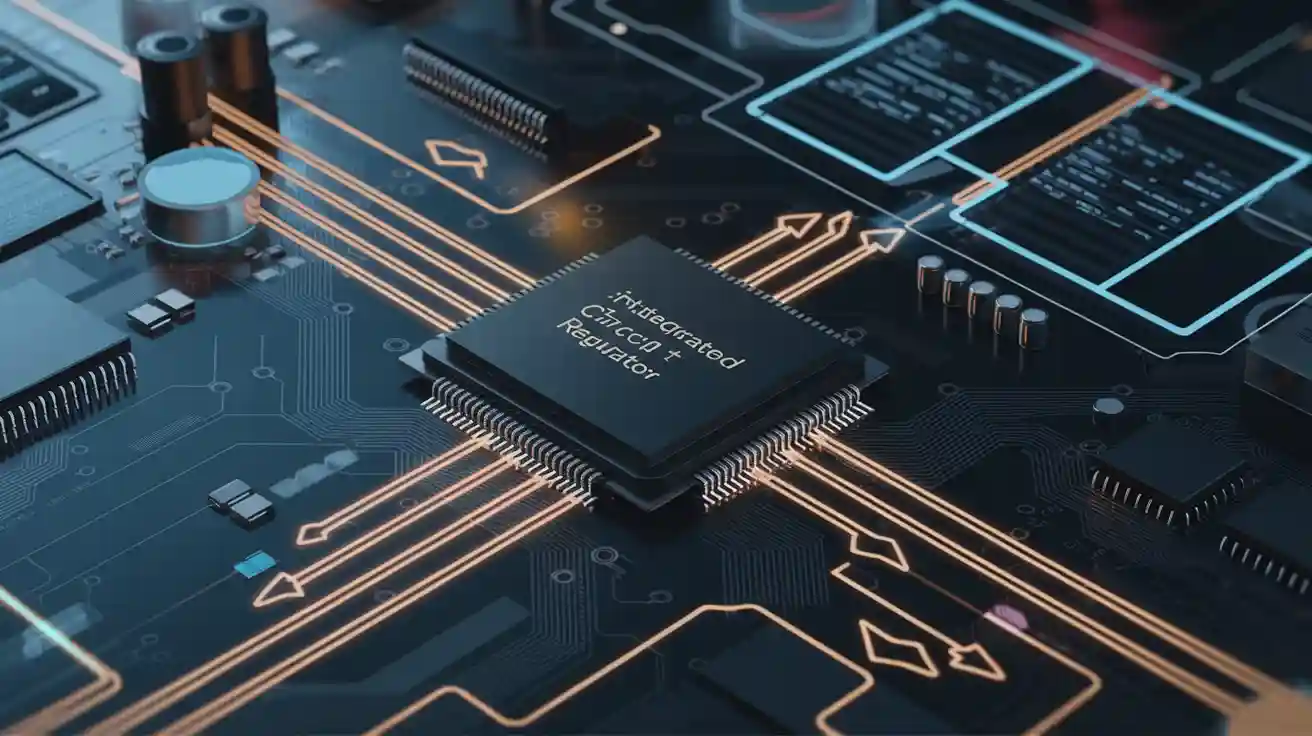
You use voltage regulators every day, even if you do not see them. These small chips protect your devices by giving them the right power. Good power management helps your phone, tablet, or computer last longer and stay cool. Engineers have fixed problems like voltage ripples and heat in hard systems. They made new solutions, like PMICs and IVRs, to meet the needs of modern electronics.
Key Takeaways
-
Voltage regulators help keep devices safe by giving steady power. This helps devices last longer and work better.
-
There are two main types. Linear regulators are simple and quiet but not very efficient. Switching regulators save energy and make less heat but are more complex.
-
New solutions like PMICs and IVRs put many voltage controls in one chip. This saves space, makes devices smaller, and helps them work better and last longer.
-
You should pick the right voltage regulator for your device’s needs. Think about power use, noise, and heat to get good performance and simple design.
-
Voltage regulators are important in many areas. They help in electronics, cars, and factories by giving steady power and helping new technology.
What Are Voltage Regulators?
Definition
Voltage regulators act like protectors for your electronics. These small chips make sure every part gets the right voltage. If you use a phone, computer, or smart watch, you rely on them. They keep voltage steady, even if the power changes or your device uses more energy.
Voltage regulators use feedback control to keep voltage stable. They check the voltage they give and compare it to a set value. If the voltage changes, the regulator fixes it fast. This is called voltage regulation. There are two main types: series and shunt. Series regulators put a special part in line with the load. Shunt regulators send extra current away from the load.
Scholarly articles say integrated circuit voltage regulators use a voltage reference and sense amplifier. These parts help keep the output steady, even if input voltage or temperature changes. Some designs add overcurrent protection and noise reduction. These features help your devices stay safe and work well.
Tip: When you learn about voltage regulators, you see why your devices last longer and work better.
Role in Power Management
Voltage regulators are important for power management. They help your devices use energy well. Without them, your phone or laptop could get too hot or stop working. Voltage regulators make sure each part gets just the right power.
Studies show voltage regulators control electricity flow in a circuit. They lower problems like voltage spikes and drops. In one study, researchers checked how voltage regulators affect the power distribution network (PDN). They found voltage regulators lower impedance in the PDN, which keeps voltage steady. The table below shows some key findings from this research:
|
Aspect |
Description |
|---|---|
|
VRM Role |
Major contributor to PDN impedance below 100 kHz frequency band. |
|
Optimization Strategy |
Combination of coarse-grained target impedance calculation and fine-tuning to suppress resonance spikes. |
|
Quantitative Improvements |
Reduction of decoupling capacitors by 21.4%, cost savings of 42.27%, and PCB space savings of 11.19%. |
|
Impedance Frequency Bands |
Bulk capacitors reduce impedance at DC-100 kHz; PCB power plane and decoupling capacitors affect 100 kHz–50 MHz; on-chip/package capacitors affect 50 MHz–1 GHz. |
|
PDN Components |
VRM, PCB power/ground planes, load chip packaging, decoupling capacitors/inductors inside chip. |
|
Empirical Data Types |
Impedance curves, current density distribution maps, and optimization results. |
This table shows voltage regulators do more than keep voltage steady. They also save space and money by needing fewer extra parts. When you know how voltage regulators work, you can design better electronics.
Modern voltage regulators have advanced features for better power management. Some handle load changes fast, while others protect against short circuits. These features help your devices last longer and stay safe. When you know how voltage regulators work, you see why they are so important in electronics.
Types of Voltage Regulators
Linear Regulators
Linear voltage regulators are found in many devices. They keep voltage steady in a simple way. They use a pass element, like a transistor, to turn extra voltage into heat. This makes the output quiet and stable. Sensitive circuits need this kind of output.
There are different kinds of linear voltage regulators. The most common are standard and low dropout (LDO) regulators. LDO regulators work with a small gap between input and output voltage. This helps them save power in battery devices. LDO regulators are expected to be 34.9% of the market by 2025. People like them because they save power and help batteries last longer.
You can see how some linear regulators work in this table:
|
Device |
Manufacturer |
Output Voltage (V) |
Output Current (mA) |
Dropout Voltage (mV) |
|---|---|---|---|---|
|
MAX603/604 |
Maxim Integrated Circuits |
5 / 3.3 |
500 |
550 |
|
ADP3302 |
Analog Devices |
3, 3.2, 3.3, 5 |
100 |
120 |
|
MAX687 |
Maxim Integrated Circuits |
3.3 |
N/A (β transistor) |
40 |
|
LT1575 |
Linear Technology |
1.5–5 |
1000 |
Very low (depends on external N-MOSFET) |
Linear voltage regulators work best when input voltage is just above output voltage. In these cases, they can be up to 97% efficient. This makes them good for low-noise and low-power uses. But if the voltage gap is big, more energy turns into heat. This lowers how well they work.
Note: Linear voltage regulators are easy to use and work well, but you must watch for heat if the input voltage is much higher than the output.
Switching Regulators
Switching voltage regulators use a different way to control voltage. They do not waste extra voltage as heat. Instead, they turn current on and off very fast. They use inductors and capacitors to store and release energy. There are different types, like buck, boost, and buck-boost converters.
Switching voltage regulators are very efficient, often over 90%. This makes them great for saving energy and keeping cool. You will find them in power supplies, portable gadgets, and cars. The market for switching voltage regulators is growing quickly. They help make devices smaller and more efficient.
Here is a table that compares linear and switching regulators:
|
Feature |
Linear Regulators |
Switching Regulators |
|---|---|---|
|
Design Complexity |
Simple design |
Complex design |
|
Power Handling Method |
Dissipates excess power as heat |
Stores and transfers power via switching |
|
Efficiency |
Lower efficiency, limited by Vout/Vin ratio |
Higher efficiency, approaching 100% ideally |
|
Thermal Stress |
High thermal stress, needs heatsinks |
Lower thermal stress, often no heatsinks |
Switching voltage regulators are best for big voltage differences or high currents. They make less heat and save space on the board. For example, buck converters are about 40% of the market and may reach $22.4 billion by 2024. Boost converters are also used a lot, especially in battery devices.
Tip: Switching voltage regulators are good for high efficiency and less heat, but they can make noise and are harder to design.
PMICs and IVRs
Modern electronics often need more than one voltage. A power management integrated circuit (PMIC) can put many voltage regulation jobs in one chip. PMICs help manage power, protect against problems, and make things work better.
Integrated voltage regulators (IVRs) go even further. They put voltage regulation close to the processor or memory. This cuts power loss, saves space, and makes devices more reliable. The IVR market was worth $5.6 billion in 2023 and could grow to $9.3 billion by 2031. People want smaller and better devices, so the market is growing.
This table shows how integration helps:
|
Device / Example |
Integration Feature(s) |
Integration Benefits |
|---|---|---|
|
Apple APL1028 IVR (2021 MacBook Pro M1) |
On-chip inductors with magnetic envelopes in RDL region |
Saves board space, improves power density, enables compact power delivery near CPU |
|
Empower EP7037C & EP71xxx series |
Multiple regulated voltages, deep trench capacitors, inductor in package or PCB traces |
10x size reduction, faster transient response, reduced board space, improved power state switching |
|
Infineon TDM3885 IPOL buck converter |
Fully integrated 4 A buck converter with inductor in package |
80% board area reduction, improved performance, suited for space/thermal constrained applications |
PMICs and IVRs give you many benefits:
-
Fewer extra parts
-
Smaller boards
-
Faster power changes
-
Better voltage regulation near the load
These features help you make smaller, better, and more reliable devices. As more devices need smart power management, you will see PMICs and IVRs in phones, cars, and more.
Benefits & Challenges
Efficiency
You want your devices to use power in a smart way. Voltage regulators help by giving just the right amount of power. Linear regulators are good for quiet circuits, but they waste energy as heat if the voltage gap is big. Switching regulators are better at saving energy. They store and move energy instead of making heat. You see these in things that need to save battery or stay cool.
To get the best results, you can:
-
Pick the best voltage regulator for your device.
-
Add power factor correction (PFC) circuits to use AC power better.
-
Try dynamic power management to use less energy when you do not need full power.
Tip: High efficiency helps your device last longer and stay cool.
Stability & Reliability
You want your electronics to work every time you use them. Voltage regulators keep things steady by giving each part the right voltage. This helps stop crashes and makes devices last longer. Engineers test how well voltage regulators handle changes. They adjust controllers to stop overshoot and help the system settle fast. Some use new ways like particle swarm optimization to make things even better.
You can also:
-
Use frequency domain analysis to check for stable operation.
-
Add filters to smooth out voltage changes.
-
Put voltage regulators in the best places to help voltage and lower losses.
Design Considerations
When you design a device, you have to balance many things. You want high efficiency, low noise, and good heat control. You should:
-
Pick the right voltage regulator for your job.
-
Think about how much heat your device will make.
-
Use low-power tricks to save energy.
-
Make sure all parts work together for steady power.
You can use models to plan where to put voltage regulators and wires. This helps you lower losses and save money. Tests on real devices show that smart design and placement can cut costs and make things work better.
Selecting Voltage Regulators
Application Needs
You should first think about what your device needs. Different jobs need different things. For example:
-
Automotive systems need good power management for electric cars and new electronics.
-
Consumer electronics, like smartphones, need small and energy-saving solutions.
-
Industrial automation and IoT devices need power supplies that work well and do not fail.
-
Telecommunications, like 5G networks, need steady and efficient voltage control.
You also need to check the output voltage, current, and temperature range. Some devices need low noise. Others need high efficiency. The table below shows why each feature is important for different uses:
|
Parameter |
Why It Matters |
Example Use Case |
|---|---|---|
|
Needed for sensitive RF circuits |
Audio equipment |
|
|
Efficiency |
Saves battery and reduces heat |
Smartphones, tablets |
|
Output Current |
Supports high-power loads |
Industrial controllers |
|
Input Voltage Range |
Handles changing supply voltages |
Automotive, battery devices |
|
Temperature Range |
Works in harsh environments |
Automotive, outdoor equipment |
Efficiency vs. Complexity
You need to find a balance between saving energy and how hard the circuit is to build. Linear regulators are easy and quiet. But they waste more energy as heat. Switching regulators save more energy and can handle bigger loads. But they are harder to build and can make electrical noise. Sometimes, you can use both types together. Use a switching regulator for most power. Use a linear regulator for parts that need quiet power. This way, you get both good efficiency and low noise.
When you design your circuit, remember these tips:
-
Put control parts close to the main chip to help performance.
-
Use good grounding to stop electrical noise.
-
Plan your layout to keep it simple and efficient.
-
Think about heat. Use heatsinks or copper pads if you need them.
Practical Tips
You can make your design better by following some best practices:
|
Topic |
Tip or Example |
|---|---|
|
Capacitor Choice |
Use low ESR capacitors to lower ripple. Check the datasheet for details. |
|
IC Regulator Benefits |
Pick integrated circuits for built-in protection and wide voltage support. |
|
Power Dissipation |
Watch the regulator’s temperature. Use heatsinks or copper pads if needed. |
|
Buck-Boost Use |
Choose buck-boost types for battery devices with changing input voltages. |
|
Documentation |
Read datasheets and application notes for help and examples. |
If your device has many power rails, think about using a PMIC. This helps you manage many voltages in a small space. It also helps your battery last longer by using power smartly.
Voltage Regulators in Applications
Consumer Devices
You use things like smartphones, laptops, and smartwatches every day. These devices need steady power to work well and last longer. Modern switching regulators help your phone battery last all day. They also help your laptop stay cool. As devices get smaller, engineers face new problems. They must deal with heat and less space. In 2023, the world bought more consumer electronics. India saw a 10% jump in sales. The telephony segment alone was worth over €460 billion. This growth means people want more stable power. Reliable power management in smartphones, tablets, and wearables is very important. It pushes companies to make better power supply designs. You get longer battery life and better device performance because of this.
Industrial & Automotive
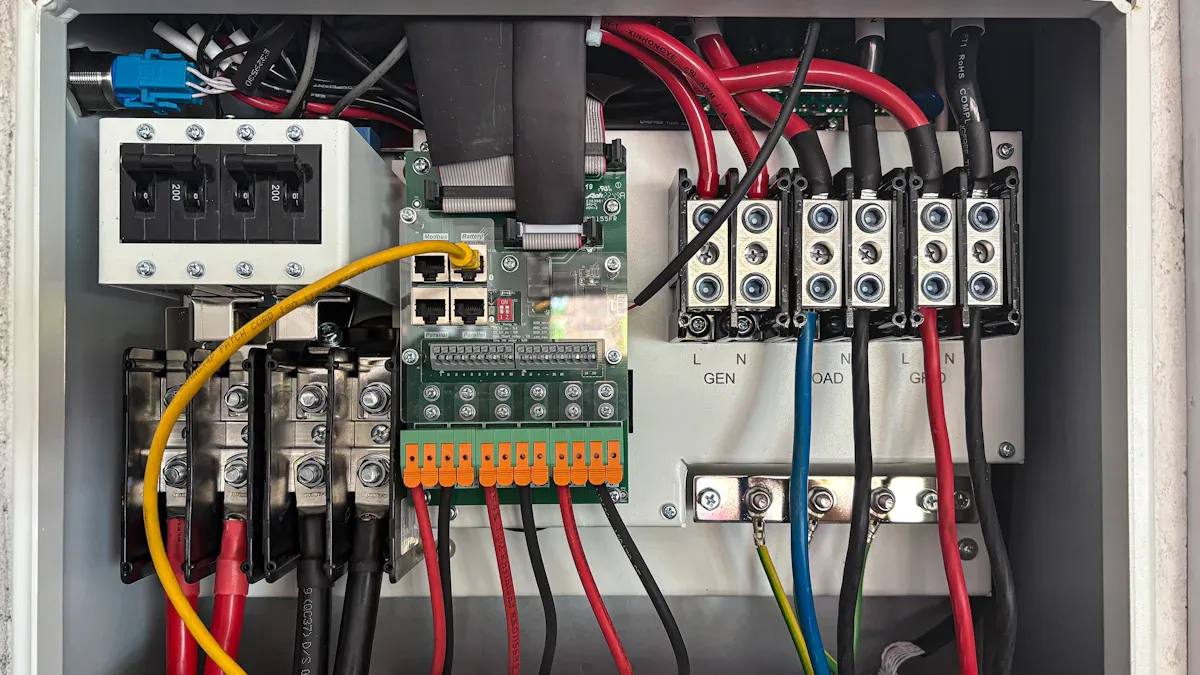
Factories and cars need steady power for safety and good performance. In factories, stable voltage keeps machines working and stops downtime. In 2023, factories used about $0.7 billion worth of regulators. This number will almost double by 2032. Cars, like electric vehicles, need steady voltage for safety and efficiency. You find these regulators in battery management and motor control. They are also in onboard charging systems. As cars use more electronics, the need for reliable power grows. Rules and new technology push companies to make better solutions.
Note: Industrial automation and electric vehicles both need strong, reliable power. This protects sensitive parts and keeps everything running smoothly.
Emerging Tech
New technology trends change how you use power. High-performance computers now use advanced regulators. These can reach over 93% efficiency. They use special transformers and soft-switching to save space and cut heat. Renewable energy systems, like solar and wind, also need small and efficient power control. You see more smart grids and digital controls. AI-powered systems watch and adjust power in real time. Companies file more patents for hybrid designs and fast-response regulators. This shows how fast this field changes. As you use more smart devices, you benefit from these new power solutions.
You help make better electronics when you pick smart power solutions. New PMICs have features like power sequencing, fault detection, and dynamic voltage control. These features help save space and lower costs.
-
PMICs let you change settings with software. This makes it easy and quick to update your design.
-
Using fewer extra parts makes devices simpler and more reliable.
|
Year |
Projected Market Size (USD) |
Key Trends |
|---|---|---|
|
2024 |
Digital power management, IoT |
|
|
2037 |
9.1 billion |
Miniaturization, sustainability |
Learn more about power management. This will help you keep your designs efficient and ready for new technology.
FAQ
What does a voltage regulator do in your device?
A voltage regulator makes sure each part gets the right voltage. It keeps the voltage steady, even if the battery changes. This helps your device work well and last longer.
How do you choose between a linear and a switching regulator?
Pick a linear regulator for simple jobs that need low noise. Use a switching regulator if you want high efficiency or big voltage changes. Think about heat, size, and how much power your device uses.
Can one voltage regulator power many parts?
Yes, one voltage regulator can power many parts if they all use the same voltage and current. If your device needs different voltages, you need more regulators or a PMIC.
Why do modern devices use PMICs and IVRs?
Modern devices use PMICs and IVRs to save space and work better. These chips control many voltages at the same time. You get longer battery life, smaller devices, and safer use.