Watch battery LR44 equivalent secret changes how devices work
Choosing a watch battery LR44 equivalent alters electronic behavior by determining whether a device receives sloped alkaline or steady silver-oxide voltage.
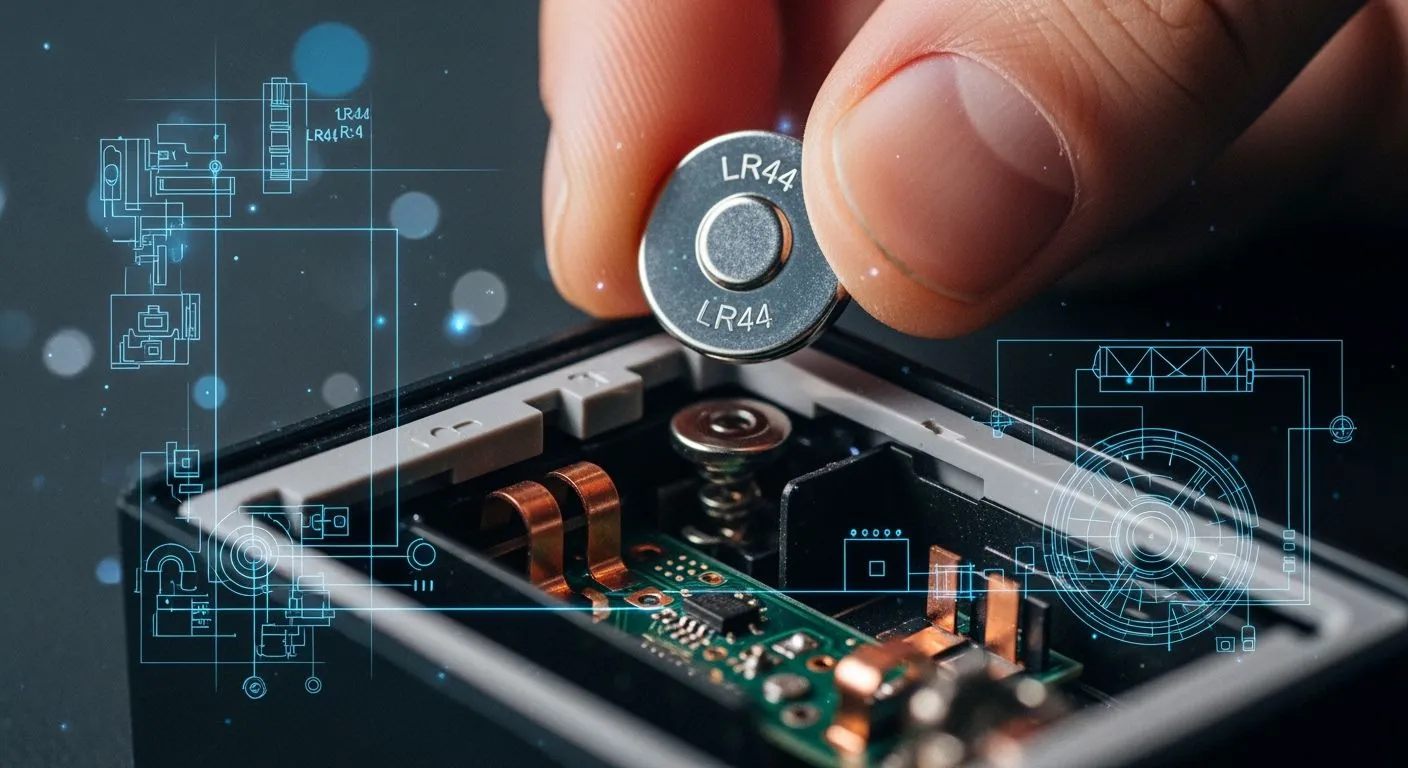
Do you wonder why your electronic devices lose accuracy over time? Your watch battery lr44 equivalent selection directly alters performance through voltage discharge curves.
Alkaline lr44 battery options experience sloped voltage drops, while silver-oxide chemistry delivers flat, continuous power.
| Battery Option | Output Characteristic |
|---|---|
| Alkaline lr44 | Sloped output decline |
| Silver-oxide 357 | Steady output voltage |
- Key operational choices:
- An alkaline a76 battery or a76 battery equivalent causes eventual device slowdowns.
- A silver-oxide sr44 battery maintains accurate sensor readings.
- You need an lr44 battery equivalent like a 357 battery for constant voltage.
- A silver-oxide 357 battery equivalent protects delicate microcontrollers.
You can improve device stability today. Choose a basic a76 battery for low-drain electronics. Select a high-grade lr44 battery equivalent for sensitive equipment. Swap your standard a76 battery for a 357 silver-oxide cell. A quality 357 lr44 battery equivalent keeps your precision lr44 tools accurate!
Key Takeaways
- Silver-oxide 357 batteries deliver steady voltage for high precision in electronic tools.
- Alkaline LR44 batteries lose power gradually and cause inaccurate sensor readings over time.
- Leaking alkaline batteries damage circuit boards, while sealed silver-oxide cells protect delicate electronics.
- Precision tools like digital calipers and medical thermometers need 357 silver-oxide batteries for reliable accuracy.
- Basic toys run fine on cheap A76 batteries, but sensitive tools require silver-oxide replacements.
Chemistry Secrets of Watch Battery LR44 Equivalent Options
You standardly buy button cells based on physical size. However, internal chemistry dictates how your microcontrollers and sensor chips operate. standard power cells share identical dimensions, but their chemical components perform differently under electronic loads.
Alkaline LR44 Versus Silver Oxide SR44
You often find an alkaline battery labeled as an standard coin cell. Manufacturers sell the standard lr44 alongside the common a76 battery for low-cost devices. Another common name for this power cell is the ag13 battery. Many users assume every button cell works identically. In reality, chemical cathode materials alter device safety and voltage delivery.
You can compare the active internal materials below:
| Battery Type | Cathode Material | Anode Material | Electrolyte |
|---|---|---|---|
| Alkaline (LR44) | Manganese dioxide | Zinc | Potassium hydroxide |
| Silver Oxide (SR44 / 357) | Silver oxide | Zinc | Potassium hydroxide or Sodium hydroxide |
A standard a76 battery uses manganese dioxide for its cathode. In contrast, a premium sr44 battery utilizes silver oxide materials. This chemical contrast alters electrical stability in sensitive semiconductor circuits.
💡 Tech Tip: Corrosive electrolyte leaks destroy delicate circuit boards! An alkaline lr44 battery carries a higher risk of leaking potassium hydroxide as it discharges. A sealed silver-oxide cell provides greater physical leak protection for your expensive devices.
An alkaline lr44 option expands during full discharge. Internal pressure creates micro-fractures in the casing seal. Potent chemical liquids seep out onto copper traces. This leakage destroys integrated circuit chips instantly. You protect your valuable tools when you replace a cheap a76 battery with a reliable silver-oxide option.
Linear Voltage Drop Versus Flat Discharge Curves
You need reliable power delivery for accurate integrated circuit measurements. An standard a76 battery starts output at 1.55 volts. Its potential voltage immediately begins a continuous decline under operation. This linear voltage drop reduces available power to electronic components continuously.
Alkaline (LR44 / A76):      1.55V  -->  1.30V  -->  1.10V  -->  0.90V (Gradual Slope)
Silver Oxide (SR44 / 357):  1.55V  -->  1.55V  -->  1.55V  -->  0.00V (Flat Discharge)
Your sensitive integrated circuits struggle under sloping potential levels. An a76 battery equivalent with manganese chemistry loses energy steadily. Sensor chips register false signals when potential drops below specific thresholds. A fading a76 battery causes display screens to flicker or dim unexpectedly.
Selecting a high-grade 357 battery changes your device performance completely. A silver-oxide battery maintains a flat potential curve throughout its entire lifespan. The voltage stays at a constant 1.55 volts until energy depletion occurs.
- Key operational benefits of stable chemistry:
- A silver-oxide sr44 battery supplies stable power to delicate sensor ICs.
- You eliminate measurement errors by choosing a silver-oxide 357 cell.
- Your precision tools receive stable current from a quality watch battery lr44 equivalent.
- A proper lr44 battery replacement prevents unexpected chip resets.
You benefit from using a proper lr44 battery equivalent in high-precision tools. A premium lr44 battery equivalent delivers steady current to microcontrollers. Standard digital calipers rely on an efficient lr44 battery equivalent for stable position tracking. Using a 357 battery equivalent ensures stable logic thresholds inside your processing chips.
Do not settle for a standard a76 battery equivalent in critical instruments. A cheap a76 battery equivalent lacks the required voltage stability. You can install a reliable 357 battery to keep your electronic systems operational. Choose a 357 power source for maximum precision today!
How LR44 Chemistry Changes Electronic Behavior
Digital Caliper Accuracy and Thermometer Readings
You notice subtle electronic glitches in everyday precision equipment. Dropping voltage in an ordinary lr44 battery changes how sensor chips analyze signals. Precision instruments like medical thermometers, handheld light meters, and digital calipers require predictable current to calculate measurements accurately.
Engineers at Nova Technology Company (HK) Limited design integrated circuit modules for advanced electronics. As a HiSilicon-designated solutions partner, they optimize microcontroller stability and chip-level solutions for sensitive sensor systems. Semiconductor components inside modern tools rely on clean, unvarying potential.
A standard a76 battery loses voltage steadily during operation. This gradual decline creates measurement drift inside sensor ICs. For instance, a digital caliper powered by a declining a76 battery loses calibration mid-measurement. Your medical thermometer shows inaccurate body temperature readings because sensor reference voltages shift. Precision light meters suffer from erratic sensor outputs when powered by an alkaline battery instead of a silver oxide battery.
| Feature / Metric | Silver Oxide Cell | Alkaline Cell |
|---|---|---|
| Discharge Curve | Flat curve; provides continuous steady power | Sloping curve; voltage continuously decreases |
| Voltage Output | Holds a consistent ~1.55V for most of its lifespan | Starts at ~1.5V and steadily declines |
| Performance Impact | Ensures high accuracy and reliable instrument readings | Causes fluctuating voltage, reduced accuracy, and disrupted outputs |
| Ideal Application | Precision tools (e.g., light meters, medical devices) | Low-drain devices (e.g., simple toys, basic remotes) |
Installing a high-performance 357 battery protects your readings. The silver-oxide chemistry maintains output stability across thousands of operating cycles. An ideal lr44 battery equivalent delivers identical energy output until total exhaustion. Choosing a silver-oxide sr44 battery prevents measurement drift in critical tools. When you replace a fading cell with a silver-oxide 357 unit, your compact lr44 tools regain factory precision. A standard lr44 coin cell decays rapidly, whereas a silver-oxide button cell maintains flat voltage output.
A fading lr44 battery drops power below operational thresholds without warning. Your typical lr44 powered gauge requires steady current for floating-point calculations inside the logic processor. An aging lr44 battery disrupts microcontrollers during continuous sensor polling. Your device needs more than a standard lr44 battery when taking critical measurements. A typical lr44 battery drains gradually, causing subtle calculation errors in delicate lr44 sensor circuits.
Display Brightness and Microcontroller Timing
A falling power level also disrupts visual displays and internal microcontrollers. Low-voltage LCD segment screens experience performance drops when operating potential dips. Under the dynamic power equation $P = C \cdot V^2 \cdot f$, operating power decreases sharply when system potential drops. A voltage transition from 5V down to 3.3V reduces current draw by roughly 56%. However, dropping voltage below liquid crystal contrast thresholds degrades screen visibility. Display segments become faint, washed out, or completely unreadable long before your coin cell dies.
A standard a76 battery forces screen segments to fade prematurely. An alkaline a76 battery causes display dimming long before total depletion. Your device with an a76 battery experiences flickering display segments during heavy processing tasks. The voltage of an a76 battery decays under continuous load, causing unexpected screen shutdown. A standard a76 battery drops below critical logic levels quickly. You can swap your old a76 battery for a constant-voltage chemistry to solve this issue.
In contrast, a 357 button cell maintains complete display clarity. You can rely on a quality a76 battery equivalent to power simple gadgets. Replacing a basic a76 battery equivalent with silver chemistry protects screen illumination. However, sensitive digital screens require a silver-oxide watch battery lr44 equivalent for maximum contrast.
⚡ Technical Insight: Dropping operating voltage below the liquid crystal threshold causes LCD segments to lose contrast, making precision readings unreadable even while processing chips remain active!
Microcontroller clock timing fails under changing electrical conditions in standard lr44 units. Integrated circuits inside precision scales or timers depend on stable logic levels in lr44 electronic gear. A weak lr44 battery equivalent causes processor resets or incorrect data processing. Replacing an ordinary a76 battery with a proper 357 battery keeps internal clock frequencies perfectly stable. Using a reliable lr44 battery equivalent ensures smooth operations in lr44 measurement devices. This premium lr44 battery equivalent maintains voltage, so you can select a durable lr44 battery equivalent for high-drain digital tools.
Selecting the correct 357 power option ensures maximum system stability. Installing a 357 battery stabilizes logic gate thresholds in delicate microprocessors. A reliable 357 battery delivers continuous potential to keep internal timers accurate. You can choose a grade 357 option to preserve system clock integrity. This silver 357 replacement provides optimal current density. The silver-oxide 357 chemistry resists voltage dips during peak operational load. A 357 micro cell prevents erratic system shutdowns. You can install a 357 silver oxide cell for long-term device stability.
A cheap a76 battery equivalent slowly degrades processor function. Meanwhile, a premium sr44 battery keeps logic gates functioning properly. Replacing your old lr44 battery improves stability across all lr44 hardware. Do not rely on a simple lr44 battery for delicate semiconductor operations. You preserve sensor accuracy and screen contrast by choosing a silver-oxide replacement today.
Choosing the Right LR44 Battery Equivalent
Comparing A76 Battery and Silver Oxide 357
You can easily select a watch battery lr44 equivalent when you understand chemical specifications. An alkaline a76 battery and a silver-oxide 357 cell share identical dimensions. Both button cells measure 11.6 mm in diameter and 5.4 mm in height. However, their internal chemistry creates huge differences in device performance.
| Performance Feature | A76 Battery (Alkaline) | 357 (Silver-Oxide) |
|---|---|---|
| Nominal Voltage | 1.50 V | 1.55 V |
| Capacity Range | 110 – 130 mAh | 150 – 200 mAh |
| Storage Shelf Life | 3 – 5 years | 5 – 10 years |
| Voltage Behavior | Sloping discharge curve | Flat discharge curve |
| Target Application | Low-drain devices | High-precision tools |
An alkaline a76 battery provides a nominal voltage of 1.50 volts. Output voltage drops steadily during continuous operation. In contrast, a 357 battery delivers a constant 1.55 volts. This silver-oxide power source holds higher energy density, offering up to 200 mAh capacity. A standard ag13 battery or a76 battery offers only 110 to 130 mAh. Furthermore, silver-oxide chemistry extends storage shelf life up to 10 years. An alkaline a76 battery lasts only 3 to 5 years in storage.
Selecting an A76 Battery Equivalent for Sensitive Tools
You must choose your replacement cell based on device sensitivity. Low-drain toys run fine on an ordinary a76 battery. However, you should avoid using an alkaline a76 battery in sensitive tools. Precision equipment needs a reliable lr44 battery equivalent.
💡 Key Selection Tip: Never substitute a standard a76 battery for a 357 cell in precision instruments! High-accuracy tools need constant voltage to prevent logic errors inside semiconductor microcontrollers.
Selecting a silver-oxide 357 replacement ensures uninterrupted operational accuracy. A basic a76 battery equivalent experiences steep potential drops under load. This voltage loss destabilizes sensitive chip-level solutions. You protect precision integrated circuits when you choose a silver-oxide sr44 battery. A high-grade 357 cell stabilizes microcontrollers across full operation.
Use this quick selection guide for your equipment:
-
Basic gadgets (toys, simple remotes):
- Install an alkaline lr44 battery or a76 battery.
- Use a basic a76 battery equivalent for simple non-precision circuits.
-
Precision electronics (calipers, medical tools, digital devices):
- Choose a reliable 357 battery for steady current.
- Install a high-capacity 357 lr44 battery equivalent for sensitive ICs.
- Select a silver-oxide 357 option for maximum clock accuracy.
- Use a silver-oxide lr44 battery equivalent to prevent data corruption.
- Buy a quality lr44 battery equivalent for long-term power stability.
- A 357 battery keeps internal logic thresholds accurate.
- Your lr44 hardware runs reliably with an advanced 357 battery.
- Replace an old lr44 battery with stable chemistry.
- Every sensitive lr44 module requires clean voltage.
- Always select a verified lr44 battery for critical tools.
Small chemical variations dictate real-world tool performance. A silver-oxide sr44 battery delivers continuous power, while an alkaline lr44 battery drops voltage steadily. Physical size allows an a76 battery to fit, yet correct electrical output ensures true system compatibility.
You protect sensitive microcontrollers by selecting a silver-oxide 357 battery instead of a standard a76 battery. A high-grade 357 battery provides constant potential to your logic gates. Installing a silver-oxide 357 cell prevents erratic resets in delicate lr44 devices. Replacing a basic a76 battery with a 357 power source maintains complete processing accuracy.
An ordinary a76 battery equivalent causes measurement drift in your compact lr44 gear. Every precision lr44 sensor requires a reliable lr44 battery equivalent. A standard lr44 battery drains down quickly, so upgrading your fading a76 battery to a silver-oxide 357 unit guarantees stability. Choosing a quality 357 powered lr44 battery equivalent keeps your device accurate.
💡 Final Tip: Check manufacturer specs before buying a watch battery lr44 equivalent! Select a 357 model and the proper lr44 battery equivalent for maximum performance.
FAQ
Can you use a 357 battery instead of an lr44 battery?
Yes, you can install a power cell in an lr44 slot. The silver-oxide 357 cell delivers constant voltage. An alkaline unit drops voltage quickly. You get stable chip performance when you replace an ordinary a76 battery with this 357 option.
What is the main difference between an a76 cell and an sr44 cell?
An alkaline a76 battery outputs 1.50 volts with a sloped discharge curve. An sr44 uses silver-oxide chemistry for 1.55 volts. This silver-oxide power keeps microcontrollers accurate. You should avoid a cheap ag13 battery or a76 battery equivalent in precision sensors.
Is an lr44 battery equivalent safe for sensitive electronic tools?
Yes, choosing the right cell protects delicate microprocessors. A silver-oxide 357 model provides strong leak protection. Standard lr44 cells can leak corrosive liquids. Installing a 357 silver-oxide cell preserves long-term circuit stability in every lr44 device.
Why does your digital caliper display fade with an a76 battery?
An alkaline power source loses voltage steadily under load. Dropping potential below logic gate thresholds causes display dimming. Upgrading to a 357 battery ensures crisp LCD contrast. Your lr44 tools maintain accurate readings until this 357 power source depletes fully inside your 357 unit.
How do you identify a proper lr44 replacement for long shelf life?
Check package chemistry labels carefully. A 357 cell offers ten years of storage life. Alkaline options like an a76 battery last five years. Selecting a high-quality lr44 battery equivalent guarantees reliable 357 power for your compact lr44 equipment and lr44 hardware.