Applications of Integrated Circuits in Consumer and Industrial Devices
Integrated circuits, which are essential components in modern electronics, play a crucial role in shaping the technology you encounter daily. So, what are integrated circuits? These small yet powerful components enhance the functionality and efficiency of devices across various industries. Their impact continues to grow, driven by rising demand and technological advancements.
Integrated circuits, which are essential components in modern electronics, play a crucial role in shaping the technology you encounter daily. So, what are integrated circuits? These small yet powerful components enhance the functionality and efficiency of devices across various industries. Their impact continues to grow, driven by rising demand and technological advancements.
By 2024, the integrated circuits market will reach $401.81 billion, growing to $446.8 billion by 2025 at an 11.2% annual rate. By 2029, it is projected to hit $661.12 billion, showcasing a compound annual growth rate of 10.3%.
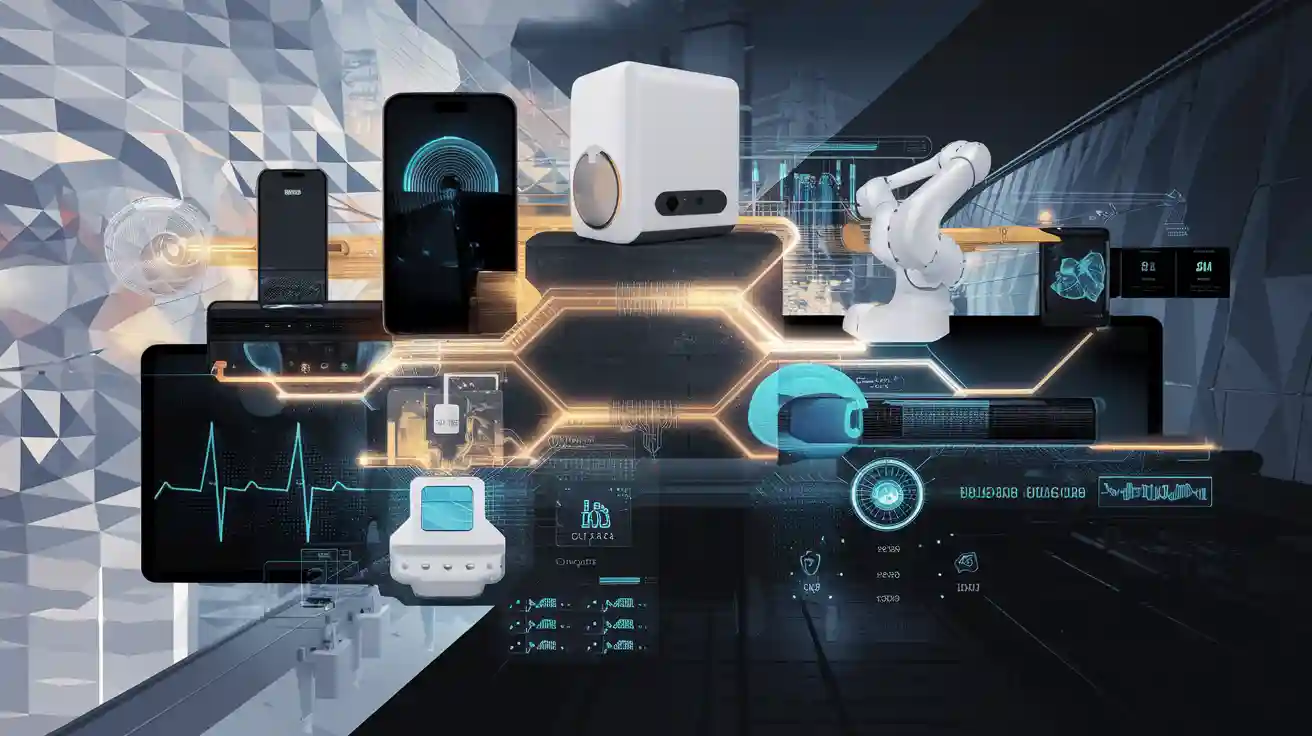
From smartphones to industrial automation systems, integrated circuits fuel innovation and enable devices to perform complex tasks with precision. They are the backbone of modern technology, making them indispensable in both consumer and industrial applications.
Key Takeaways
-
Integrated circuits (ICs) are key to modern electronics. They help devices become smaller, faster, and work better.
-
The global market for ICs is growing quickly. It may reach $661.12 billion by 2029, showing their high demand.
-
ICs are used in many devices like phones and appliances. They make these devices work better and save energy.
-
In factories, ICs help with automation and improve reliability. They make work faster and reduce delays.
-
Medical tools use ICs for accurate tests and live monitoring. This keeps patients safe and improves healthcare.
-
The future of ICs includes smaller sizes, AI, and quantum computing. These will create smarter devices.
-
IC makers are using eco-friendly methods to cut waste and save energy. This helps the environment.
-
Buying devices with energy-saving ICs improves performance and helps protect the planet.
What Are Integrated Circuits?
Definition and Components of an Integrated Circuit
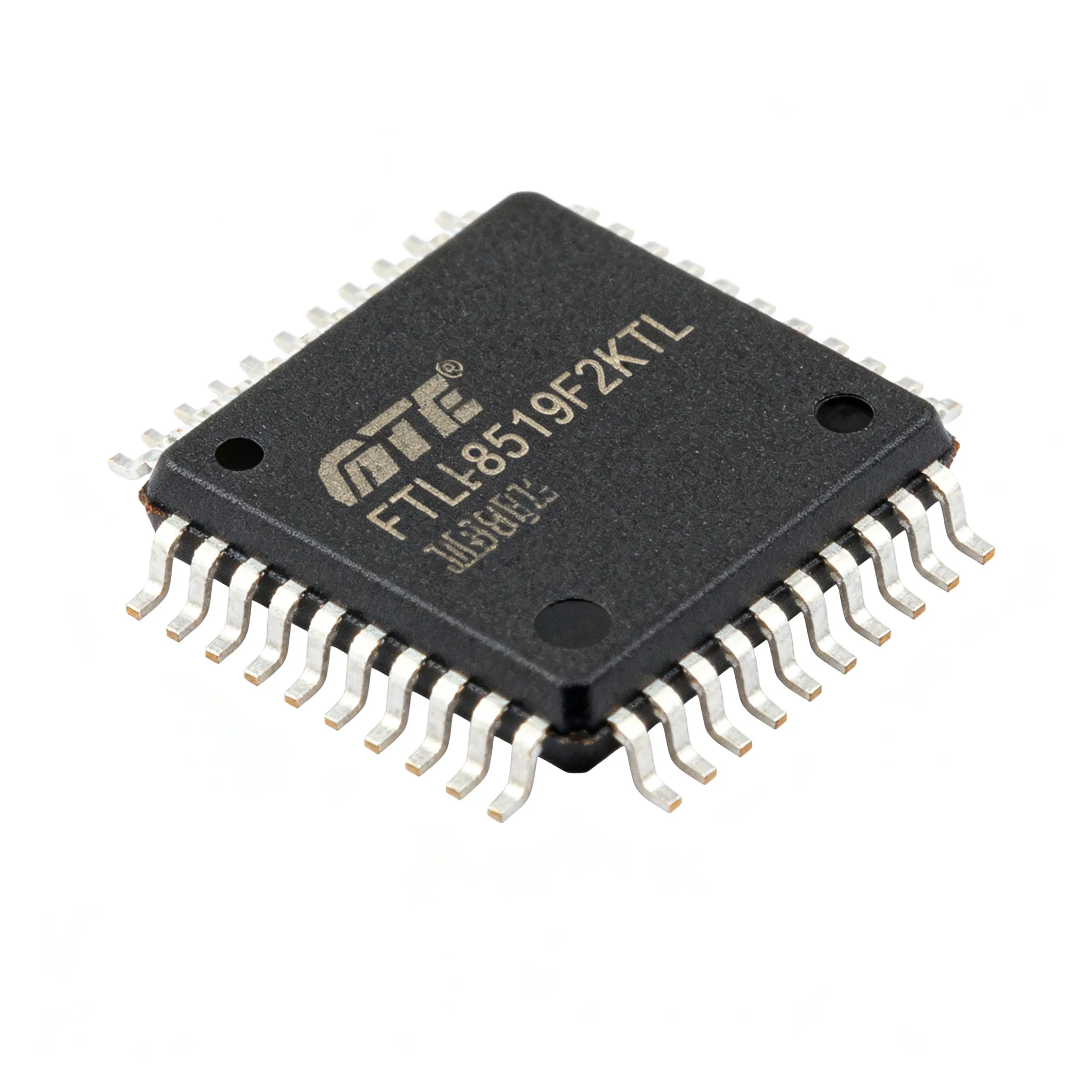
An integrated circuit (IC) is a compact assembly of electronic components fabricated as a single unit. It combines miniaturized active devices like transistors and diodes with passive components such as resistors and capacitors. These components are interconnected on a semiconductor material, typically silicon, to perform specific functions. The invention of the first IC in 1958 by Jack Kilby revolutionized electronics, enabling the creation of smaller, faster, and more efficient devices.
The components of an IC work together to process, store, or transmit information. For example, transistors act as switches or amplifiers, while capacitors store electrical energy. Resistors control the flow of current, and diodes allow current to flow in one direction. These elements are integrated into a single chip, making ICs the backbone of modern electronics, from CPUs to GPUs.
Types of Integrated Circuits
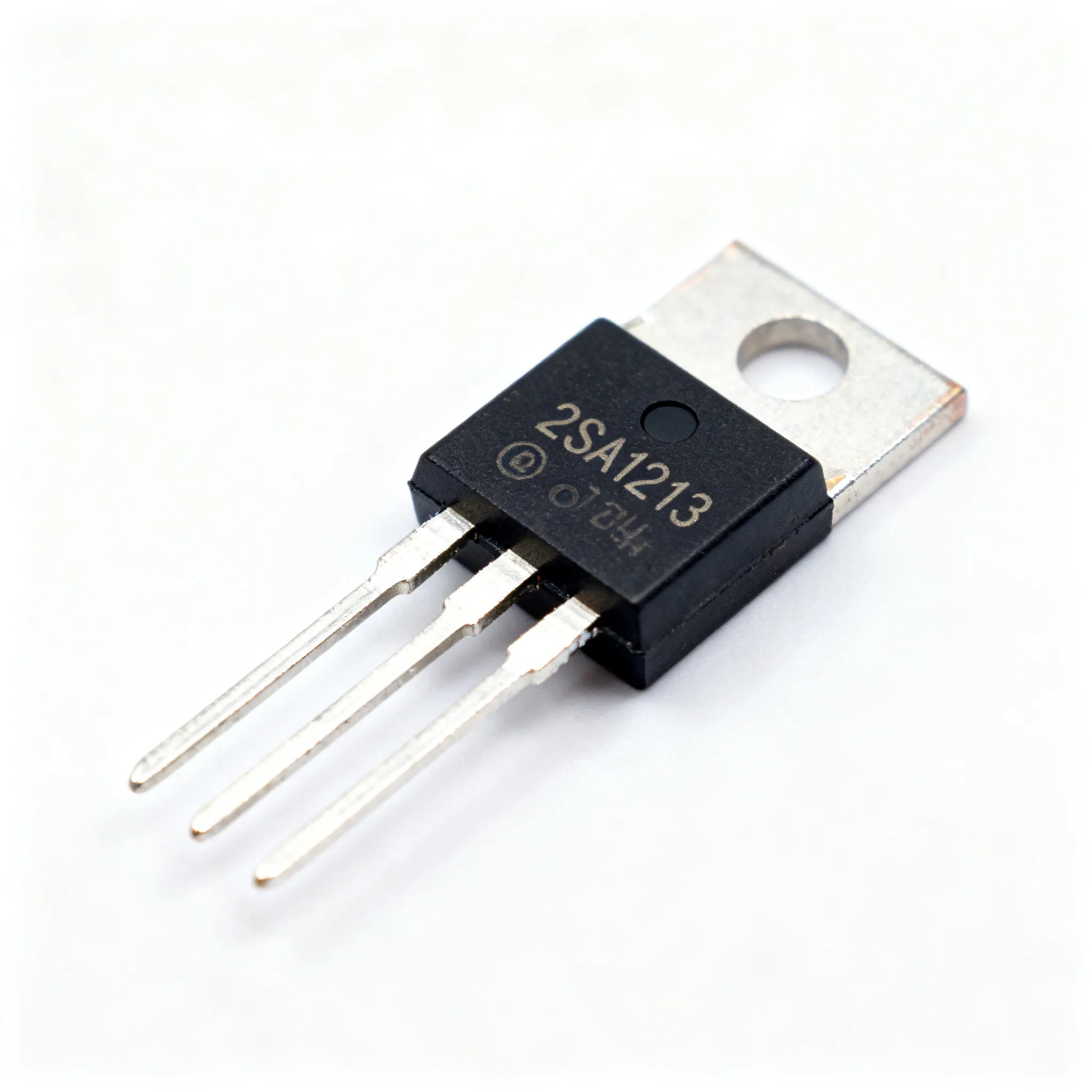
There are several types of integrated circuits, each designed for specific applications. The basic types of integrated circuits include analog ICs, digital ICs, and mixed-signal ICs. Analog ICs process continuous signals, such as sound or temperature, while digital ICs handle binary data. Mixed-signal ICs combine both analog and digital functions, making them versatile for various uses.
ICs can also be classified by their scale of integration. Small Scale Integration (SSI) contains a few transistors, while Medium Scale Integration (MSI) includes hundreds. Large Scale Integration (LSI) and Very Large Scale Integration (VLSI) pack thousands to millions of transistors into a single chip. Ultra Large Scale Integration (ULSI) and Giga Scale Integration (GSIC) represent the cutting edge, enabling advanced technologies like computer memory storage and application-specific integrated circuits.
|
Classification |
Description |
|---|---|
|
Type |
Analog IC, Digital IC, Mixed Signal IC |
|
Scale |
SSI, MSI, LSI, VLSI, ULSI, GSIC |
|
Application |
Consumer Electronics, Automotive, Healthcare |
How Integrated Circuits Work
Integrated circuits function by processing electrical signals through their interconnected components. For instance, in a central processing unit (CPU), transistors switch on and off to execute instructions. This rapid switching enables the CPU to perform billions of calculations per second. Similarly, in a graphics processing unit (GPU), ICs handle complex mathematical operations to render images and videos.
The efficiency of ICs lies in their design. Engineers use schematics to map out how components interact, ensuring optimal performance. Modern ICs also leverage advanced technologies like CMOS transistors, which consume less power and allow for higher integration. These innovations make ICs indispensable in devices ranging from microprocessors to medical equipment.
Applications of Integrated Circuits in Consumer Devices
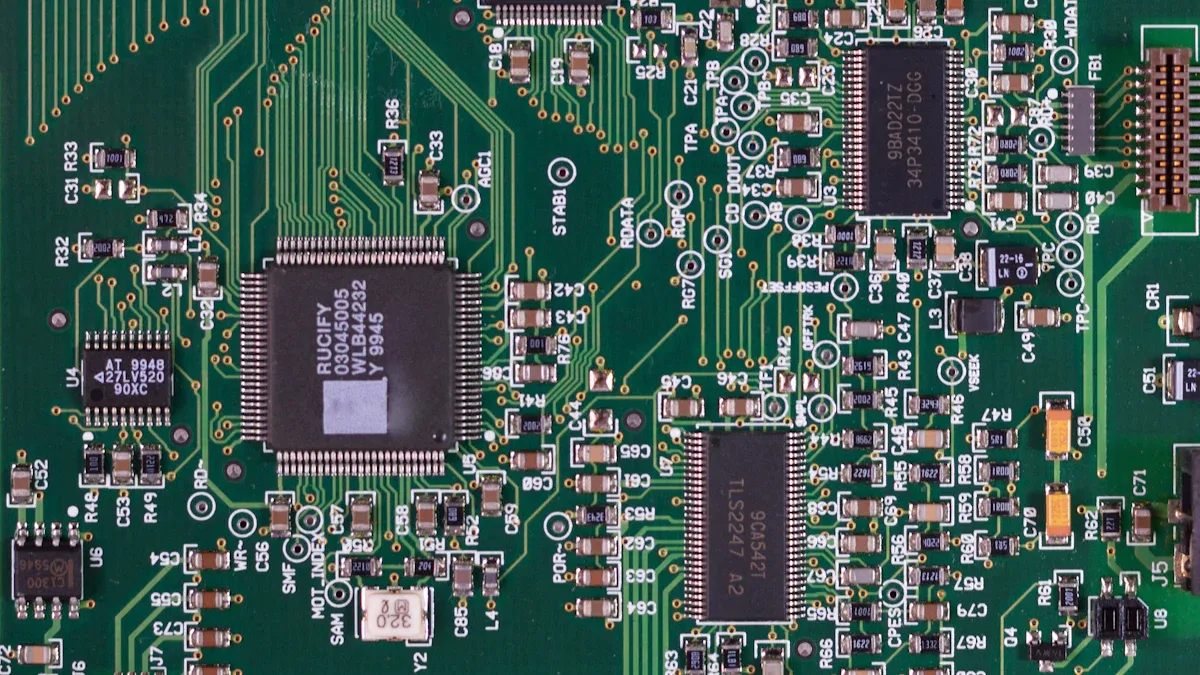
Integrated circuits (ICs) have revolutionized consumer electronics, enabling devices to become smarter, faster, and more efficient. From the smartphones in your pocket to the appliances in your kitchen, ICs power the technology that simplifies your daily life. Let’s explore how these tiny chips enhance some of the most common consumer devices.
Smartphones and Mobile Devices
Your smartphone is a marvel of modern engineering, and at its core lies the IC chip. These chips handle everything from processing data to managing wireless communication. For instance, the central processing unit (CPU) and graphics processing unit (GPU) in your phone are ICs that enable multitasking and high-quality visuals. Specialized ICs, such as those for 5G connectivity, ensure faster internet speeds and seamless streaming.
The demand for smartphones continues to grow, with approximately 75% of mobile phone owners expected to own a smartphone by 2025. This growth drives advancements in IC technology, including miniaturization and integration of multiple functions into a single chip. These innovations not only improve performance but also reduce power consumption, extending battery life. As a result, your smartphone becomes more powerful and efficient with each new generation.
|
Evidence Type |
Detail |
|---|---|
|
Percentage of Smartphone Models with Integrated Circuits |
Approximately 75% of mobile phone owners will own a smartphone by 2025 |
|
Advancements in Technology |
Increased demand for specialized integrated circuits designed for specific applications, including smartphones |
Computers and Laptops
Integrated circuits are the backbone of modern computers and laptops. They enable these devices to perform complex calculations, run software applications, and store vast amounts of data. The performance of a computer largely depends on the ICs it uses, particularly the CPU and memory chips. These components determine how quickly your computer processes information and how much data it can handle at once.
Advancements in IC technology have significantly improved computer performance. For example, higher transistor density allows more transistors to fit on a single chip, enabling faster and more efficient processing. Increased clock speeds and larger cache memory further enhance performance, making modern computers capable of handling demanding tasks like video editing and gaming.
|
Performance Factor |
Description |
Impact on Computer Performance |
|---|---|---|
|
Transistor Density |
The number of transistors packed onto a single IC chip. |
Higher density enables more complex operations and greater processing capability, leading to faster computation and improved performance. |
|
Clock Speed |
The rate at which a processor executes instructions, measured in Hertz (Hz). |
Increased clock speed means more instructions are processed per second, which directly improves the speed at which the computer operates. |
|
Cache Memory |
A small, fast memory located close to the CPU, used for storing frequently accessed data. |
Faster access to frequently used data accelerates processing and reduces delays, thereby improving the overall performance of the integrated circuit computer. |
Household Appliances
Integrated circuits have transformed household appliances, making them smarter and more energy-efficient. From refrigerators to washing machines, ICs control various functions, such as temperature regulation, motor speed, and energy usage. These chips enable appliances to adapt to your needs, providing convenience and reducing energy consumption.
For example, modern appliances use algorithms powered by ICs to predict your energy habits and optimize performance. This not only saves electricity but also ensures that the appliance operates reliably under different conditions. Stringent energy rating systems further encourage manufacturers to develop ICs that enhance efficiency. As a result, you benefit from appliances that are both cost-effective and environmentally friendly.
-
The algorithm predicts household energy habits based on appliance usage.
-
It achieves high recall, indicating effective identification of energy-saving opportunities.
Entertainment Systems
Integrated circuits (ICs) have transformed the way you experience entertainment, making systems smarter, faster, and more immersive. Whether you're watching a movie, playing a video game, or listening to music, ICs power the technology that delivers high-quality visuals and sound. These tiny chips work behind the scenes to process complex data, ensuring smooth performance and an enhanced user experience.
High-Quality Audio and Video Processing
Modern entertainment systems rely on ICs to deliver crystal-clear audio and stunning visuals. For example, multimedia ICs handle tasks like audio decoding, video rendering, and signal processing. These chips ensure that your favorite movies and songs play without interruptions or delays. The growing demand for immersive multimedia experiences has driven advancements in IC technology. Devices like smartphones, smart TVs, and automotive infotainment systems now feature ICs capable of supporting high-definition content and surround sound.
The multimedia IC market continues to grow rapidly. This growth reflects your desire for better audio and video quality in everyday devices. Automotive systems, for instance, now integrate advanced multimedia features to enhance your in-car experience. Whether you're streaming music or navigating with a digital map, ICs ensure that these systems operate seamlessly.
Advanced Display Technology
Integrated circuits also play a crucial role in modern display systems. Display Driver Integrated Circuits (DDICs) manage the screens on devices like TVs, gaming monitors, and even vehicle dashboards. These ICs control how pixels light up, ensuring vibrant colors and sharp images. When you watch a 4K movie or play a graphically intense video game, DDICs handle the heavy lifting to deliver a smooth and visually stunning experience.
In the automotive industry, DDICs have become essential for infotainment screens and digital dashboards. Electric and autonomous vehicles, in particular, rely on high-performance displays to provide clear information and enhance safety. These ICs not only improve entertainment but also make navigation and vehicle operation more intuitive.
Gaming Systems and Consoles
Gaming consoles and PCs owe much of their power to integrated circuits. Graphics Processing Units (GPUs), which are specialized ICs, render lifelike graphics and enable real-time gameplay. These chips process millions of calculations per second, ensuring that your games run smoothly without lag. Additionally, ICs in gaming systems manage audio output, network connectivity, and even controller inputs, creating a seamless gaming experience.
The rise of virtual reality (VR) and augmented reality (AR) has further highlighted the importance of ICs. These technologies require immense processing power to create immersive environments. ICs make it possible for VR headsets and AR devices to deliver realistic visuals and responsive interactions, bringing your games to life like never before.
The Future of Entertainment Systems
As technology advances, integrated circuits will continue to shape the future of entertainment. Miniaturization allows manufacturers to pack more functionality into smaller devices, making portable entertainment systems more powerful. Artificial intelligence (AI) and machine learning, powered by ICs, are also transforming how you interact with entertainment. For example, AI-driven recommendation systems suggest movies, shows, or songs based on your preferences, enhancing your overall experience.
Did You Know?
The shift towards electric and autonomous vehicles has increased the demand for high-performance displays. These systems not only improve entertainment but also enhance safety by providing clearer information.
Integrated circuits have become the backbone of modern entertainment systems. They ensure that your devices deliver the performance, quality, and features you expect. Whether you're relaxing at home or on the go, ICs make every moment of entertainment more enjoyable.
Applications of Integrated Circuits in Industrial Devices
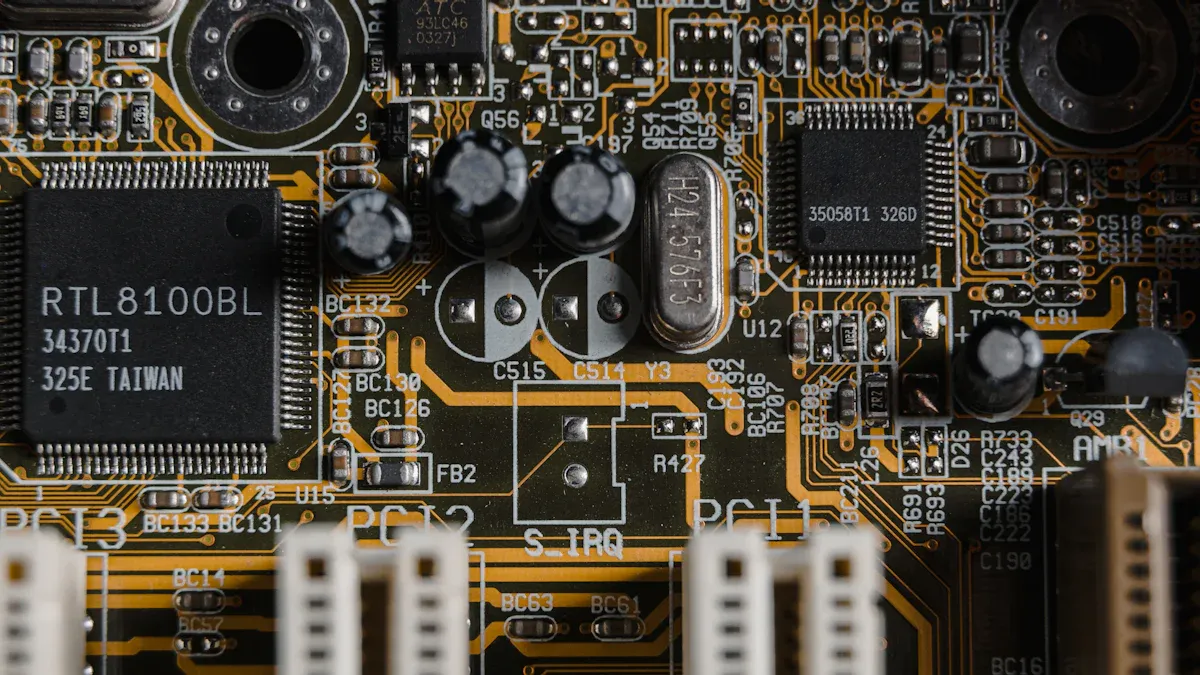
Integrated circuits play a pivotal role in industrial devices, driving innovation and efficiency across various sectors. These ICs enable automation, enhance precision, and improve reliability in critical applications. Let’s explore how IC chips are transforming industrial devices in automation, machinery, and medical fields.
Automation and Robotics
Automation and robotics rely heavily on integrated circuits to achieve precision and reliability. IC chips serve as the brain of programmable logic controllers (PLCs), which automate tasks like assembly line operations, material handling, and quality control. These chips process real-time data, enabling machines to adapt to changing conditions and perform complex tasks with minimal human intervention.
For instance, MOS logic ICs are essential in industrial robots. They govern movement and task execution, ensuring high precision and reliability. In smart manufacturing systems, ICs facilitate communication between automated systems, allowing real-time data processing and adaptive responses. This integration minimizes downtime and optimizes production efficiency.
|
Description |
|
|---|---|
|
Manufacturing Process Control |
Enables precise monitoring and control of machinery, ensuring optimal operation. |
|
Automation of Complex Processes |
Powers PLCs for automating assembly lines and quality control. |
|
Smart Manufacturing Systems |
Facilitates communication between systems for real-time data processing. |
|
Control Systems in Industrial Robots |
Governs robot movement and task execution with high precision. |
The advancements in IC technology have also enabled the development of Hisilicon chips, which are particularly effective in IoT applications. These chips excel in long-distance image transmission, making them a preferred choice for industrial automation systems requiring remote monitoring and control.
Industrial Equipment and Machinery
Integrated circuits enhance the performance and reliability of industrial equipment and machinery. IC chips enable condition monitoring, predictive maintenance, and real-time control, reducing downtime and improving operational efficiency. For example, the NI cRIO platform has revolutionized industrial equipment by enabling rapid development and testing. This platform allows software changes and tests to be completed in as little as 1.5 hours.
ICs also power custom solutions for condition monitoring, which are now used daily in hundreds of facilities. These systems send alerts for maintenance needs, reducing unanticipated downtime and maintenance expenses. The implementation of NI cRIO controllers has further improved uptime in industrial equipment, with projections for widespread installation.
-
The NI cRIO platform enables rapid development and testing, achieving as little as 1.5 hours between software changes and tests.
-
Custom condition monitoring solutions enhance cost-efficiency and scalability in industrial facilities.
-
Online monitoring systems send alerts for maintenance needs, reducing downtime.
-
Remote condition monitoring decreases unanticipated downtime and maintenance expenses.
These advancements highlight the critical role of IC chips in industrial machinery. By enabling smarter and more efficient operations, ICs contribute to the scalability and cost-effectiveness of industrial processes.
Medical Devices
Integrated circuits are indispensable in modern medical devices, ensuring precision, reliability, and efficiency. IC chips power advanced medical equipment like MRI machines, pacemakers, and wearable health monitors. These chips process complex data, enabling accurate diagnostics and real-time monitoring of patient health.
For example, ICs in MRI machines handle high-speed data processing, ensuring clear and detailed imaging. In pacemakers, IC chips regulate heart rhythms with exceptional precision, enhancing patient safety. Wearable health monitors, powered by ICs, track vital signs and provide real-time feedback, empowering individuals to manage their health proactively.
The growing demand for wearable technology has driven advancements in IC design. Hisilicon chips, known for their efficiency in IoT applications, are an excellent choice for medical devices requiring long-distance data transmission. These chips enable seamless communication between devices, ensuring reliable performance in critical healthcare applications.
Integrated circuits also play a crucial role in telemedicine, where they enable remote consultations and diagnostics. By powering devices that transmit high-quality audio and video, ICs make healthcare more accessible and efficient.
Note: The reliability of ICs in medical devices is critical, as these devices often operate in life-saving scenarios. Manufacturers prioritize robust designs to ensure consistent performance under varying conditions.
Integrated circuits continue to revolutionize the medical field, driving innovation in diagnostics, treatment, and patient care. Their compact size, efficiency, and versatility make them a cornerstone of modern healthcare technology.
Aerospace and Defense
Integrated circuits (ICs) are at the heart of modern aerospace and defense systems. These tiny chips enable advanced technologies that ensure safety, precision, and reliability in critical applications. Whether you're flying in an airplane or relying on national defense systems, ICs play a vital role in making these systems work seamlessly.
Navigation and Communication Systems
ICs power navigation and communication systems in aircraft and spacecraft. These systems rely on ICs to process signals from satellites, ensuring accurate positioning and reliable communication. For example, Global Positioning System (GPS) receivers use ICs to calculate your location with precision. In aviation, ICs help pilots navigate through complex airspaces and maintain communication with ground control.
Fun Fact:
The ICs in GPS receivers can process signals from multiple satellites simultaneously, allowing you to pinpoint your location within a few meters.
Flight Control and Avionics
Flight control systems depend on ICs to manage critical operations. These chips process data from sensors, enabling real-time adjustments to ensure stability and safety during flight. Avionics systems, which include cockpit displays and onboard computers, also rely on ICs to provide pilots with essential information. For instance, ICs in autopilot systems analyze data from gyroscopes and accelerometers to maintain steady flight paths.
|
Application |
Role of ICs |
Impact |
|---|---|---|
|
Autopilot Systems |
Process sensor data to maintain flight stability. |
Improved safety and reduced workload for pilots. |
|
Cockpit Displays |
Power high-resolution screens for real-time data. |
Enhanced situational awareness. |
|
Sensor Integration |
Enable seamless communication between sensors. |
Accurate and reliable flight control. |
Defense Systems
In defense applications, ICs are indispensable for radar systems, missile guidance, and electronic warfare. Radar systems use ICs to process signals and detect objects with high precision. Missile guidance systems rely on ICs to calculate trajectories and ensure accurate targeting. Electronic warfare systems use ICs to jam enemy signals and protect communication networks.
Did You Know?
Modern radar systems can detect objects as small as a bird, thanks to the advanced signal processing capabilities of ICs.
Space Exploration
Spacecraft and satellites depend on ICs for their operation. These chips handle tasks like data collection, signal transmission, and power management. For example, ICs in satellites process images of Earth and transmit them back to ground stations. In space exploration, ICs enable rovers to navigate and perform experiments on distant planets.
ICs used in space must withstand extreme conditions, including radiation and temperature fluctuations. Engineers design radiation-hardened ICs to ensure reliable performance in these harsh environments.
The Future of Aerospace and Defense
The future of aerospace and defense will see ICs enabling even more advanced technologies. Artificial intelligence (AI) and machine learning, powered by ICs, will enhance autonomous systems in aircraft and defense equipment. Quantum computing, another emerging field, promises to revolutionize encryption and data processing in defense applications.
Tip:
As ICs become more powerful and energy-efficient, they will continue to drive innovation in aerospace and defense, making systems smarter and safer.
Integrated circuits are the backbone of aerospace and defense technologies. They ensure that systems operate with precision and reliability, whether you're navigating the skies or exploring outer space. With ongoing advancements, ICs will remain a cornerstone of innovation in these critical fields.
Advantages of Using Integrated Circuits
Compact Size and Portability
Integrated circuits revolutionized electronics by enabling devices to become smaller and more portable. These chips integrate multiple components, such as transistors and resistors, into a single semiconductor material. This miniaturization allows you to carry powerful devices, like smartphones and laptops, in your pocket or bag.
The compact size of ICs also enhances the performance and functionality of devices. For example, Surface Mount Technology (SMT) increases the density of components on printed circuit boards (PCBs), making devices more efficient and feature-rich.
|
Evidence Description |
Key Benefit |
|---|---|
|
Improved performance in compact devices. |
|
|
Denser packing of components allows more functions. |
Increased functionality in limited space. |
|
Surface Mount Technology (SMT) increases density. |
Smaller, more efficient devices. |
This compactness is especially beneficial in industries like healthcare and aerospace, where space-saving designs are critical. Whether it's a wearable health monitor or a satellite, ICs make it possible to pack advanced technology into tiny spaces.
Tip: The next time you marvel at the slim design of your smartphone or smartwatch, remember that ICs make it all possible.
Energy Efficiency
Integrated circuits are designed to consume less power while delivering high performance. This energy efficiency is crucial in today’s world, where devices must balance functionality with sustainability. ICs achieve this by using advanced materials and designs that minimize energy loss during operation.
Studies have shown that heterogeneous systems, which use different types of processors, significantly improve energy efficiency. For instance, research by Gao and Zhang (2016) highlighted how these systems optimize power usage in computing tasks.
|
Study |
Findings |
|---|---|
|
Gao and Zhang (2016) |
Heterogeneous systems improve energy efficiency by using diverse processors. |
|
Victor Zhirnov et al. (2014) |
Practical improvements could lower power consumption to 10–17 J/bit. |
|
General Findings |
Energy efficiency is vital to manage rising computational demands. |
This efficiency extends to consumer devices like smartphones, where ICs help extend battery life, and industrial systems, where they reduce operational costs. By consuming less energy, ICs not only save money but also contribute to a greener planet.
Did You Know? The global push for energy-efficient technologies has made ICs a cornerstone in reducing energy consumption across industries.
Cost-Effectiveness
Integrated circuits offer a cost-effective solution for modern electronics. By integrating multiple components into a single chip, ICs reduce manufacturing costs and simplify assembly processes. This mass production capability makes ICs more affordable than traditional electronic components.
The market value of ICs reflects their cost-effectiveness. In 2023, the IC market was valued at USD 635.74 billion, with projections to reach USD 1,496.57 billion by 2030. This growth highlights the widespread adoption of ICs due to their affordability and reliability.
|
Aspect |
Details |
|---|---|
|
Market Value (2023) |
USD 635.74 billion |
|
Projected Market Value (2030) |
USD 1,496.57 billion |
|
CAGR (2024-2030) |
13.01% |
|
Advantages of ICs |
Cost-efficient, reduced size, simplified assembly, mass production benefits. |
ICs also reduce costs for consumers by enabling the production of smaller, faster, and more efficient devices. Whether it’s a budget-friendly smartphone or a high-performance gaming console, ICs make advanced technology accessible to everyone.
Note: The affordability of ICs doesn’t compromise their quality. Their reliability and performance make them a preferred choice across industries.
Reliability and Performance
When it comes to electronics, reliability and performance are two of the most critical factors you consider. Integrated circuits (ICs) excel in both areas, making them indispensable in modern technology. These tiny chips undergo rigorous testing to ensure they meet industry standards and deliver consistent results in various applications.
Reliability Testing for Integrated Circuits
ICs are subjected to a series of reliability tests to guarantee their durability and stability. These tests simulate real-world conditions, ensuring that the chips can withstand stress and perform as expected. For example:
-
High-Temperature Reverse Bias (HTRB) tests evaluate long-term stability under maximum rated conditions. This ensures that ICs remain reliable even in extreme environments.
-
Early Failure Rate (EFR) testing provides insights into how ICs perform within the first year of use. This helps manufacturers identify and address potential issues before the chips reach you.
-
High Temperature Operating Life (HTOL) tests assess how ICs perform under temperature and voltage stress. This ensures that the chips can handle demanding applications without compromising their functionality.
These tests ensure that the ICs in your devices, whether it's a smartphone or an industrial robot, operate reliably over time.
Performance Metrics
The performance of ICs is measured using industry-standard metrics. Organizations like JEDEC establish uniform standards for electronic devices, including ICs. These metrics ensure that ICs meet the high expectations of modern technology. Here’s a quick overview of some key tests and their purposes:
|
Test/Metric |
Description |
|---|---|
|
Establish uniform standards for electronic devices, including ICs. |
|
|
Early Failure Rate (EFR) |
Estimates device failures within a year, varying by product line. |
|
High Temperature Operating Life (HTOL) |
Evaluates product lifetime under temperature and voltage stress. |
|
High-Temperature Reverse Bias (HTRB) |
Tests long-term stability under high drain-source bias. |
These metrics ensure that ICs deliver the performance you expect, whether you're using them in a gaming console or a medical device.
Why Reliability and Performance Matter
Reliable ICs reduce the risk of device failure, saving you time and money. For instance, when ICs in your household appliances or industrial equipment perform consistently, you experience fewer disruptions. High performance also means that your devices run faster and more efficiently, enhancing your overall experience.
Tip: The next time you use a device that works seamlessly, remember that its ICs have passed rigorous tests to ensure reliability and performance.
Integrated circuits are the unsung heroes behind the technology you rely on every day. Their ability to combine reliability with high performance makes them a cornerstone of modern innovation.
Future Trends in Integrated Circuit Technology
Advancements in Miniaturization
The miniaturization of electronics has transformed how you interact with technology. Devices are becoming smaller, lighter, and more efficient, thanks to integrated circuits that combine multiple components onto a single chip. This trend reduces size and weight while maintaining or even enhancing performance. For example, modern ICs enable smartphones to deliver high-speed processing in a compact design.
The demand for enhanced network connectivity, driven by 5G and the Internet of Things (IoT), is accelerating this progress. These technologies require lower latency and higher efficiency, which miniaturized ICs provide. The market for next-generation integrated circuits reflects this growth. In 2022, it was valued at $996 million, and by 2031, it is projected to reach $3.26 billion, growing at a compound annual growth rate (CAGR) of 14.08%.
|
Year |
Market Size (USD Million) |
CAGR (%) |
|---|---|---|
|
2022 |
996 |
N/A |
|
2031 |
3260 |
14.08 |
This rapid expansion highlights the importance of miniaturization in meeting the demands of modern electronics. As ICs continue to shrink, you can expect devices to become even more portable and energy-efficient.
Artificial Intelligence and Machine Learning
Artificial intelligence (AI) and machine learning (ML) are reshaping the role of integrated circuits in technology. These fields require immense computational power, which ICs deliver through specialized designs. Graphics Processing Units (GPUs) and Application-Specific Integrated Circuits (ASICs) are at the forefront of this innovation. GPUs excel at parallel processing, making them ideal for tasks like image analysis and training ML models. ASICs, on the other hand, are custom-built for specific AI applications, offering unmatched speed and energy efficiency.
AI also enhances the manufacturing of integrated circuits. Predictive quality analytics, powered by ML, identifies potential issues early in production, improving quality management. Automated inspections reduce human error, ensuring that ICs meet the highest standards. These advancements not only improve the production process but also make ICs more reliable for you as a consumer.
As AI and ML continue to evolve, their integration with ICs will unlock new possibilities. From smarter devices to more efficient manufacturing, these technologies are paving the way for a future where machines learn and adapt to your needs.
Quantum Computing
Quantum computing represents the next frontier in integrated circuit technology. While traditional ICs rely on binary data (0s and 1s), quantum computers use qubits, which can exist in multiple states simultaneously. This allows quantum systems to solve complex problems much faster than classical computers.
The integration of quantum and classical computing aims to combine the strengths of both systems. Hybrid models are emerging, where quantum frameworks work alongside traditional ICs. These systems excel in tasks like job scheduling, resource management, and data transfer between quantum and classical domains.
|
Aspect |
Description |
|---|---|
|
Job Scheduling |
Higher-level task scheduling and resource allocation for quantum systems. |
|
Resource Management |
Tools like SLURM manage resources among users. |
|
Quantum Framework (QFw) |
Supports integration models and backend simulation packages. |
|
Resource Allocation |
Simultaneous allocation of quantum and classical computing resources. |
Quantum computing holds the potential to revolutionize fields like cryptography, drug discovery, and financial modeling. As these systems become more accessible, you may witness breakthroughs that were once thought impossible. The integration of quantum components with traditional ICs ensures that this technology remains practical and scalable for real-world applications.
Note: The future of integrated circuits lies in their ability to adapt to emerging technologies. Whether through miniaturization, AI, or quantum computing, ICs will continue to shape the devices and systems you rely on every day.
Sustainable and Green Technology
Integrated circuits (ICs) are evolving to meet the growing demand for sustainable and eco-friendly technology. As you become more aware of environmental challenges, manufacturers are adopting greener practices to reduce waste and energy consumption. These advancements not only benefit the planet but also pave the way for innovative solutions in electronics.
Eco-Friendly Manufacturing Processes
Modern IC production focuses on reducing environmental impact. Manufacturers now use low-temperature processing techniques to minimize energy usage. Recycling plays a key role in this shift, allowing companies to reuse materials like silicon and copper. Novel materials, such as biodegradable substrates, are also gaining traction. These methods align with global sustainability goals and help reduce the carbon footprint of electronics manufacturing.
|
Key Insights |
Description |
|---|---|
|
Report Title |
Sustainable Electronics Manufacturing: 2023-2033 |
|
Focus Areas |
Sustainable methods in PCB and IC manufacturing, including materials and processes |
|
Innovations |
Low temperature processing, recycling, and novel materials |
|
Industry Examples |
Samsung, IBM, Intel, Toshiba, Apple, Dell |
|
Future Projections |
20% of PCBs to be manufactured sustainably by 2033 |
|
Key Questions Addressed |
Policies, low emission technologies, disruptive innovations, and material growth opportunities |
Reducing Waste in Semiconductor Production
Conventional semiconductor manufacturing generates significant waste. Sustainable practices aim to address this issue by optimizing processes and materials. For example, companies like Samsung and Intel are exploring ways to reduce emissions during production. These efforts align with regulations like the Ecodesign for Sustainable Products Regulation, which promotes eco-friendly designs and manufacturing standards.
|
Key Insights |
Description |
|---|---|
|
Report Title |
Sustainable Electronics and Semiconductor Manufacturing 2025-2035 |
|
Focus Areas |
Innovations in PCB and semiconductor manufacturing processes and materials |
|
Environmental Impact |
Highlights wastefulness in conventional manufacturing and opportunities for sustainability |
|
Industry Examples |
Samsung, TSMC, GlobalFoundries, Intel |
|
Legislation Impact |
Discusses Ecodesign for Sustainable Products Regulation and its global implications |
The Role of Green Technology in IC Development
Green technology is transforming how ICs are designed and produced. By adopting low-emission technologies, manufacturers can create chips that consume less energy and last longer. These innovations not only reduce environmental impact but also improve device performance. For instance, energy-efficient ICs extend battery life in smartphones and laptops, making them more sustainable for everyday use.
Tip: When you choose devices with energy-efficient ICs, you contribute to reducing global energy consumption and supporting sustainable practices.
Future Outlook
The future of ICs lies in sustainability. By 2033, 20% of printed circuit boards (PCBs) are expected to be manufactured using eco-friendly methods. This shift will drive further innovation in materials and processes, ensuring that electronics remain both advanced and environmentally responsible. As you embrace greener technology, you play a vital role in shaping a sustainable future for electronics.
Integrated circuits drive innovation across industries, making them essential in modern technology. Their compact design, efficiency, and versatility enable devices to perform complex tasks while remaining user-friendly. You benefit from faster, smarter, and more reliable electronics, whether in consumer gadgets or industrial systems.
|
Evidence Type |
Description |
|---|---|
|
Comprehensive Characterization |
Comparing current methods systematically reveals advantages and limitations, guiding future innovations. |
|
Addressing Gaps |
Bridging gaps between satisfied and unsatisfied needs fosters practical advancements in IC technology. |
|
Reducing Complexity |
Simplifying design challenges encourages innovation, especially in manufacturing processes. |
As technology advances, integrated circuits will continue to evolve, shaping the future of electronics with smarter designs and sustainable practices. Their role in driving progress ensures that you remain at the forefront of technological innovation.
FAQ
What is the main purpose of integrated circuits?
Integrated circuits (ICs) combine multiple electronic components into a single chip. They process, store, and transmit data, enabling devices to perform complex tasks efficiently. ICs make electronics smaller, faster, and more reliable.
How do integrated circuits improve energy efficiency?
ICs use advanced materials and designs to minimize energy loss. They optimize power usage, extending battery life in devices like smartphones and laptops. This efficiency reduces operational costs and supports sustainable technology.
Can integrated circuits be used in medical devices?
Yes, ICs power medical devices like pacemakers, MRI machines, and wearable health monitors. They process data for accurate diagnostics and real-time monitoring, ensuring precision and reliability in healthcare applications.
What makes integrated circuits cost-effective?
ICs integrate multiple components into a single chip, reducing manufacturing costs and simplifying assembly. Their mass production capability makes them affordable while maintaining high performance and reliability.
How do integrated circuits contribute to aerospace technology?
ICs enable navigation, communication, and flight control systems in aircraft and spacecraft. They process signals, manage sensor data, and ensure safety and precision in critical aerospace applications.
Are integrated circuits used in robotics?
Yes, ICs serve as the brain of robots, powering programmable logic controllers (PLCs) and enabling real-time data processing. They ensure precision in movement and task execution, making robots reliable for industrial automation.
What advancements are shaping the future of integrated circuits?
Miniaturization, artificial intelligence, and quantum computing are driving IC innovation. These advancements make devices smarter, faster, and more energy-efficient, paving the way for groundbreaking technologies.
How do integrated circuits support green technology?
ICs are evolving with eco-friendly manufacturing processes, such as recycling and low-temperature techniques. Energy-efficient ICs reduce power consumption, contributing to sustainable electronics and a greener planet.
Tip: Choosing devices with energy-efficient ICs helps reduce your environmental impact while enjoying advanced technology.