2026 Market Outlook: A Buying Guide for Power Management ICs and the TPS54340
2026 Market Outlook: A Buying Guide for Power Management ICs and the TPS54340 Introduction As the semiconductor industry continues its rapid growth trajectory, with global revenues projected to rea
Introduction
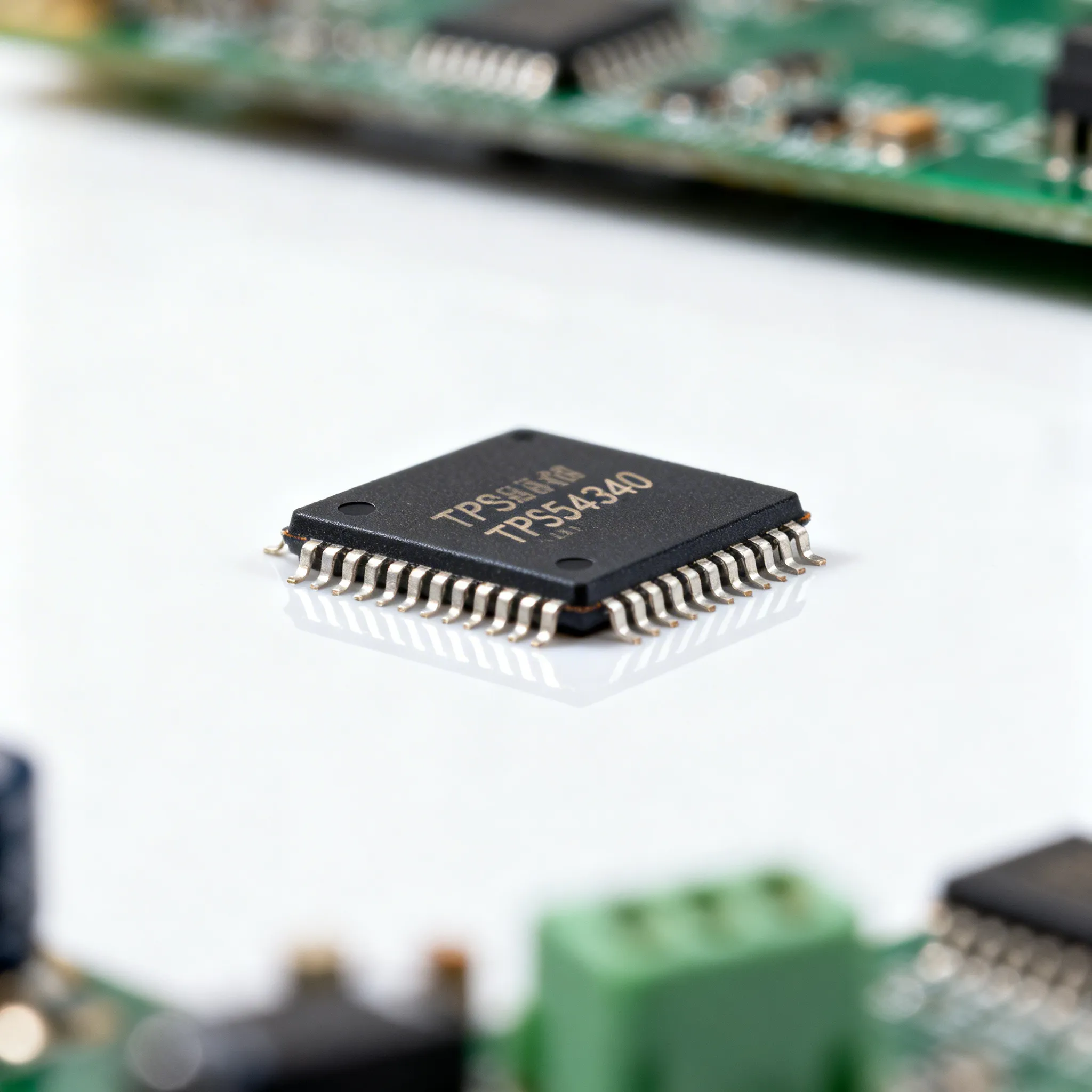
As the semiconductor industry continues its rapid growth trajectory, with global revenues projected to reach $595.2 billion in 2026, the demand for efficient power management integrated circuits (ICs) is on the rise. Power management ICs are critical to the performance and efficiency of modern electronic devices, playing a vital role in managing power consumption, enhancing battery life, and reducing heat dissipation. Among the myriad of power management solutions available, the TPS54340 stands out as a versatile and reliable choice for designers seeking to optimize their power systems. This article provides a comprehensive buying guide to help you navigate the specifications, applications, and sourcing of power management ICs, with a special focus on the TPS54340.
Technical Overview
Power management ICs are essential components in electronic circuits, responsible for regulating voltage, managing power conversion, and ensuring efficient energy distribution across various modules. The TPS54340 is a step-down converter designed to handle input voltages of up to 42V, making it suitable for a wide range of applications. This IC offers high efficiency, low quiescent current, and excellent transient response, making it ideal for battery-powered devices and industrial applications. The core principles of power management involve voltage regulation, load management, and thermal management. Understanding these principles is crucial for selecting the right IC for your specific needs.
Detailed Specifications
| Parameter | Value | Units | Notes |
|---|---|---|---|
| Input Voltage Range | 4.5 - 42 | V | Wide input range for flexible applications |
| Output Voltage Range | 0.8 - 37 | V | Adjustable output voltage |
| Output Current | 3.5 | A | High output current capability |
| Switching Frequency | 100 - 2000 | kHz | Adjustable for efficiency optimization |
| Efficiency | 95% | % | High efficiency under typical conditions |
| Quiescent Current | 146 | µA | Low power consumption in standby mode |
| Thermal Shutdown | 160 | °C | Protects against overheating |
| Soft Start | 1.5 | ms | Reduces inrush current |
| Enable Threshold | 1.2 | V | Voltage level to enable the IC |
| Overcurrent Protection | Yes | - | Protects against overload conditions |
Thermal & Mechanical Specs
| Parameter | Value | Units | Notes |
|---|---|---|---|
| Operating Temperature Range | -40 to 150 | °C | Suitable for harsh environments |
| Junction-to-Ambient Thermal Resistance | 40 | °C/W | Efficient heat dissipation |
| Junction-to-Case Thermal Resistance | 2 | °C/W | Low thermal impedance |
| Package Type | HSOP | - | Compact footprint |
| Package Dimensions | 5.00 x 6.00 | mm | Small size for space-constrained designs |
| Weight | 0.5 | g | Lightweight |
| Moisture Sensitivity Level | Level 3 | - | Standard handling precautions |
| Pin Count | 8 | - | Simplified design integration |
Application Comparison
| Application | Benefits | Challenges | Notes |
|---|---|---|---|
| Industrial Automation | Robust power delivery | High noise environments | Use with proper filtering |
| Consumer Electronics | Compact and efficient | Thermal management | Ensure adequate cooling |
| Automotive Systems | Wide input range | Temperature extremes | Use automotive-grade components |
| Telecommunications | Stable voltage output | Power fluctuations | Incorporate redundancy |
| Renewable Energy | High efficiency | Variable input conditions | Use adaptive algorithms |
Design Considerations
Designing with power management ICs such as the TPS54340 requires careful consideration of various factors to ensure optimal performance. Key aspects include proper voltage regulation, thermal management, and layout considerations. Voltage regulation involves selecting the appropriate feedback network to achieve the desired output voltage. Thermal management is critical, as power dissipation can lead to overheating; thus, incorporating adequate heat sinks or thermal vias is essential. Layout considerations include minimizing trace inductance and ensuring a solid ground plane to reduce electromagnetic interference (EMI). Additionally, selecting the right passive components, such as inductors and capacitors, is crucial to achieving the desired transient response and stability. Understanding these design principles can significantly impact the efficiency and reliability of the final product.
Step-by-Step Guide
Implementing the TPS54340 in your design involves several steps:
- Define Requirements: Determine the input voltage range, output voltage, and current requirements for your application.
- Select Passive Components: Choose the appropriate inductor, input and output capacitors based on the desired switching frequency and output ripple.
- Schematic Design: Create a detailed schematic diagram incorporating the TPS54340, ensuring correct connections for the feedback network, enable pin, and compensation components.
- PCB Layout: Design the PCB with careful attention to minimizing loop area, providing a solid ground plane, and ensuring adequate thermal management.
- Prototype Testing: Assemble the prototype and conduct testing to verify output voltage, efficiency, thermal performance, and transient response.
- Iterate Design: Based on test results, make necessary adjustments to component values or layout to address any performance issues.
- Finalize Design: Once verified, finalize the design for production, ensuring all components meet the necessary specifications and certifications.
- Documentation: Prepare comprehensive documentation, including schematics, BOM, and test results for future reference and production.
Common Issues & Solutions
Designers often encounter challenges when working with power management ICs. Here are some common issues and their solutions:
- Issue: Output voltage instability. Solution: Check the feedback network and compensation components for correct values and connections.
- Issue: Overheating. Solution: Improve thermal management by adding heat sinks or thermal vias and ensuring proper airflow.
- Issue: High output ripple. Solution: Increase the output capacitor value or use low ESR capacitors to reduce ripple.
- Issue: EMI issues. Solution: Optimize PCB layout to minimize loop area and add filtering components as needed.
- Issue: Inadequate current handling. Solution: Ensure the selected inductor and capacitors can handle the required current without saturation or overheating.
Applications & Use Cases
The TPS54340 is widely used in various applications due to its robust performance and versatility. In industrial automation, it ensures reliable power delivery amidst high noise and voltage fluctuations. In consumer electronics, its compact size and high efficiency make it ideal for portable devices. Automotive systems benefit from its wide input voltage range, accommodating the voltage variations typical in vehicle environments. Telecommunications equipment relies on the stable voltage output provided by the TPS54340 to maintain signal integrity. In renewable energy systems, its high efficiency is crucial for maximizing energy conversion from variable input sources.
Selection & Sourcing Guide
When selecting a power management IC, consider factors such as input voltage range, output current capability, efficiency, and thermal performance. The TPS54340 is an excellent choice for a wide range of applications, offering a balance of performance and flexibility. For sourcing, visit IC Online, an authorized distributor offering competitive pricing and fast delivery options for electronic components.
FAQ
- Q: What is the maximum input voltage for the TPS54340?
A: The maximum input voltage is 42V. - Q: Can the TPS54340 handle automotive applications?
A: Yes, its wide input voltage range and robust performance make it suitable for automotive systems. - Q: What is the typical efficiency of the TPS54340?
A: The typical efficiency is around 95% under normal operating conditions. - Q: How do I reduce the output ripple?
A: Increase the output capacitor value or use capacitors with lower ESR. - Q: What package type does the TPS54340 come in?
A: It is available in an HSOP package. - Q: Is there overcurrent protection in the TPS54340?
A: Yes, it includes overcurrent protection to prevent damage during overload conditions. - Q: What is the quiescent current of the TPS54340?
A: The quiescent current is 146 µA, which helps in low power consumption during standby. - Q: How do I improve thermal management?
A: Use adequate heat sinks, thermal vias, and ensure good airflow to dissipate heat effectively.
Conclusion
The TPS54340 power management IC offers a compelling combination of efficiency, flexibility, and performance for a wide range of applications. Understanding its detailed specifications and design considerations is crucial for optimizing your power systems. By following the guidelines and addressing common challenges, you can leverage the full potential of the TPS54340 to enhance the efficiency and reliability of your electronic designs.