Automation Strategies for Streamlining PCB Production and Assembly to Increase Efficiency
Automation strategies now change how you make pcb products and put them together. These strategies help you work faster and better. Automation is spreading quickly in factories.
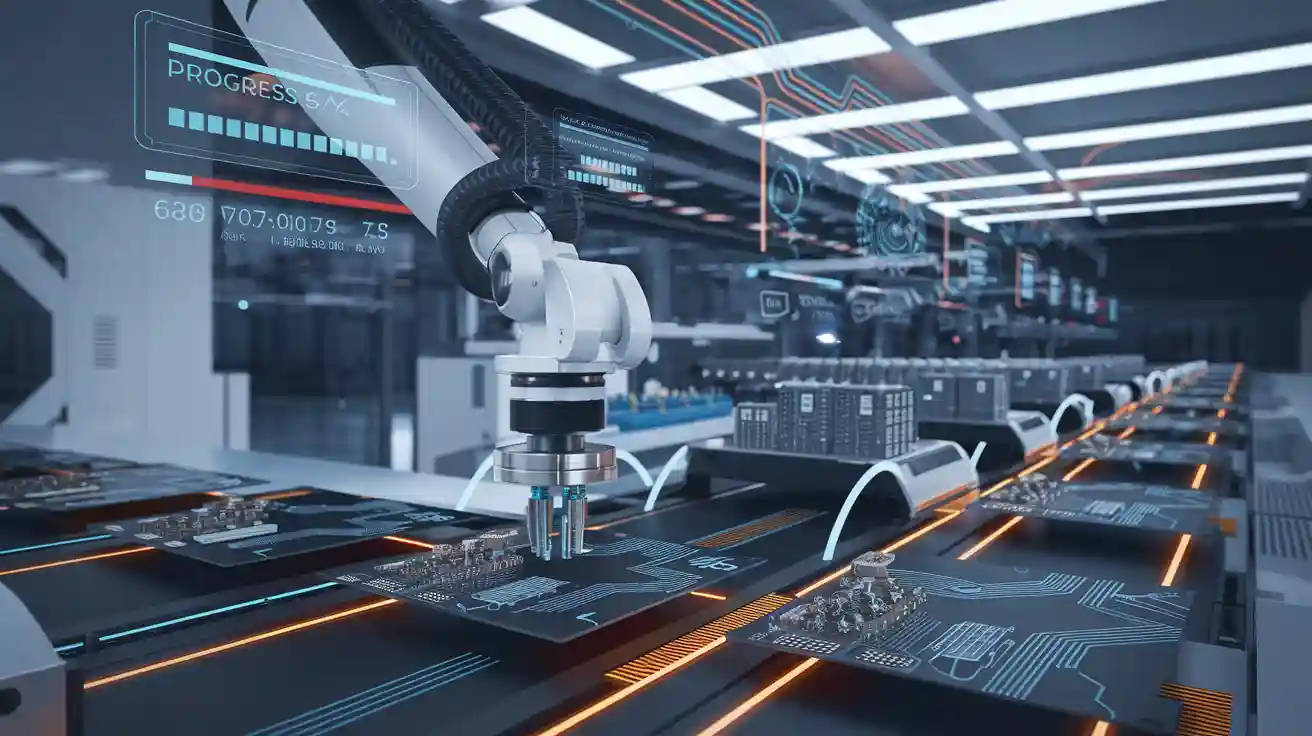
Automation strategies now change how you make pcb products and put them together. These strategies help you work faster and better. Automation is spreading quickly in factories. This happens because new technology helps people do more work. The pcb field now has faster production, better quality, and lower costs.
-
Automation in pcb manufacturing brings:
-
Shorter wait times and better quality with careful process control
-
Lower costs and a stronger supply chain
-
Ongoing improvement and higher productivity over time
You solve problems by always trying to improve. You use advanced inspections and work together early in the design. This makes sure every pcb meets high quality rules.
-
Key Takeaways
-
Automation makes PCB production faster. It also makes quality better. It helps save money by cutting down on mistakes and waste.
-
Automated design checks help find errors early. Collaborative tools make it easier for teams to work together.
-
Robots and machines like pick-and-place work fast. Automated soldering helps make assembly quick and correct.
-
Real-time monitoring helps find problems right away. Smart data tools keep production smooth and steady.
-
Training your team helps everyone learn new technology. Good change management helps people adjust and work well.
Design Automation
Design Rule Checking
Automated design rule checking, or DRC, helps you find mistakes early. DRC tools look at your pcb layout for problems. These problems can be shorts, wrong vias, or spacing issues.
-
DRC makes it easier to find errors than checking by hand.
-
You get quick feedback and can fix things right away.
-
Tools like Altium Designer show problems as you design.
-
DRC makes sure your pcb follows all the needed rules.
-
This lowers the chance of expensive fixes and extra prototypes.
DFM Principles
Automated DFM software helps you make pcb designs that are simple to build. DFM checks look at materials, layers, trace width, spacing, and via design.
-
DFM checks if your pcb uses the right materials and layout.
-
DFA helps you place parts so assembly is faster and easier.
-
Using standard parts and shapes saves money.
-
Automated DFM checks can find most assembly problems before you build.
-
Good panelization and heat control help you get more working pcbs.
-
You get more pcbs per batch and can sell them sooner.
Collaborative Tools
Collaborative pcb design platforms help your team work together. These tools let everyone share updates and work at the same time.
|
Tool Name |
Collaborative Features and Efficiency Improvements |
Standardization Features and Benefits |
|---|---|---|
|
Altium Designer |
Many designers can work together, supports modular design |
3D view, keeps design the same and easy to make |
|
EasyEDA |
Online, lets you manage projects in real time |
Connects to part lists, helps stop mistakes |
|
Siemens Xpedition |
Teams can design together at once |
Advanced DRC, checks signals and power |
|
KiCad EDA |
Open-source, works on many systems |
DRC checks design, finds spacing problems |
These tools help your team talk better, make fewer mistakes, and finish pcb projects faster.
Material and Fabrication Automation
Material Management
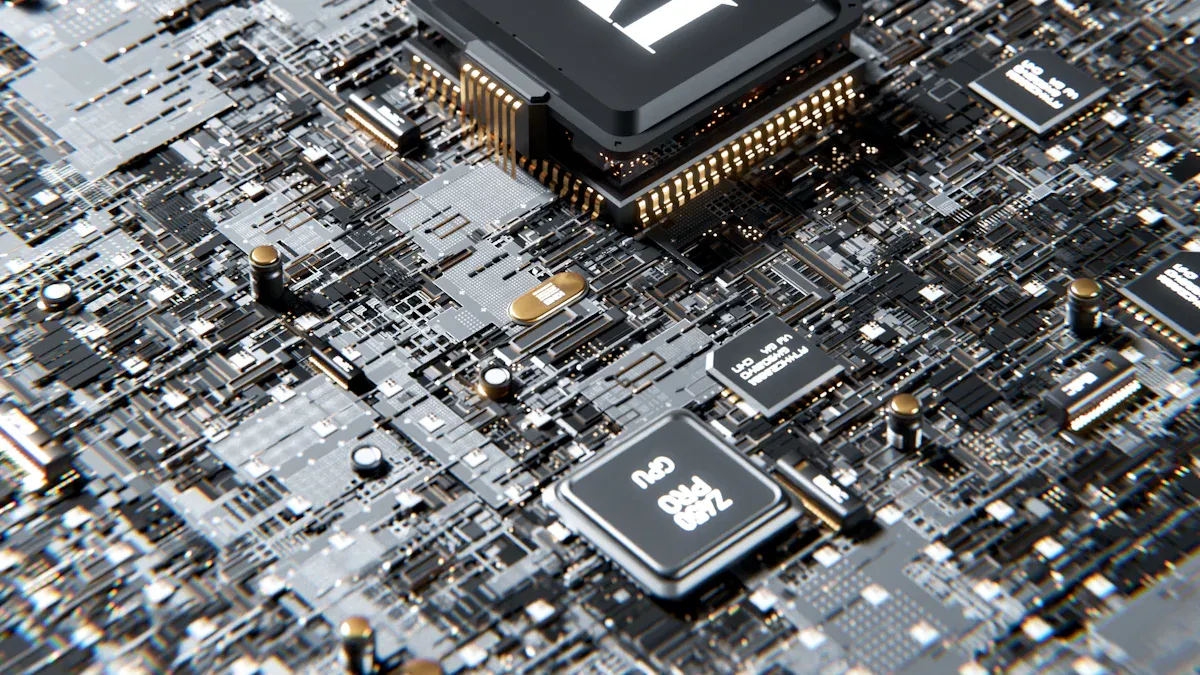
Automated material management systems help pcb factories work better. These systems watch inventory all the time. They stop you from running out or having too much. Automated tools pick the right materials for each pcb job. They look at what the design and production need. This way, you always have good parts ready. You do not waste money or keep extra parts you do not need. Smart management lets you react fast when orders change.
Automated Fabrication
Automated fabrication machines change how pcbs are made. Pick-and-place robots can put many parts on boards very quickly. They are also very accurate. Reflow soldering systems use heat to make strong connections. Automated optical inspection finds mistakes that people might not see. These machines work all day and night. They can make many boards at once. This means faster work and fewer errors. For example, one phone company made more phones each day and had fewer mistakes. Another car part company made more good boards and got fewer complaints. Automation in pcb factories is also good for the environment. 3D pcb printing uses only what is needed. It uses less chemicals and saves water. You help the earth and make better products.
Tip: Using automated fabrication makes pcba faster, better, and with less fixing.
Process Optimization
You get better results by making every step work well. Here are some ways to do this:
-
Use DFM and DFA to make designs simple to build.
-
Use automation and robots to stop mistakes.
-
Lean manufacturing helps you cut waste and move faster.
-
Make work steps the same and check quality often.
-
Teach your team how to use new machines.
-
Check for problems early to fix them fast.
-
Look at data to find slow spots and fix them.
-
Manage parts and suppliers so things arrive on time.
-
Keep checking and making your process better.
-
Watch costs and stop wasting money.
-
Make designs that can change if you need to.
These ideas help you keep quality high, save money, and keep pcb work going well.
Assembly Automation Strategies
Pick-and-Place Machines
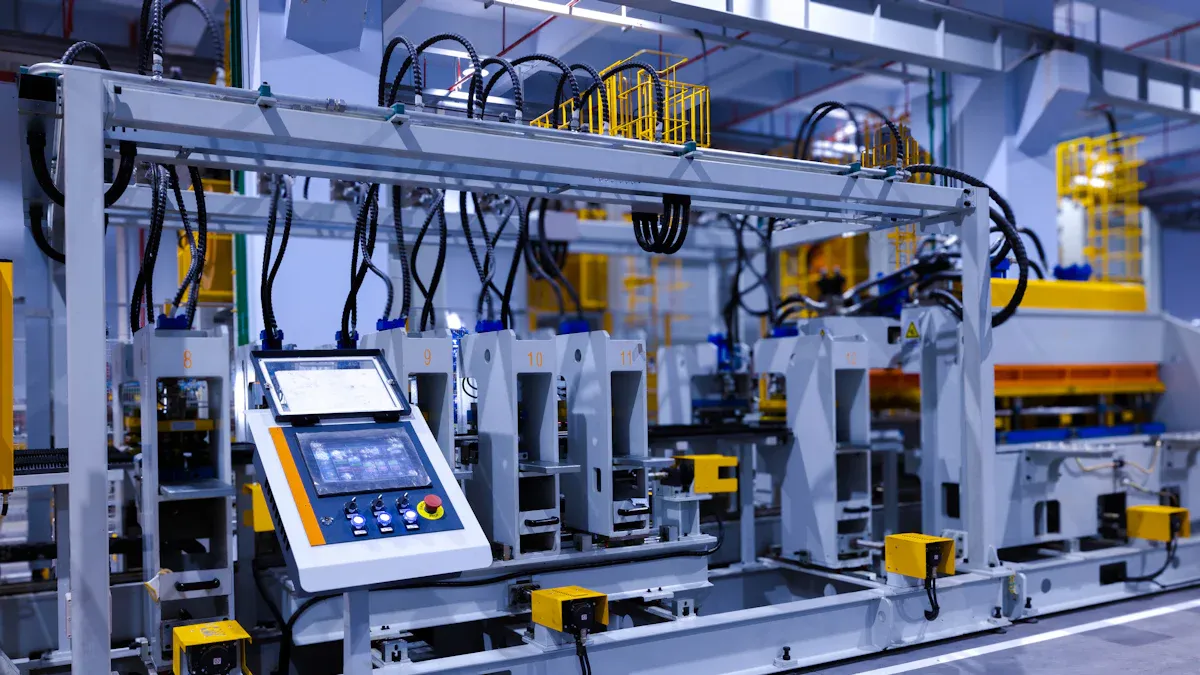
Pick-and-place machines help you make pcbs faster and better. These machines use robots to put parts on the pcb quickly and correctly. You do not need to place parts by hand anymore. Manual work can be slow and cause mistakes. Robots do not get tired, so your assembly lines can work all day and night. This means you make more boards and have fewer errors.
When you use pick-and-place machines, you swap boring jobs for exact robot work. This change means you get fewer mistakes and every pcb looks the same. You also spend less money on workers and do not need to fix as many problems. Many companies make more boards and keep workers safer with these machines. Pick-and-place tools help you finish orders fast and always make good products.
Tip: Pick-and-place machines help you make more boards fast and keep the quality high, even if you get more orders.
Automated Soldering
Automated soldering is very important for quick assembly. It gives you better and more even results than soldering by hand. Machines use the right heat and solder for every part. This makes sure each pcb meets tough rules. You get fewer mistakes because people do not do the work.
-
Automated soldering puts parts and solder in the right spot, so you get fewer problems.
-
Every board is the same, no matter who is working.
-
This is great for things like phones that must all work the same.
-
Soldering by hand lets you change things, but it is not as exact as machines.
You also work faster with automated soldering. Machines can solder more boards in less time. This is good when you have lots of orders. Many companies use both ways, but machines are best for making lots of boards that all need to be the same.
SMT and Panelization
Surface Mount Technology, or SMT, and panelization help you build boards faster. SMT lets you put parts right on the pcb. This makes assembly quicker and costs less. Using the same SMT parts saves money and makes buying parts easier. Grouping parts and turning them the same way helps robots work faster.
Panelization means you put many boards on one big panel. You can work on many boards at once. This saves time and helps you make more boards. Machines can put parts and solder on many boards in one go, so you make fewer mistakes.
Here are some ways SMT and panelization help you save time and money:
-
SMT lets you put parts on fast and cuts costs.
-
Using the same parts makes buying easier and cheaper.
-
SMT shapes make building faster and need fewer changes.
-
Grouping parts close together helps robots move less.
-
Fewer part types make it easier to keep track of parts.
-
Designs that work with robots help you make boards faster and with fewer mistakes.
-
Parts that are easy to turn save time and money.
When you use these ideas, you get more boards made and spend less money. One big company made boards faster and better with full automation. They had fewer mistakes, paid less for workers, and made more boards. These changes show how automation can help your pcb assembly.
Note: Making your pcb design good for SMT and panelization saves work and makes sure every board is good and ready fast.
By using these automation ideas, you make more boards, get better quality, and finish orders quickly. You also help your business do well in the busy pcb market.
Testing and Inspection
Automated testing and inspection are very important in pcb production. These systems help you find mistakes early. They keep your assembly lines working well. Automation in testing stops human errors. It also makes checking each pcb much faster. This means you give better products to customers. You also save money.
Automated Optical Inspection
Automated Optical Inspection, or AOI, uses cameras and software to check each pcb. It finds missing parts, solder problems, or wrong parts right after assembly. AOI works much faster than people. It scans every board in just a few seconds. AOI does not get tired or miss things. You get clear reports that show where problems are. This helps you fix issues before they slow down your work. AOI keeps quality high when you make more boards.
In-Circuit Testing
In-circuit testing, or ICT, checks the electrical parts and connections on your pcb. With automation, ICT tests many spots at the same time. You do not need to use slow tools by hand. Automated ICT gives you:
-
Fewer mistakes from people during testing
-
Faster checks for every pcb, even in big groups
-
The same results for all boards
-
Smart software that finds problems in hard designs
-
Better at finding faults than checking by hand
You can trust automated ICT to find problems fast. It keeps your assembly line moving. This saves you time and makes every pcb better.
Functional Testing
Automated functional testing checks if your pcb works like it should. You use this step to make sure each board is good before you ship it. Automation in functional testing lowers the number of bad boards a lot. It finds hidden problems, power issues, and system errors that other tests miss. Even though it takes more time and setup, you get better products and fewer returns. Your customers trust your pcb products because they work right the first time.
Tip: Using automated testing in your assembly line helps you find problems early, save time, and always give customers great pcb products.
Real-Time Monitoring
IoT Sensors
You can use IoT sensors to watch your pcb production as it happens. These sensors collect data from each step in making pcbs. You see things like how machines work and how much energy you use. You even notice small changes on your assembly line.
-
You find problems before they stop your quick turn assembly.
-
You fix issues early, so machines last longer.
-
You use less energy and save money.
IoT sensors help you make pcb manufacturing work better. You always know what is happening on your factory floor. This technology helps quick turn assembly by keeping lines moving and products on time.
Production Analytics
Production analytics tools help you learn about your pcb process. You keep track of every part and board. Automated inventory systems show where each part is all the time. Robots move parts fast and make fewer mistakes.
Automated optical inspection and testing tools check every pcb for errors. You get results right away. Machine learning and AI help you see patterns and make your work better. Cobots help your team do boring jobs. People look at the data and make smart choices.
Tip: Use production analytics to get more done and keep your quick turn assembly working well.
You finish more work in less time. You find new ways to make assembly better and keep your work fast.
Predictive Maintenance
Predictive maintenance uses data from IoT sensors and analytics to keep machines working well. You do not wait for machines to break. You fix small problems before they get big. This keeps your quick turn assembly running smoothly.
-
You stop expensive downtime.
-
You make your machines last longer.
-
You plan repairs when it is best for you.
Predictive maintenance helps you focus on getting more work done. You use smart tools and automation to keep pcb manufacturing strong. This helps quick turn assembly and lets you give customers good products every time.
Supply Chain Automation
Inventory Tracking
You need strong inventory tracking to keep your quick turn assembly running smoothly. Automated systems let you see every pcb part in real time. You always know what you have and what you need. Just-in-time inventory systems help you avoid extra stock and wasted space. These systems order new parts only when you need them. You get faster assembly and lower costs. When you use just-in-time, you keep your pcb manufacturing lean and flexible. You can react fast to changes in orders or supply. This helps you stay ahead as a trusted pcb manufacturer.
Tip: Use digital inventory tracking to support just-in-time and keep your quick turn assembly on schedule.
Supplier Integration
You improve your quick turn assembly by working closely with suppliers. Early teamwork between your engineering and procurement teams helps you pick the right parts for each pcb. You avoid costly redesigns and supply problems. Use digital tools to share data with suppliers in real time. This lets you spot issues before they slow down your assembly. You should broaden your supplier base. Do not rely on just one source. This keeps your pcb manufacturing safe from disruptions.
Here are best practices for supplier integration:
-
Work with many suppliers to avoid risks.
-
Use live sales data to match supply with demand.
-
Build a flexible logistics network for your quick turn assembly.
-
Use strong software for supply chain management and risk checks.
-
Protect your data with encryption and secure access.
-
Check your supply chain for risks often.
You keep your quick turn assembly strong by following these steps. You also make your pcb production more reliable.
Demand Forecasting
Automated demand forecasting helps you plan your quick turn assembly better. You use smart tools to predict how many pcb units you need. This lets you order parts just in time. You avoid both shortages and extra stock. Automated systems adjust orders as soon as they see changes in demand. You keep your assembly moving and meet customer needs fast.
-
Automated demand forecasting improves your just-in-time inventory systems.
-
You get steady inventory levels for pcb manufacturing.
-
Real-time tools help you spot problems early.
-
IoT sensors and digital tracking keep your quick turn assembly reliable.
You finish more orders on time and keep your customers happy. Your management team can trust the data and make smart choices for every pcb project.
Workforce and Technology
Employee Training
You need a skilled team for quick turn assembly. Training helps your staff learn new skills for automated pcb production. Many top programs use real projects and hands-on learning. These programs teach you how to use robots and new technology. The table below lists some leading training options:
|
Program / Institute |
Description |
Training Approach |
Relevance to Automated PCB Manufacturing |
|---|---|---|---|
|
LIFT's Operation Next |
Blended learning for advanced manufacturing careers. Over 90% success rate. |
Hands-on, competency-based, blended learning |
Skills for automation and robotics in pcb work |
|
ARM Institute Robotics |
Certified robotics and automation training. |
Industry-endorsed, certified programs |
Supports automation skills for quick turn assembly |
|
NextFlex FlexPro Workshop |
Focus on flexible hybrid electronics and manufacturing technology. |
Hands-on workshops and theory lectures |
Relevant for flexible pcb and quick turn assembly |
|
PowerAmerica Short Course |
Two-day courses on wide bandgap semiconductor technologies. |
Short, focused courses and webinars |
Complements skills for automated pcb production |
|
LIFT IGNITE and Learning Lab |
Multi-year curriculum with immersive learning in advanced manufacturing. |
Project-based, on-site certification courses |
Prepares for automation in pcb and assembly |
You can use these programs to help your team learn more. This keeps your quick turn assembly running well.
Change Management
When you add automation to pcb production, you must manage change well. Change management helps your team get used to new ways of working. You should talk with your staff often and share news in many ways. If you involve your team early, they feel included. This makes it easier for everyone to accept new assembly methods. Training should teach both technical skills and how to handle new processes. Keep giving feedback and check how things are going. A positive work culture helps quick turn assembly succeed. You build trust and keep pcb production strong by helping your team at every step.
Note: Talking openly and including your team early helps them accept new technology faster.
Technology Upgrades
You must upgrade your technology to stay ahead in quick turn assembly. When you pick new systems, look for machines that place parts fast and accurately. This is important for modern pcb designs. Automation lets you make both small and big orders without losing quality. You get faster work and lower costs over time. Automated inspection tools like AOI and ICT help you find problems quickly. You should also add AI, machine learning, and smart systems to your assembly line. These upgrades make your assembly better and more reliable.
Key points to remember when upgrading:
-
Focus on accuracy for complex pcb work.
-
Make sure your assembly can grow as orders increase.
-
Use automation to speed up work and cut mistakes.
-
Buy systems that give real-time feedback and check quality.
-
Plan for team training and easy system setup.
-
Pick technology that works with flexible pcb designs and green ideas.
-
Balance the cost now with savings and better results later.
If you follow these steps, your quick turn assembly will stay efficient and ready for the future.
You make quick turn assembly better by using automation all the time. This helps you keep getting better at what you do. The table below shows how you can save time, make better boards, and spend less money:
|
Metric |
Impact on Quick Turn Assembly |
|---|---|
|
You get from idea to product much faster. |
|
|
First Pass Yield |
There are fewer mistakes and less fixing. |
|
Time to Market |
You can send products to customers sooner. |
To do well, you need to use technology, good steps, and a strong team:
-
Teach your team how to use new assembly machines.
-
Share live data so everyone can make smart choices.
-
Link your systems so you keep getting better.
In the future, you will see:
-
AI and smart factories making quick turn assembly even smarter.
-
Live data and robots making every step go faster.
-
Always improving will help pcb production keep growing.
FAQ
What is the main benefit of automation in PCB production?
Automation helps you make pcbs faster and better. It cuts down on mistakes people make. Every step goes quicker with machines. You spend less money and send products out on time.
How do automated testing systems improve quality?
Automated testing checks for problems early. You find bad boards before they leave the factory. This means your products work well and customers stay happy.
Can small manufacturers use PCB automation?
Yes, small companies can use automation too. You can start with simple tools that fit your needs. These systems can grow as your business gets bigger. You work better without spending a lot at first.
What skills do employees need for automated assembly lines?
You should know how to use computers and want to learn new things. Training teaches you how to run machines and use software. You keep your job important as technology changes.
How does real-time monitoring help your production?
Real-time monitoring helps you see problems right away. You can fix things before your line stops. This keeps your factory working well and saves time.