What Does GND Mean in Electronics
GND electronics refers to ground, the zero voltage reference in circuits. It ensures accurate measurements, safe operation, and stable device performance.
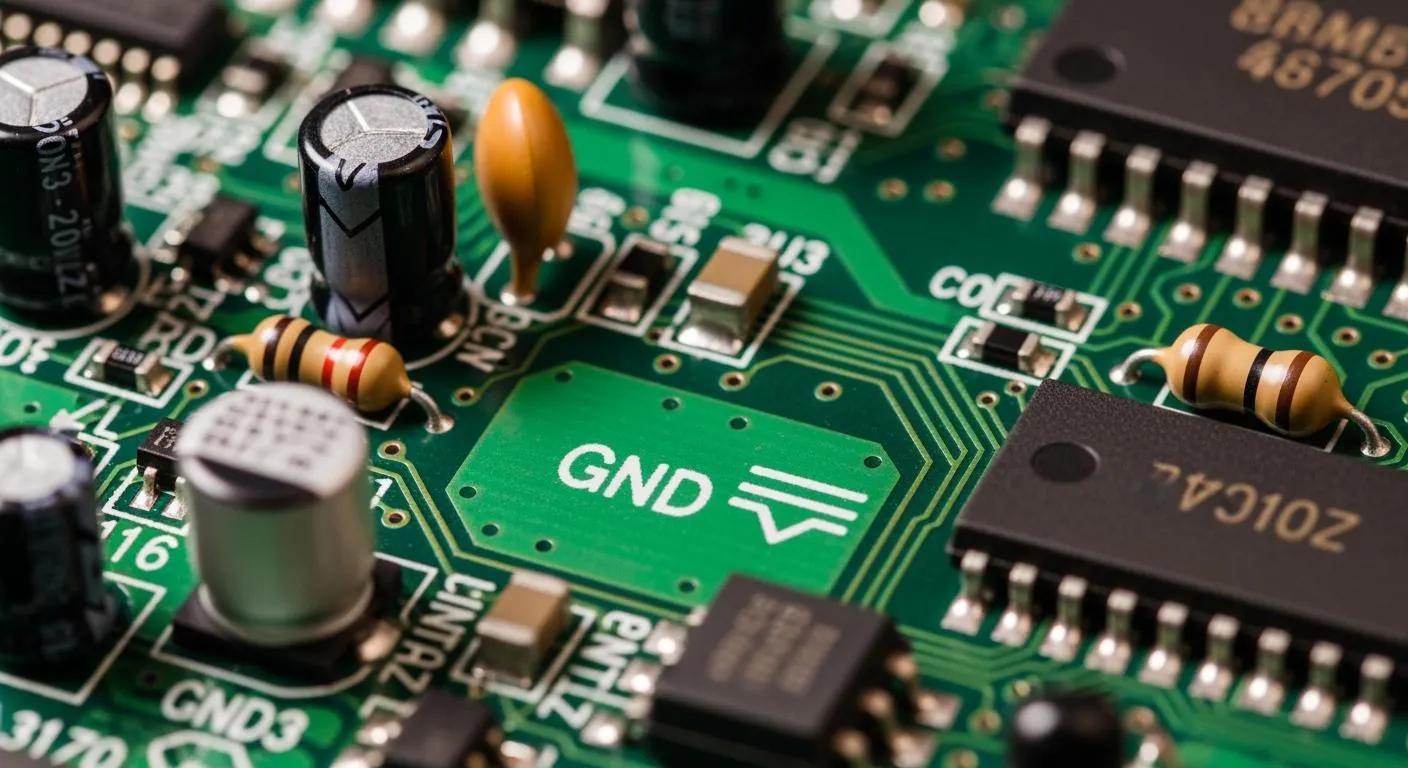
You often see the term gnd when exploring electronics. Gnd stands for ground, which acts as the zero voltage reference point in every circuit. You use ground to measure voltage and keep your devices running smoothly. Understanding gnd helps you see its importance in electronics and why grounding matters for safety. When you connect parts of a circuit, you always use ground as a common link. Gnd electronics basics help you work with any project, no matter your skill level. You will find ground in almost every device, showing its importance in electronics.
Key Takeaways
- GND stands for ground, serving as the zero voltage reference point in circuits. It is essential for accurate voltage measurements.
- Proper grounding prevents issues like signal interference and ensures safe operation of electronic devices. Always check ground connections.
- Different types of ground, such as earth ground and chassis ground, serve unique purposes. Use them correctly to enhance safety and performance.
- A well-designed ground layout minimizes noise and improves circuit stability. Keep ground paths short and direct for best results.
- Avoid common mistakes like mixing ground types or using thin wires. These errors can lead to unreliable circuit performance.
GND Electronics Basics

What Is GND
You see the term gnd in almost every circuit diagram. Gnd stands for ground, which acts as the main reference point for voltage in electronics. When you measure voltage, you always compare it to this point. In gnd electronics, ground is the place where all voltages start at zero. This makes it easier for you to understand how electricity moves through a circuit.
You find different types of ground in electronics. Each type serves a special role. The table below shows the main types of ground and their definitions according to major electronics organizations:
| Ground Type | Role and Definition |
|---|---|
| Power Supply Ground (GND) | The 0 V reference point for the entire circuit; all other grounds converge here. |
| Power Ground (PGND) | Used in high-power circuits to handle higher currents and prevent ground offset. |
| Digital Ground (DGND) | Used in digital circuits to isolate electromagnetic noise from other parts of the circuit. |
| Analog Ground (AGND) | Used in analog circuits to prevent signal distortion caused by high currents elsewhere in the circuit. |
| Earth Ground (EGND) | Safety ground connected to earth, used in high voltage/current applications for protection. |
You also notice that gnd appears in many symbols on circuit diagrams. These symbols help you identify the type of ground used in each part of the circuit. Here are some common ground symbols you might see:
- Signal Ground Symbol: An empty triangle pointing downwards or three parallel horizontal lines of decreasing length.
- Chassis Ground Symbol: Three parallel diagonal lines pointing downwards.
- Earth Ground Symbol: Three parallel horizontal lines of decreasing length.
In most diagrams, gnd is shown as an inverted triangle with three horizontal lines beneath it. This symbol means the connection goes to earth, which is important for safety and stability.
Why GND Matters
You need gnd in every electronic device for several reasons. Gnd electronics relies on ground to keep circuits working correctly and safely. Here are some key reasons why gnd matters:
- Gnd acts as a zero-voltage reference point. You use it to measure all other voltages in the circuit.
- Gnd completes the current path. Without ground, current cannot flow, and the circuit will not work.
- Gnd provides a safe path for excess current during faults or surges. This protects your devices from damage.
- Gnd helps reduce electrical noise and interference. A solid ground plane keeps signals clean and stable.
- Gnd separates digital and analog signals. This prevents digital noise from affecting sensitive analog parts.
- Gnd improves measurement accuracy. Proper grounding minimizes noise and errors in your readings.
- Gnd prevents problems like ground loops, crosstalk, and oscillations. These issues can cause devices to malfunction.
Tip: Always check your ground connections when building or troubleshooting a circuit. Good grounding keeps your electronics reliable and safe.
If you use gnd incorrectly, you may face problems such as signal interference, stability issues, or unreliable operation. Mixing ground wires with different functions can introduce unwanted noise. You should always follow best practices for grounding to avoid these problems.
Industry standards recommend using strategies like star ground or multi-point grounding to reduce noise and distortion. A well-designed ground system can greatly improve the performance and stability of your electronics.
Gnd electronics forms the backbone of every circuit. You depend on ground for accurate measurements, safe operation, and reliable performance. Understanding how gnd works helps you build better and safer electronic projects.
GND Reference Point in Circuits
Zero Voltage Reference
You use gnd as the zero voltage reference in every electronic circuit. This point acts as the baseline for all voltage measurements. When you connect different parts of a circuit, you always refer voltages back to ground. Without a clear ground, you would not have a consistent way to compare voltages. Every component in your circuit uses gnd as its reference, which keeps your measurements reliable.
- Gnd functions as the zero-voltage reference point for all components in a circuit, ensuring consistent voltage measurements.
- Gnd provides a common reference point for measuring voltage, which is essential for the proper operation of electronic circuits.
- Without a common reference like gnd, voltage measurements would be inconsistent, making it difficult to discuss voltages meaningfully.
You can think of ground as the anchor that holds your circuit steady. If you remove this anchor, your voltage readings will float and lose meaning. In most schematics, you see gnd marked clearly, so you know where to connect your reference point. This practice helps you avoid confusion and keeps your circuit stable.
Tip: Always double-check your ground connections before powering up your circuit. A missing or loose ground can cause unexpected behavior.
Accurate Voltage Measurement
Accurate voltage measurement depends on a solid ground connection. When you use a multimeter, you place one probe on gnd and the other on the point you want to measure. This method gives you a true reading of the voltage difference. If you connect your ground incorrectly, your measurements may show errors or noise.
Proper grounding also helps you avoid voltage drops and interference. In complex circuits, you may see several ground symbols, but they all connect back to a single gnd point. This setup prevents ground loops and keeps your signals clean. Good grounding practices are essential for sensitive devices, such as amplifiers or microcontrollers, where even small voltage errors can cause problems.
You should always plan your ground layout carefully. Use short, thick wires for ground paths to reduce resistance. Keep your ground connections as direct as possible. These steps help you maintain accurate voltage readings and improve the performance of your electronics.
Note: In high-frequency or high-power circuits, grounding becomes even more important. Poor ground design can lead to noise, instability, or even damage to your components.
GND in Circuits: Function and Importance
Nova Technology Company (HK) Limited stands as a HiSilicon-designated solutions partner, specializing in chip-level solutions and system integration for advanced electronics. You find their expertise in integrated circuit design, embedded systems, and applications ranging from smart devices to industrial automation. Their focus on proper grounding and gnd in circuits ensures reliable performance and safety in every project.
Current Return Path
You rely on gnd in circuits to provide the main return path for current. When you build a circuit, current flows from the power source through the components and returns to the source via ground. This path keeps your circuit stable and prevents unwanted voltage drops. If you do not have a proper grounding design, you risk creating large current loops. These loops increase parasitic inductance and make your circuit more susceptible to electromagnetic interference (EMI).
- Large current loops lead to higher parasitic inductance.
- The return current may not flow directly beneath the signal trace, which increases EMI risk.
- Increased loop inductance affects signal integrity and power integrity.
- Routing signals over a gap in the ground plane raises loop inductance and harms signal quality.
You need to keep the main return path as short and direct as possible. This practice reduces noise and improves the stability of gnd in circuits. Proper grounding also helps you control the return path, which is essential for maintaining circuit performance.
Tip: Always plan your gnd layout to minimize loop area and ensure a low-impedance main return path.
Reducing Noise and Fluctuations
Gnd in circuits plays a critical role in reducing electrical noise and voltage fluctuations. You depend on ground to provide a stable reference point for voltage, especially in sensitive circuits. At low frequencies, ground noise comes from the resistance of conductors, which causes potential fluctuations. At high frequencies, inductance in conductors can induce voltage disturbances known as ground bounce.
- Gnd serves as a stable reference point for voltage, maintaining circuit stability.
- It provides a low-impedance path for current, minimizing electrical noise.
- A well-designed grounding layout reduces electromagnetic interference and ensures reliable operation.
You must use proper grounding to prevent noise from affecting your measurements and signals. Gnd connection helps you maintain signal integrity and avoid voltage errors. In complex circuits, grounding design becomes even more important. You should separate digital and analog circuits to prevent noise interference and use continuous ground planes for low-impedance return paths.
Note: Proper grounding is essential for high-frequency and high-power circuits. Poor gnd layout can lead to instability and damage.
Common GND Connection
You need a shared gnd connection for safety and proper operation. When you connect all parts of your circuit to a common ground, you ensure that voltage differences stay within safe limits. This practice prevents ground loops, crosstalk, and oscillations. You can choose between single-point and multi-point grounding systems based on your circuit’s frequency.
Single-point grounding works well for low-frequency circuits. It minimizes voltage differences in ground loops and reduces low-frequency noise. Multi-point grounding is better for high-frequency circuits. It connects various grounds directly through a ground plane, lowering loop inductance and improving signal transmission.
Industry recommendations for gnd layout in printed circuit board (PCB) design include:
| Recommendation | Description |
|---|---|
| Continuous Ground Planes | Use unbroken ground planes for low-impedance return paths. |
| Minimize Noise | Ground planes reduce electrical noise and provide stable voltage references. |
| EMI Reduction | Solid ground planes help in reducing electromagnetic interference. |
| Ground Plane Continuity | Maintain continuity to ensure low impedance and reduce EMI. |
| Avoid Discontinuities | Cuts in the ground plane can cause signal reflection or interference. |
| Separate Digital and Analog Circuits | Keep digital and analog circuits separate to prevent noise interference. |
| Complete Ground Plane at Crossings | Ensure ground plane continuity at signal crossings to maintain signal integrity. |
You should always follow these guidelines for proper grounding and gnd connection. This approach keeps your circuit safe, stable, and reliable. Gnd in circuits forms the backbone of your electronic design, providing the main return path and reducing noise.
Callout: A well-planned grounding design improves circuit performance and protects your devices from electrical hazards.
Types of GND in a Circuit

Understanding the different types of gnd in a circuit helps you design safer and more reliable electronics. Each type of ground serves a unique purpose. You need to know when and why to use each one for the best results.
Earth Ground
You use earth ground when you want to connect your circuit to the physical earth. This type of ground protects both people and equipment from dangerous voltages. Earth ground provides a direct path for fault currents to flow safely into the ground, which helps prevent electric shock and equipment damage.
- Electrical power distribution systems use earth ground to create a low-impedance path for fault currents. This setup disconnects faulty equipment quickly and keeps you safe.
- Lightning protection systems rely on earth ground to safely dissipate high currents from lightning strikes. This prevents damage to your devices.
You often see earth ground in large installations or high-voltage systems. It forms the foundation of a strong grounding system and keeps your entire setup safe.
Note: Earth ground is essential for safety in any system that connects to the power grid or faces lightning risks.
Chassis Ground
Chassis ground connects the metal frame or enclosure of your device to ground. You use chassis ground to protect users from electric shock and to shield sensitive circuits from interference.
- Chassis grounding creates a low-resistance path for electrical current during faults. This allows current to flow safely away from equipment.
- This connection prevents voltage buildup on surfaces you might touch.
- Chassis ground diverts fault current away from accessible surfaces, reducing the risk of electric shock.
- It shields internal circuits from electromagnetic interference (EMI) and radio frequency interference (RFI).
- Grounding the enclosure maintains signal integrity by blocking external noise.
You find chassis ground in most electronic devices with metal cases. It forms a key part of the overall grounding system and works with other types of ground to keep your equipment safe.
Signal Ground
Signal ground acts as the reference point for low-level signals in your circuit. You use signal ground to isolate sensitive signals from noise and interference.
- Signal ground isolates noise better than earth ground or chassis ground.
- It provides a dedicated reference point, which helps reduce noise and interference.
- Signal ground lets systems with multiple voltage levels work together without causing interference or buzzing.
You often use signal ground in audio equipment, measurement devices, and communication systems. Proper signal ground design improves performance and keeps your signals clean.
Tip: Always separate signal ground from power or chassis ground when working with sensitive analog or digital signals.
Proper grounding in your circuit ensures electromagnetic compatibility. When you design your grounding system carefully, you control unwanted emissions and keep your devices safe. Confusing ground as a reference point with a current return path can cause problems. Always use the right ground connection for each part of your circuit to avoid noise and interference.
Using GND in a Circuit Safely
Where to Connect GND
You must connect gnd in a circuit at the right points to keep your electronics safe and reliable. Always link the negative terminal of your power supply to gnd. This connection forms the main return path for current. You should attach all component grounds to a single gnd point whenever possible. This practice prevents voltage differences and keeps your circuit stable. In printed circuit boards, use a continuous ground plane to provide a low-resistance path for gnd. Short, thick wires help reduce resistance and noise. If you work with sensitive analog or digital signals, separate their ground connections to avoid interference. When you build larger systems, connect gnd to earth ground for extra safety.
Tip: Double-check every gnd connection before powering up your circuit. A missing ground can cause unpredictable behavior.
Common Mistakes
You may face problems if you connect gnd in a circuit incorrectly. One common mistake is mixing signal ground with power ground. This error introduces noise and affects signal quality. Another mistake is using thin wires for ground paths. Thin wires increase resistance and cause voltage drops. You might also forget to connect gnd to the chassis or earth ground in high-voltage circuits. This oversight puts your equipment and yourself at risk. Avoid creating ground loops by connecting multiple ground points in parallel. Ground loops lead to unwanted currents and interference.
- Mixing signal and power ground causes noise.
- Using thin wires for ground increases resistance.
- Forgetting to connect gnd to chassis or earth ground risks safety.
- Creating ground loops leads to interference.
Safety Tips
You must follow safety standards when handling gnd in a circuit. The National Electrical Code Article 250 requires you to choose the right ground wire and electrode. Make sure your ground connection can handle fault currents. Prevent unwanted currents that could pose safety risks. The NFPA 780-2020 standard gives guidelines for bonding and grounding systems to protect against lightning strikes. In high-voltage circuits, post warning signs like “DANGER – HIGH VOLTAGE” near entrances. Use automatic grounding devices to apply a visible ground after circuits are de-energized. Ground exposed intermediate terminals, especially in series capacitor setups. Review safety rules with everyone in the test area. Secure temporary wiring to prevent accidental interruptions. Short-circuit capacitive objects when not in use to prevent voltage buildup.
Note: Always treat gnd in a circuit with respect. Proper grounding protects you and your devices from harm.
You now understand that GND is the zero voltage reference point in electronics. GND keeps your measurements accurate and completes the circuit. You use proper grounding to protect your devices and yourself. Good GND practices help you build safe and reliable projects. Apply these basics in your next circuit and see better results.
Remember: Careful grounding leads to stable and noise-free electronics.
FAQ
What does GND stand for in electronics?
GND stands for "ground." You use it as the zero voltage reference point in a circuit. It helps you measure voltage and keeps your circuit stable.
Can you connect all grounds together?
You can connect all grounds together in most circuits. This practice creates a common reference point and prevents voltage differences. Always check your circuit type before combining grounds.
Why do you need a ground plane on a PCB?
A ground plane gives you a low-resistance path for current. It reduces noise and improves signal quality. You use it to keep your circuit reliable and safe.
What happens if you forget to connect GND?
If you forget to connect GND, your circuit may not work. You might see unstable signals or incorrect voltage readings. Always check your ground connections before powering up.
How do you avoid ground loops?
You avoid ground loops by using a single ground point or a continuous ground plane. Keep your ground paths short and direct. This practice prevents unwanted currents and interference.