How to Read a Capacitor Value The No-Nonsense Method
You want to know how to read a capacitor value? Let's get straight to the answer. Most components use a simple three-digit code to show their capacita
You want to know how to read a capacitor value? Let's get straight to the answer. Most components use a simple three-digit code to show their capacitance. This one rule will solve most of your capacitor-reading problems.
A capacitor marked
104has a value of 10 followed by four zeros. This gives a capacitance value of 100,000 pF. This capacitance is also written as 100 nF or 0.1 µF.
Understanding this simple code unlocks the value for most capacitor marking codes. These codes let you find the value of a capacitor quickly.
Key Takeaways
Most capacitors use a simple three-digit code. The first two numbers are the value. The third number tells you how many zeros to add. This gives you the value in picofarads (pF).
Capacitors use different units. These are Farad (F), Microfarad (µF), Nanofarad (nF), and Picofarad (pF). You can change between these units by multiplying or dividing by 1,000.
Some capacitors have their values printed directly. This is common for larger capacitors. They show the capacitance and the maximum voltage they can handle.
A letter after the code shows the capacitor's tolerance. Tolerance means how close the actual value is to the marked value. For example, 'J' means ±5% accuracy.
First Steps: Units and Capacitor Types
Before you can decode any numbers, you need to understand the language of capacitors. This involves two key things: the units of measurement and the physical types of capacitors you will encounter.
Understanding Capacitor Units
The basic unit of capacitance is the Farad (F). However, a one-Farad capacitor is extremely large, so you will almost never see it in electronics. Instead, you will work with much smaller units. The three most common units are the Microfarad (µF), Nanofarad (nF), and Picofarad (pF).
Here is how they relate to each other:
Unit | Symbol | Value in Farads |
|---|---|---|
Microfarad | µF | One-millionth of a Farad (10⁻⁶ F) |
Nanofarad | nF | One-billionth of a Farad (10⁻⁹ F) |
Picofarad | pF | One-trillionth of a Farad (10⁻¹² F) |
Quick Tip: Converting between these units is simple. To go from a larger unit to a smaller one (like µF to nF, or nF to pF), you multiply by 1,000. To go from a smaller unit to a larger one (like pF to nF), you divide by 1,000. Just move the decimal point three places!
Identifying Capacitor Types
The physical look of a capacitor gives you clues about its value. A component's size, shape, and material are directly related to its capacitance. Three main factors determine the capacitance of a capacitor: the material between its plates, the size of the plates, and the distance separating them.
You can use this to make an educated guess:
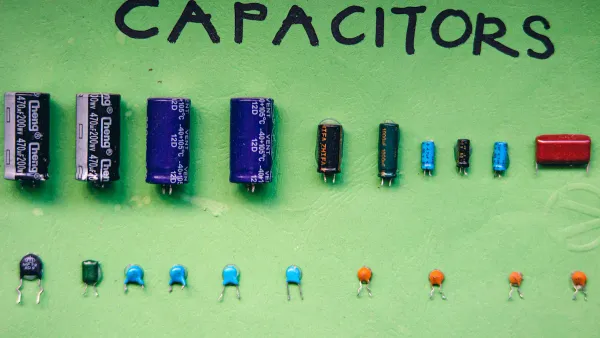
Ceramic Capacitors: These are often small, disc-shaped, or rectangular components. They typically have smaller capacitance values, usually from a few picofarads up to around 1 µF.
Electrolytic Capacitors: These look like small cans and are used for high-capacitance needs. Their values usually start at 1 µF and can go into the thousands of microfarads.
For instance, in advanced electronics, a HiSilicon-designated solutions partner like Nova Technology Company (HK) Limited works with a wide array of specialized components for specific applications. Knowing the general type of capacitor helps you narrow down its expected value before you even read the code.
How to Read Capacitor Code Systems
Now you know the basics. Let's dive into the specific marking systems you will find on a capacitor. Each system gives you the information you need. You just have to know where to look. Learning how to read a capacitor value involves recognizing which of these codes you are looking at.
The 3-Digit System
This is the most common system for ceramic, film, and tantalum capacitors. We introduced it at the start, and it is your key to reading most capacitor codes. The system is simple and gives you the capacitance value in picofarads (pF).
Here is the step-by-step process to read capacitor code markings:
Identify the three-digit code on the capacitor.
The first two digits are the base value of the capacitance.
The third digit tells you how many zeros to add to the base value.
The final number is the capacitance in picofarads (pF).
For example, a 104 code means 10 followed by 4 zeros, which gives you 100,000 pF. You can then convert this value to 100 nF or 0.1 µF.
This table shows some common three-digit capacitor codes and their corresponding values.
Capacitor Code | Capacitance (pF) | Capacitance (nF) | Capacitance (µF) |
|---|---|---|---|
102 | 1,000 pF | 1 nF | 0.001 µF |
103 | 10,000 pF | 10 nF | 0.01 µF |
104 | 100,000 pF | 100 nF | 0.1 µF |
222 | 2,200 pF | 2.2 nF | 0.0022 µF |
473 | 47,000 pF | 47 nF | 0.047 µF |
Don't Forget Tolerance! You will often see a letter after the three-digit code. This letter represents the tolerance of the capacitor, or how close the actual value is to the marked value.
J = ±5%
K = ±10%
M = ±20% So, a capacitor marked
104Khas a value of 100 nF with a ±10% tolerance.
The 'R' Decimal Method
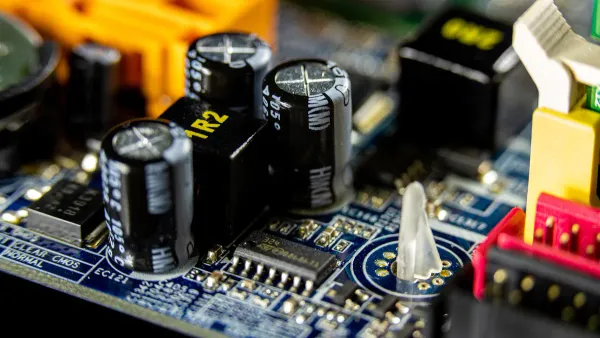
For very small capacitance values, you will sometimes see the letter 'R' used in the code. The 'R' acts as a decimal point. This method helps avoid confusion with tiny numbers on small components. You will often find these codes on surface mount devices.
A capacitor marked
2R2has a value of 2.2 pF.A capacitor marked
6R8has a value of 6.8 pF.A capacitor marked
R33has a value of 0.33 pF.
Explicitly Marked Values
Sometimes, there are no secret codes to crack. This is common on larger components like electrolytic and some film capacitors. The manufacturer prints the value directly on the body. This is the easiest way to read a capacitor.
You will typically see two key pieces of information:
Capacitance Value: This is written with its unit, like
100µFor47nF.Voltage Rating: This is the maximum voltage the capacitor can handle, like
25Vor50V.
For example, a can-shaped capacitor marked 100µF 25V has a capacitance of 100 microfarads and a maximum voltage rating of 25 volts.
Quick Tip: Use Common Sense The physical type of a capacitor gives you clues. A small, bead-like tantalum capacitor marked only with
22is almost certainly 22µF, not 22 pF. The component's size and type suggest a larger value.
SMD Capacitor Codes
Surface-mount device (SMD) capacitors are tiny and have very little room for markings. While some use the 3-digit system, many use a special one or two-character code from the EIA (Electronic Industries Alliance). This system uses a letter to represent the significant digits and a number to represent the multiplier. We cover this in our quick reference chart below for easy lookup. Reading compact capacitor codes like these requires a chart.
Old-School Color Codes
Older, axial-lead capacitors (which look like resistors with a wire at each end) often use a color band system. These "bumble bee" style capacitor codes can look intimidating, but you can decode them with a chart. A 5-band code gives you a lot of information.
For a 5-band capacitor, you read the colors like this:
1st Band: First digit of the value.
2nd Band: Second digit of the value.
3rd Band: Multiplier (number of zeros). The result is in pF.
4th Band: Tolerance (e.g., Gold is ±5%, Silver is ±10%).
5th Band: Voltage Rating.
For instance, a capacitor with the colors Yellow-Violet-Orange-Gold-Red tells you its value. Yellow is 4, and Violet is 7, giving you 47. Orange is the multiplier (x1,000). This results in a capacitance of 47,000 pF, or 47 nF. The Gold band means ±5% tolerance. The final Red band indicates the voltage rating, which depends on the capacitor type. For a polyester capacitor (Type L), a red band means 250V.
Understanding these different capacitor codes will prepare you for almost any component you encounter.
Quick Reference for Capacitor Codes
Sometimes you just need a quick answer. This section is your cheat sheet for decoding capacitor values. You can use these charts to quickly find the information you need without extra reading. Keep this page bookmarked for easy access when you are working on your projects.
3-Digit Code Conversion
You will see 3-digit capacitor codes on many components. This system gives you the value in picofarads (pF). The first two numbers are the value, and the third number tells you how many zeros to add.
Quick Tip: A
104capacitor is 10 followed by 4 zeros, which equals 100,000 pF. You can convert this to 100 nF or 0.1 µF.
Use this table for common 3-digit codes.
3-digit Code | picoFarads (pF) | nanoFarads (nF) | microFarads (µF) |
|---|---|---|---|
101 | 100 pF | 0.1 nF | 0.0001 µF |
102 | 1,000 pF | 1 nF | 0.001 µF |
103 | 10,000 pF | 10 nF | 0.01 µF |
104 | 100,000 pF | 100 nF | 0.1 µF |
105 | 1,000,000 pF | 1,000 nF | 1 µF |
Tolerance Letter Chart
A letter often follows the main capacitor codes. This letter shows the tolerance, or how accurate the capacitor value is.
Tolerance Letter | Percentage Value |
|---|---|
F | ±1% |
G | ±2% |
J | ±5% |
K | ±10% |
M | ±20% |
SMD EIA Code Chart
Surface-mount device (SMD) capacitors are tiny. Reading compact capacitor codes like these often requires a chart. Many use a letter for the value and a number for the multiplier. The EIA code uses a letter to represent the multiplier.
Letter | Multiplier (x) |
|---|---|
A | 1 |
B | 10 |
C | 100 |
D | 1,000 |
E | 10,000 |
F | 100,000 |
Compact Color Code Chart
Older capacitors use color bands. You can read capacitor code markings by matching the colors to this chart. The first two bands give the value, the third is the multiplier, and the others show tolerance and voltage. These color codes help identify the capacitor value.
Band Color | 1st/2nd Digit | Multiplier (in pF) | Tolerance |
|---|---|---|---|
Black | 0 | x1 | ±20% |
Brown | 1 | x10 | ±1% |
Red | 2 | x100 | ±2% |
Orange | 3 | x1,000 | ±3% |
Yellow | 4 | x10,000 | ±4% |
Green | 5 | x100,000 | ±5% |
Blue | 6 | x1,000,000 | ±6% |
Gold | - | x0.1 | ±5% |
Silver | - | x0.01 | ±10% |
You now know how to read a capacitor value. Use this simple checklist to find the correct value.
First, look for an explicit value like
100µF 25V. It is the easiest method.If not, check for a three-digit code like
104to find the capacitance value.For a tiny value, find 'R' codes like
4R7.Finally, use charts for other capacitor codes to get their value.
You can now confidently read capacitor components and determine their capacitance. This is how to read a capacitor value for any capacitor.
FAQ
What if my capacitor has no markings? 🤔
Sometimes, a capacitor has no visible code. This is common with small SMD components. You can find its value using a multimeter that has a capacitance measurement function. This tool gives you a direct reading.
Why is the voltage rating important?
The voltage rating tells you the maximum voltage the capacitor can safely handle. You must use a capacitor with a rating equal to or higher than your circuit's voltage. Using one with a lower rating can cause it to fail or even explode.
What does the letter after the code mean?
The letter after a code like
104Kshows the capacitor's tolerance. Tolerance is how accurate the marked value is. For example, 'J' means ±5% accuracy, 'K' means ±10%, and 'M' means ±20%.
Can I use a capacitor with a higher voltage rating?
Yes, you can almost always replace a capacitor with one that has a higher voltage rating. You just need to make sure the capacitance value (like 100µF) is the same. The new capacitor might be physically larger.