Maximizing Performance and Cost: A Guide to Choosing the Right Op Amp for Your Projects
Expert guide on Maximizing Performance and Cost: A Guide to Choosing the Right Op Amp for Your Projects. Technical specs, applications, sourcing tips for engineers and buyers.
Introduction
Operational amplifiers, commonly known as op amps, are integral components in modern electronic systems, driving everything from audio equipment to signal processing units. With the global semiconductor market projected to reach $595.2 billion by 2026, selecting the appropriate op amp for your project is more crucial than ever. The right choice not only maximizes performance but also optimizes cost, ensuring that you stay competitive in a rapidly evolving industry. This guide will walk you through the process of choosing the perfect op amp, detailing the necessary parameters, design considerations, common issues, and practical applications.
Technical Overview
Op amps are versatile components used for signal amplification, filtering, and mathematical operations in electronic circuits. Fundamentally, an op amp is a high-gain electronic voltage amplifier with differential inputs and, typically, a single-ended output. The core parameters that define an op amp's performance include gain bandwidth product, slew rate, input offset voltage, and noise. Understanding these parameters is essential for selecting an op amp that meets the specific needs of your application.
For example, the gain bandwidth product determines the frequency range over which the amplifier can operate effectively. A higher gain bandwidth product is desirable for applications requiring high-speed signal processing. Similarly, the slew rate impacts how quickly the op amp can respond to changes in the input signal, which is critical for applications involving rapidly changing signals. By comprehensively understanding these parameters, engineers can make informed decisions, ensuring optimal performance and cost-effectiveness.
Detailed Specifications
| Parameter | Typical Value | Tolerance | Units | Notes |
|---|---|---|---|---|
| Gain Bandwidth Product | 1 MHz | ±10% | Hz | Higher for high-speed applications |
| Slew Rate | 0.5 V/µs | ±5% | V/µs | Important for fast signal changes |
| Input Offset Voltage | 0.5 mV | ±0.1 mV | mV | Should be minimized for precision |
| Input Bias Current | 50 nA | ±10 nA | nA | Lower values are better |
| Noise | 10 nV/√Hz | ±1 nV/√Hz | nV/√Hz | Critical for low-noise applications |
| Power Supply Rejection Ratio (PSRR) | 90 dB | ±2 dB | dB | Higher values indicate better performance |
| Common-Mode Rejection Ratio (CMRR) | 80 dB | ±2 dB | dB | Important for differential applications |
| Output Impedance | 50 Ω | ±5 Ω | Ω | Lower values are preferred |
| Temperature Range | -40 to 125 °C | N/A | °C | Operating range |
| Supply Voltage | ±15 V | ±5% | V | Standard for most op amps |
The table above outlines the critical parameters and their typical values, tolerances, and units for operational amplifiers. These parameters are crucial for ensuring the op amp meets the specific requirements of your application. By understanding the significance of each parameter, such as the gain bandwidth product and slew rate, engineers can optimize their designs for performance and cost-effectiveness.
| Equipment/Tool | Purpose | Notes |
|---|---|---|
| Oscilloscope | Signal analysis and troubleshooting | Essential for waveform visualization |
| Multimeter | Measuring voltage, current, and resistance | Basic diagnostic tool |
| Function Generator | Generating test signals | Useful for testing op amp response |
| Soldering Station | Assembling circuits | Includes soldering iron and accessories |
| Power Supply Unit | Providing power to circuits | Adjustable voltage and current settings |
| Breadboard | Prototyping circuits | Allows for quick circuit changes |
| PCB Etching Kit | Creating custom PCBs | For permanent circuit designs |
| CAD Software | Circuit design and simulation | For designing and testing circuits virtually |
| Thermal Camera | Monitoring temperature | Useful for detecting overheating components |
| ESD Protection Gear | Preventing electrostatic discharge | Includes wrist straps and mats |
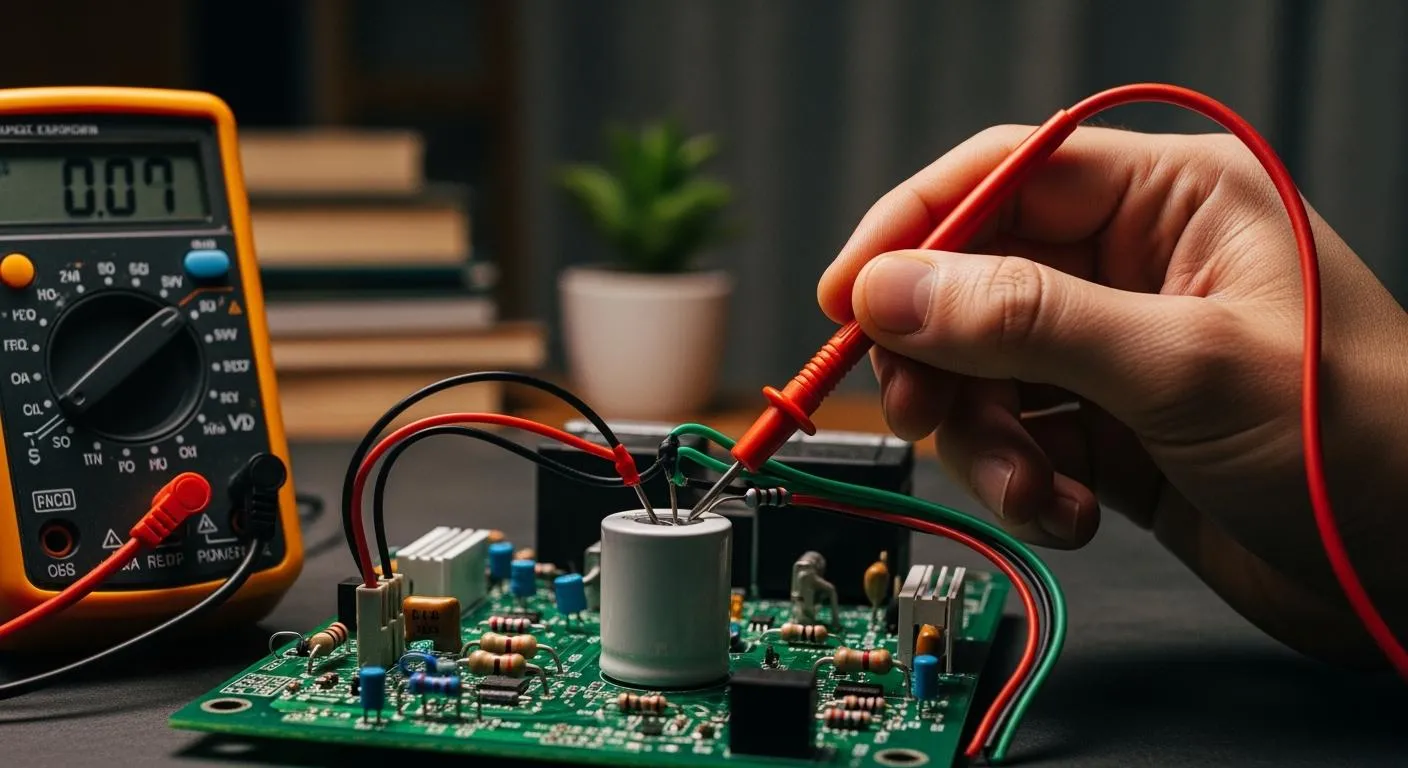
Having the right tools and equipment is crucial for designing and testing circuits involving op amps. The table above lists essential tools, such as oscilloscopes and multimeters, that are necessary for effective signal analysis and troubleshooting. Additionally, equipment like soldering stations and PCB etching kits are vital for assembling and prototyping circuits.
| Issue | Solution | Notes |
|---|---|---|
| Excessive Noise | Use low-noise op amps and proper grounding techniques | Consider shielding sensitive components |
| Oscillation | Add a small capacitor across the feedback resistor | Stabilizes the feedback loop |
| Offset Voltage Drift | Use op amps with low offset voltage and temperature compensation | Critical for precision applications |
| Limited Bandwidth | Select op amps with higher gain bandwidth product | Ensure application requirements are met |
| Power Supply Rejection | Use op amps with high PSRR and proper power supply filtering | Minimizes power supply noise impact |
| Thermal Overload | Implement heat sinks and ensure adequate ventilation | Prevents damage from overheating |
Common issues when working with op amps include excessive noise, oscillation, and offset voltage drift. The table above provides solutions to these problems, such as using low-noise op amps and adding capacitors to stabilize feedback loops. By addressing these issues, engineers can ensure reliable and efficient circuit operation.
Design Considerations
When designing circuits with op amps, several practical guidelines should be considered to ensure optimal performance. Firstly, it's essential to select an op amp that matches the application's frequency requirements. For high-speed applications, opt for op amps with a high gain bandwidth product and slew rate.
Another critical consideration is power supply requirements. Ensure that the op amp's supply voltage matches your circuit's power supply, and consider using op amps with high power supply rejection ratios (PSRR) to minimize the impact of power supply noise.
Thermal management is also crucial, especially in high-power applications. Implement heat sinks and ensure adequate ventilation to prevent thermal overload and potential damage to the op amp.
Additionally, consider the input and output impedance requirements of your circuit. Matching these impedances can prevent signal loss and ensure maximum power transfer. For precision applications, prioritize op amps with low input offset voltage and input bias current to minimize errors.
Finally, always prototype and test your circuit thoroughly before finalizing the design. Use simulation tools to predict circuit behavior and perform real-world testing to validate performance. This step is critical for identifying and addressing any unforeseen issues that may arise during operation.
Step-by-Step Guide
- Define Application Requirements: Start by clearly defining the requirements of your application, including frequency range, signal type, and environmental conditions. This step is crucial for selecting the appropriate op amp.
- Select Op Amp Type: Based on the application requirements, choose the type of op amp that best suits your needs. Consider parameters such as gain bandwidth product, slew rate, and input offset voltage.
- Choose Supporting Components: Select resistors, capacitors, and other passive components that complement the chosen op amp and ensure optimal circuit performance.
- Design Circuit Layout: Use CAD software to design the circuit layout, paying close attention to component placement and routing to minimize noise and interference.
- Prototype and Test: Assemble the circuit on a breadboard or PCB and perform thorough testing using tools like oscilloscopes and multimeters. Validate the circuit's performance against the defined requirements.
- Optimize and Finalize Design: Based on test results, make necessary adjustments to the circuit design to address any performance issues. Consider thermal management and impedance matching for optimal results.
- Document Design: Document the final circuit design, including schematics, component values, and test results. This documentation is essential for future reference and troubleshooting.
- Implement in Production: Once the design is finalized and tested, proceed with production, ensuring quality control measures are in place to maintain consistency and reliability.
Common Issues & Solutions
Working with op amps can present various challenges, but understanding common issues and their solutions can ensure successful implementation. One frequent problem is excessive noise, which can be mitigated by using low-noise op amps and proper grounding techniques. Additionally, oscillation can occur in feedback loops, which can be resolved by adding a small capacitor across the feedback resistor to stabilize the loop.
Offset voltage drift can be a concern in precision applications, but selecting op amps with low offset voltage and temperature compensation can minimize this issue. Limited bandwidth is another challenge, especially in high-frequency applications, and can be addressed by choosing op amps with a higher gain bandwidth product.
Power supply rejection is critical for minimizing the impact of power supply noise on the circuit. Use op amps with high PSRR and implement proper power supply filtering to address this issue. Finally, thermal overload can occur in high-power applications, so it's essential to implement heat sinks and ensure adequate ventilation to prevent damage.
Applications & Use Cases
Op amps are used in a wide range of applications, from audio amplification to signal processing and precision measurement. In audio systems, op amps serve as preamplifiers, equalizers, and active filters, providing high-quality sound reproduction. In signal processing, op amps are used for filtering and amplifying signals in communication systems, ensuring clear and accurate data transmission.
In precision measurement applications, op amps are used in instrumentation amplifiers to measure small differential signals with high accuracy. Additionally, op amps are employed in control systems, providing feedback and stabilization in applications such as motor control and temperature regulation. The versatility and performance of op amps make them indispensable in various electronic systems.
Selection & Sourcing Guide
When selecting and sourcing op amps for your project, it's essential to consider factors such as availability, cost, and compatibility with your design. Start by browsing online distributors like IC Online to find a wide range of op amps that meet your specifications. Ensure that the chosen op amp is in stock and available for immediate delivery to avoid delays in your project timeline.
Compare prices from different suppliers to find the most cost-effective option, and consider purchasing in bulk to take advantage of discounts. Additionally, check for compatibility with your circuit design and ensure that the op amp's parameters align with your application's requirements.
FAQ
- What is an op amp? An op amp is a high-gain electronic voltage amplifier with differential inputs and, typically, a single-ended output, used for signal amplification and processing.
- How do I choose the right op amp? Consider parameters such as gain bandwidth product, slew rate, input offset voltage, and noise to select an op amp that meets your application's requirements.
- What are common applications of op amps? Op amps are used in audio systems, signal processing, precision measurement, and control systems, among other applications.
- How can I minimize noise in my op amp circuit? Use low-noise op amps, proper grounding techniques, and shielding to minimize noise in your circuit.
- What is the gain bandwidth product? The gain bandwidth product is a parameter that determines the frequency range over which an op amp can operate effectively.
- How do I address oscillation in my op amp circuit? Add a small capacitor across the feedback resistor to stabilize the feedback loop and prevent oscillation.
- What is the importance of PSRR in op amps? The power supply rejection ratio (PSRR) is important for minimizing the impact of power supply noise on the circuit's performance.
- How can I ensure thermal management in my op amp circuit? Implement heat sinks and ensure adequate ventilation to prevent thermal overload and damage to the op amp.
- Where can I source op amps? Browse online distributors like IC Online to find a wide range of op amps that meet your specifications.
- What tools are essential for working with op amps? Essential tools include oscilloscopes, multimeters, function generators, and soldering stations for effective circuit design and testing.
Conclusion
Choosing the right op amp for your project is a critical decision that can significantly impact performance and cost. By understanding the technical parameters, design considerations, and common issues associated with op amps, engineers can make informed decisions that optimize their designs. With the right tools, equipment, and sourcing strategies, you can ensure successful implementation and achieve your project's objectives. Stay informed and leverage resources like online distributors to find the best op amp solutions for your needs.