Integrated Circuit Images that showcase the art behind modern electronics
Imagine zooming in on a chip. You see tiny lines and shapes. They make a maze of colors and lights. You might spot the 'Detailed Red Electronic Circuit Illustration.' Or you could see one of the '10 Unique Microcontroller Images.
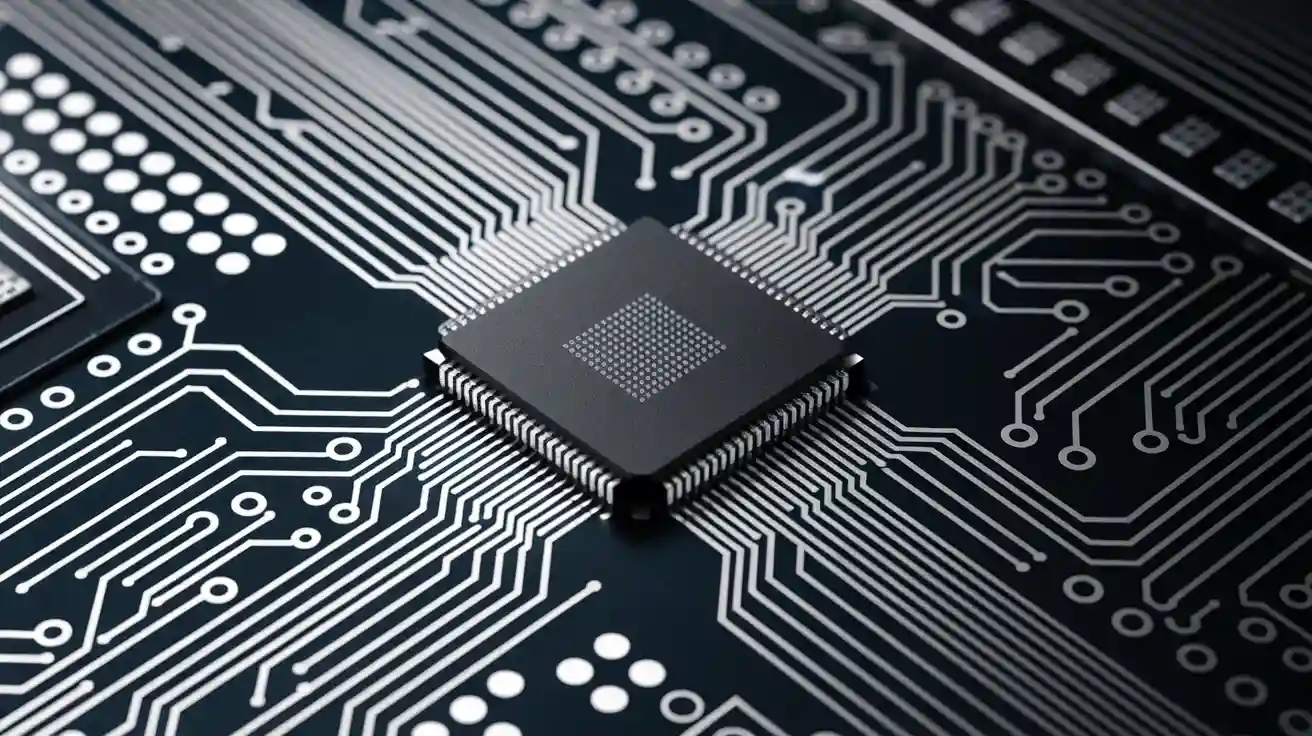
Imagine zooming in on a chip. You see tiny lines and shapes. They make a maze of colors and lights. You might spot the 'Detailed Red Electronic Circuit Illustration.' Or you could see one of the '10 Unique Microcontroller Images.' Each picture shows a place where science and art meet. Over time, designers put millions of transistors on one chip. This started in the late 1950s. Now, there are 3D stacked chips and AI-powered layouts. When you look at integrated circuit images, you see more than just technology. You find a mix of design, purpose, and beauty in every chip and circuit board. The layers and patterns in integrated circuit design make each chip special. These images let you see the hidden art inside every integrated circuit.
Key Takeaways
-
Integrated circuit images show the art and science in small chip designs. They display patterns, colors, and shapes that make each chip special. Symmetry and patterns in chip layouts help engineers make neat and balanced designs. This makes chips work better and look nicer. Colors in integrated circuit images come from light bouncing off different layers. This makes the chips look like tiny glowing cities. Different images, like macro photos and die shots, show the outside and inside of chips. These images help us learn about their complex design. Integrated circuit design mixes creativity and technology. It inspires curiosity, learning, and new ideas in both art and science.
Artistic Elements in Integrated Circuit Images
Patterns and Symmetry
When you look at integrated circuit images, you see patterns everywhere. These patterns are made on purpose by engineers. They use integrated circuit design to make things neat and organized. You can spot lines, shapes, and blocks that repeat on the chip. This repeating is called symmetry. Symmetry helps the chip work well and look nice. Sometimes, you see translation symmetry, where shapes repeat in a row. Other times, you notice rotation symmetry, where patterns turn around a center. Reflection symmetry is when one side of the chip looks like a mirror of the other.
Designers use special tools to check these patterns. They use scale-invariant structure features to find symmetry, even when the chip is tiny. These features look at the edges and curves in the design. They help engineers find important shapes, even if the image is blurry or noisy. Another tool is the pseudo-polar Fourier transform. This tool finds rotation and reflection symmetry by checking how patterns change as you move around the chip. These methods help keep the design quality high.
Here is a table that shows some common visual pattern trends in integrated circuit design:
|
Visual Pattern Trend |
Description |
Statistical Validation Method |
|---|---|---|
|
Translation Symmetry |
Repeated shapes shifted in space |
Feature matching between polygons |
|
Scale Symmetry |
Same shapes at different sizes |
Curvature histograms and scale-invariant features |
|
Rotation Symmetry |
Patterns spinning around a point |
Angular correlation using Fourier transform |
|
Partial Symmetry |
Symmetry in only part of the layout |
Axis detection algorithms |
|
Non-orthogonal Axes |
Symmetry not lined up with main axes |
Graph-based analysis |
|
Structural Contours |
Focus on edges and outlines |
Curvature response histograms |
You can see that integrated circuit design is not just about how it works. It is also about making the chip look neat and balanced. This focus on symmetry and pattern makes every semiconductor chip look like a tiny piece of art.
Color and Illumination
Color makes integrated circuit images bright and interesting. When you look at a chip under a microscope, you see glowing colors and lines. These colors are not from paint. They happen because light bounces off the layers of the semiconductor. Each layer in the integrated circuit design reflects light in its own way. Some layers shine with blue and green colors. Others glow with red and gold.
Engineers use special lights to show the design clearly. They shine light from different sides to show the chip’s depth and texture. This makes the small wires and shapes easy to see. You can follow the paths that electricity takes. The colors help you learn how the chip works. They also make the integrated circuit look beautiful.
Sometimes, the chip looks like a city at night in these images. The lights and colors show the busy paths inside the semiconductor. This look comes from the careful design of each layer. Good lighting helps you see the tiny details. It also shows the skill of the engineers who made the integrated circuit.
Miniaturization and Detail
Integrated circuit design is about making things very small. You might hear the word "very-large-scale integration" or VLSI. This means engineers put millions or billions of parts on one chip. The goal is to fit more power into a smaller space. This is called miniaturization.
When you look at integrated circuit images, you see tiny details. Every line, dot, and shape has a job to do. The design quality depends on how well these parts fit together. Engineers use circuit layout optimization to put every part in the right spot. They check the pin configurations and the layers. Each layer adds more detail to the chip.
The design quality is very important. If the parts are too close, the chip might not work. If they are too far apart, the chip wastes space. High-density integrated circuits show how much detail can fit in a small area. The design uses advanced VLSI techniques. You can see this in the sharp lines and clear shapes in the images.
You can think of integrated circuit design like building a tiny city. Each building, road, and park has a job. The quality of the city depends on the design of every part. When you look at these images, you see the art of making things small. You also see the skill and care that goes into every semiconductor chip.
Tip: Next time you use a computer or phone, remember there is a chip inside with millions of tiny details. The design quality and the art of integrated circuit design make your technology work.
Types of Integrated Circuit Images
Macro Photography
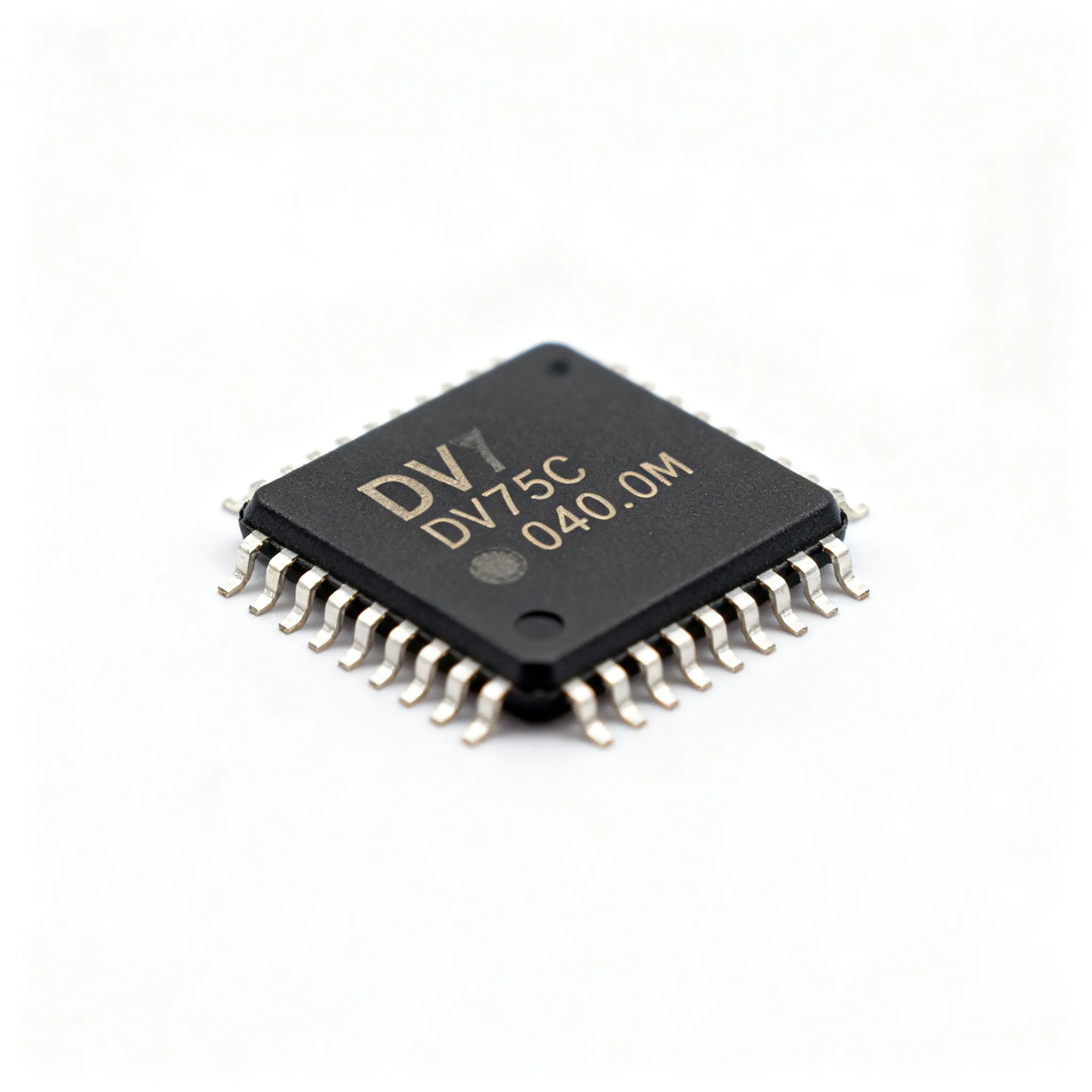
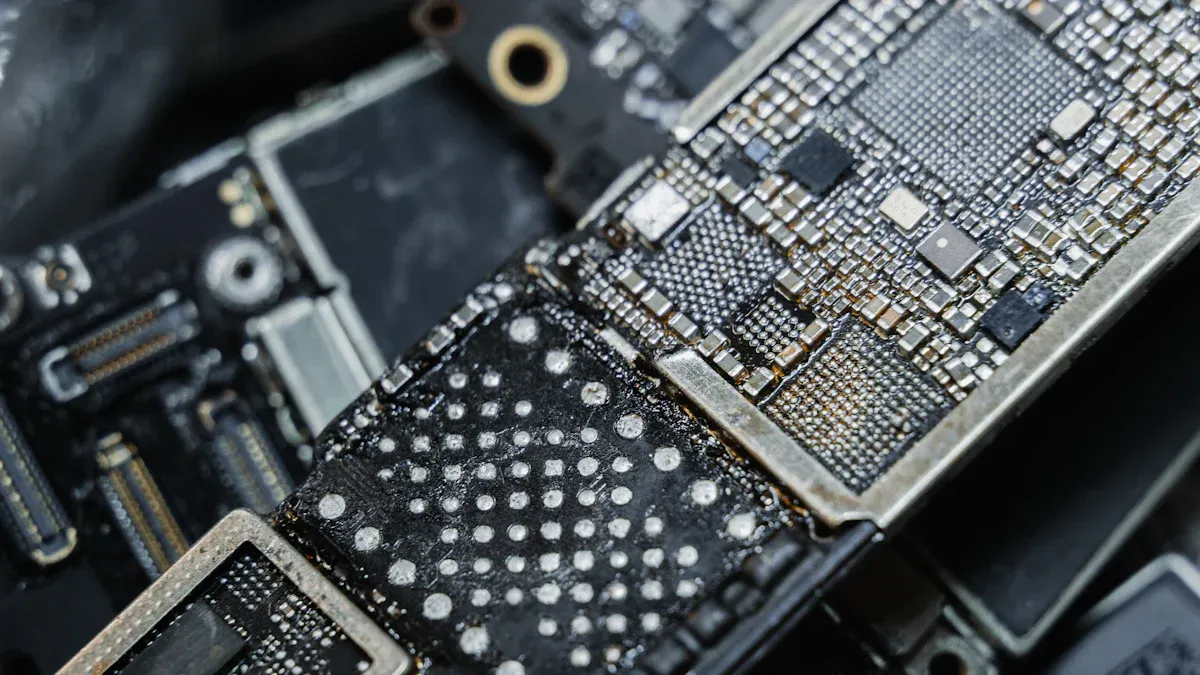
Macro photography lets you look closely at a chip. You can see tiny wires and shiny metal pads. There are neat rows of pins on the chip. These photos show the outside of a microchip. You can see how the chip connects to the board. The images help you notice smart design choices. You see how the chip fits into bigger devices. Macro photography gives you a first look at chip design beauty.
Die Shots and Micrographs
Die shots and micrographs show the inside of a chip. You can see the different layers in the integrated circuit. Each layer has its own color and pattern. Engineers use special tools to take these pictures. You can spot the paths where electricity moves. Die shots show how many transistors fit together. Micrographs show the tiny details of digital circuits. You can see sharp lines and small blocks on the chip. These images show the art in semiconductor design.
Did you know? Die shots can look like abstract art. The patterns come from how engineers arrange chip parts.
Wafer Illustrations
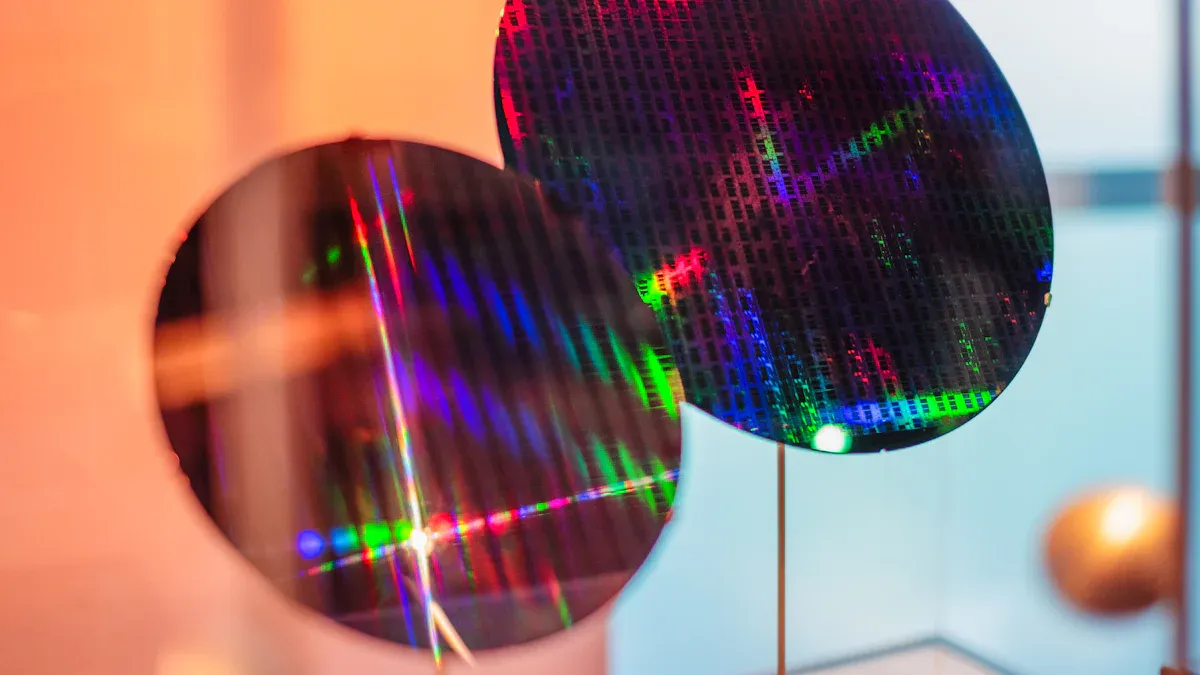
Wafer illustrations show the big picture of chip making. A wafer holds many chips before they are cut apart. You can see rows and columns of chips on a shiny disk. The wafer glows with colors from the layers. These images help you see how many chips are made at once. You can see the results of vlsi and very-large-scale integration. Wafer illustrations show the size of modern chip design. You get to see how each chip starts as part of something bigger.
|
Type of Image |
What You See |
What It Reveals |
|---|---|---|
|
Macro Photography |
Chip surface, pins, pads |
External design, connections |
|
Die Shots/Micrographs |
Inside layers, patterns |
Internal design, vlsi art |
|
Wafer Illustrations |
Many chips on one wafer |
Mass production, scale |
|
Mixed-Signal ICs |
Analog + digital features |
Complex design, versatility |
Mixed-Signal ICs
Mixed-signal integrated circuits have analog and digital parts. You can see smooth curves and sharp lines in these images. Mixed-signal chips are used in phones, cars, and computers. The design of these chips needs special care. Engineers put analog and digital circuits together on one chip. Mixed-signal IC images show how hard it is to fit both types. You can see vlsi and very-large-scale integration at work. These images show the creativity in every system on a chip.
When you look at integrated circuit images, you see more than technology. You see art, science, and skill in every chip.
Integrated Circuit Design and Art
Layout and Architecture
When you look at an integrated circuit, you see more than just a chip. You see a world built with careful planning. Integrated circuit design starts with a blank space. You fill this space with tiny parts. Each part has a job. You use circuit layout optimization to place every part in the best spot. This helps the chip work faster and use less power. You want the design to look neat and balanced. Good layout optimization strategy makes the chip strong and reliable.
You can think of integrated circuit design like building a city. You plan roads, parks, and buildings. You want traffic to move smoothly. You use design optimization to make sure every part connects well. The quality of the layout shows in how well the chip works. You see the layers in the semiconductor. Each layer adds detail and beauty. You use design quality improvement to fix problems and make the chip better. When you finish, you have a chip that looks good and works well.
Functional Aesthetics
Integrated circuit design is not just about function. You also care about how the chip looks. The patterns in the semiconductor can look like art. You use circuit layout optimization to create shapes and lines that please the eye. You want the design to show both order and creativity. The quality of the design matters. You use design optimization to make the chip both beautiful and powerful.
You see color and light in the images. These come from the layers in the semiconductor. Each layer in the integrated circuit adds to the look. You use layout optimization strategy to balance beauty and function. You want the chip to stand out. You use design quality to check your work. You use design quality improvement to make the chip even better. When you look at an integrated circuit, you see the result of smart design choices. You see how design performance and art come together.
Tip: Next time you see a chip, look for the patterns and shapes. You might spot the art hidden in the integrated circuit design.
Significance of Integrated Circuit Images
Inspiring Curiosity
Looking at an integrated circuit image can make you feel amazed. The chip looks like a tiny city with lots of patterns and colors. These details make you want to learn more. You might wonder how engineers fit so much into a small space. Integrated circuit design lets you see the hidden world inside your phone or computer. You notice how each layer of the semiconductor connects to the next one. This makes you curious about how a chip works. You may ask questions about how a system on a chip brings everything together. Many people get new ideas just by looking at these images. You might even think of your own design for a future device.
Educational Value
Integrated circuit images help you learn about technology. You see what careful design and planning can do. When you look at a chip, you notice layers, shapes, and connections. These images make it easier to understand how a semiconductor works. Teachers use them to show students real parts inside a device. You can see how a system on a chip puts many functions in one place. Integrated circuit images also show how design choices change how well a chip works. You learn why engineers use certain patterns or layouts. Seeing these things helps you remember what you learn.
Tip: Try drawing your own integrated circuit design. You will see how much thought goes into every chip.
Bridging Art and Technology
Integrated circuit images mix art and science together. You can see beauty in how engineers arrange each part of the chip. The design of a semiconductor is not just about making it work. It is also about making it look nice. Many people use these images as ideas for art projects. Some even use them in jewelry or graphic design. The process of integrated circuit design often leads to new ideas in both technology and art. When you look at a chip, you see how creativity and logic work together.
|
Measurable Impact |
Description |
Application Examples |
|---|---|---|
|
40-60% Energy Efficiency Improvement |
Chips with AI-assisted design use less energy. |
Data centers, wireline communication |
|
Faster Development Cycles |
AI tools help engineers finish integrated circuit design faster. |
Rapid prototyping, new devices |
|
Creation of Flexible Electronics |
New design ideas make flexible semiconductor chips possible. |
Wearable health monitors, flexible screens |
|
Enhanced Wireless Systems |
Better design improves how chips handle signals in wireless systems. |
Drones, robots, vehicles |
|
Cross-disciplinary Collaboration |
Teams mix design, material science, and user experience for better chips. |
RF products, consumer electronics |
|
Research to Practical Applications |
Integrated circuit design moves from labs to real products quickly. |
Patented signal processing, healthcare tech |
You can see that integrated circuit images do more than show technology. They inspire you, help you learn, and connect art with science. When you look at these images, you join a world where design, creativity, and the power of the semiconductor come together.
Every integrated circuit image has its own story. Each chip has many layers that show art and science. When you look at a chip, you see smart design choices. You can see how each integrated circuit fits a lot into a small chip. The colors and patterns in each integrated circuit make you want to learn more about design. If you want to know more, check out the Energy Informatics SpringerOpen platform. It has studies and data about integrated circuit design, chip layout, and design performance. You can look at thousands of integrated circuit examples and see how design changes each chip. Try looking at online galleries or reading about integrated circuit design. Next time you see a chip, remember it is more than just for work. You can find art in every integrated circuit and chip. Try to see the beauty in technology and its design.
FAQ
What makes an integrated circuit different from a regular chip?
You see an integrated circuit as a tiny world packed with parts. A regular chip might have fewer features. The integrated circuit uses smart design to fit more inside. This makes your devices faster and smaller.
How do engineers design a chip?
Engineers start with a plan. They use special tools to create the design. You watch as they place each part in the right spot. The design helps the chip work well. Every step in the design process matters for the final chip.
Why do integrated circuit images look like art?
You notice patterns, colors, and shapes in every chip image. The design creates these effects. Engineers use design tricks to make the integrated circuit work and look good. You see art and science come together in each chip.
Can you find the design of a chip in everyday devices?
Yes! You use phones, computers, and even smartwatches with an integrated circuit inside. The design of each chip helps your device run smoothly. You depend on this design every day, even if you never see the chip.
How does the design of an integrated circuit affect its performance?
The design controls how fast and reliable the chip is. If the design is smart, the chip works better. You get longer battery life and faster speeds. Good design means your integrated circuit does more in less space.
Tip: Next time you use your device, remember the design of the integrated circuit inside makes everything possible!