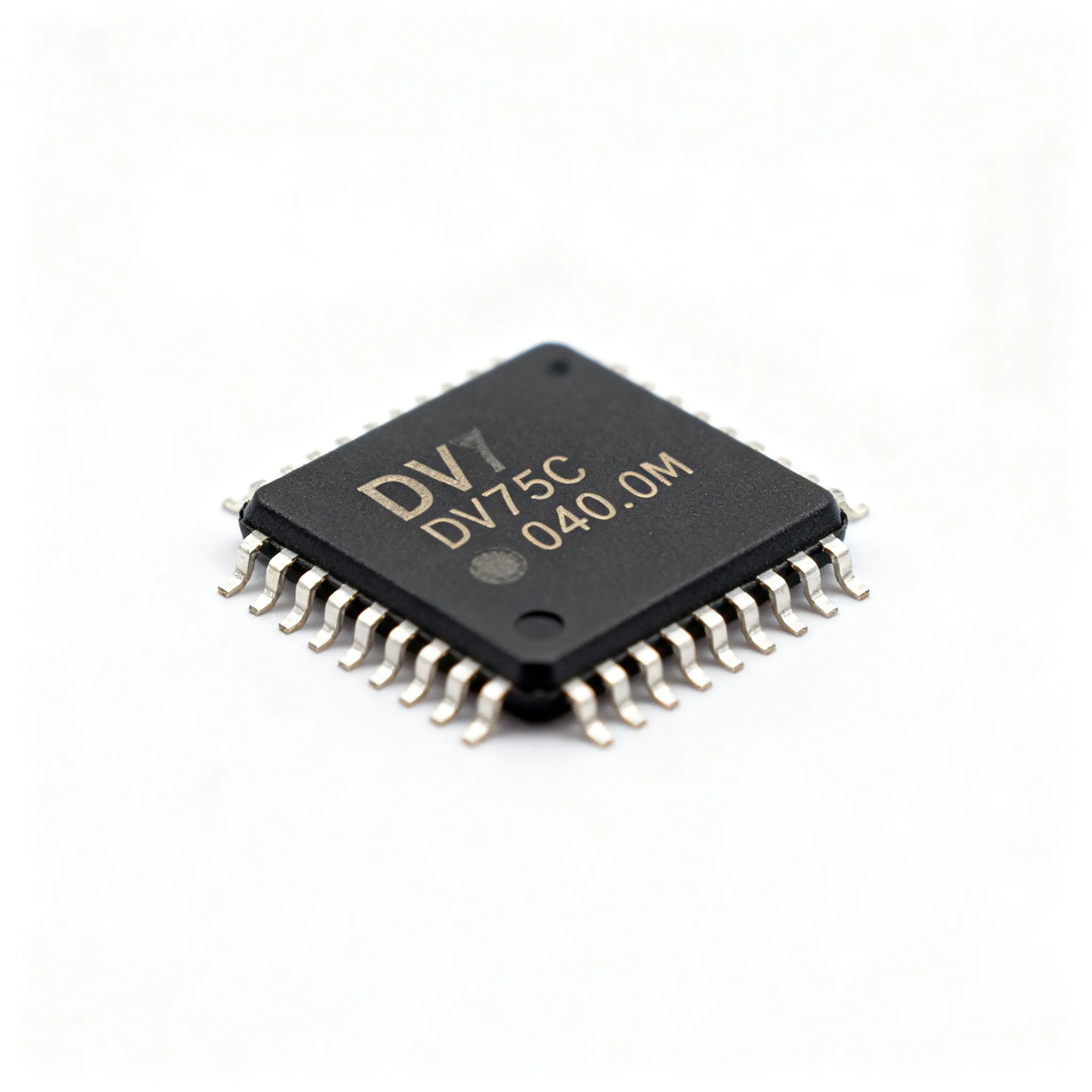
Optoelectronic Components: Types, Applications, and Selection Criteria
Optoelectronic components let you change light into electrical signals. They also let you change electrical signals back into light. You can find optoelectronics in many places.
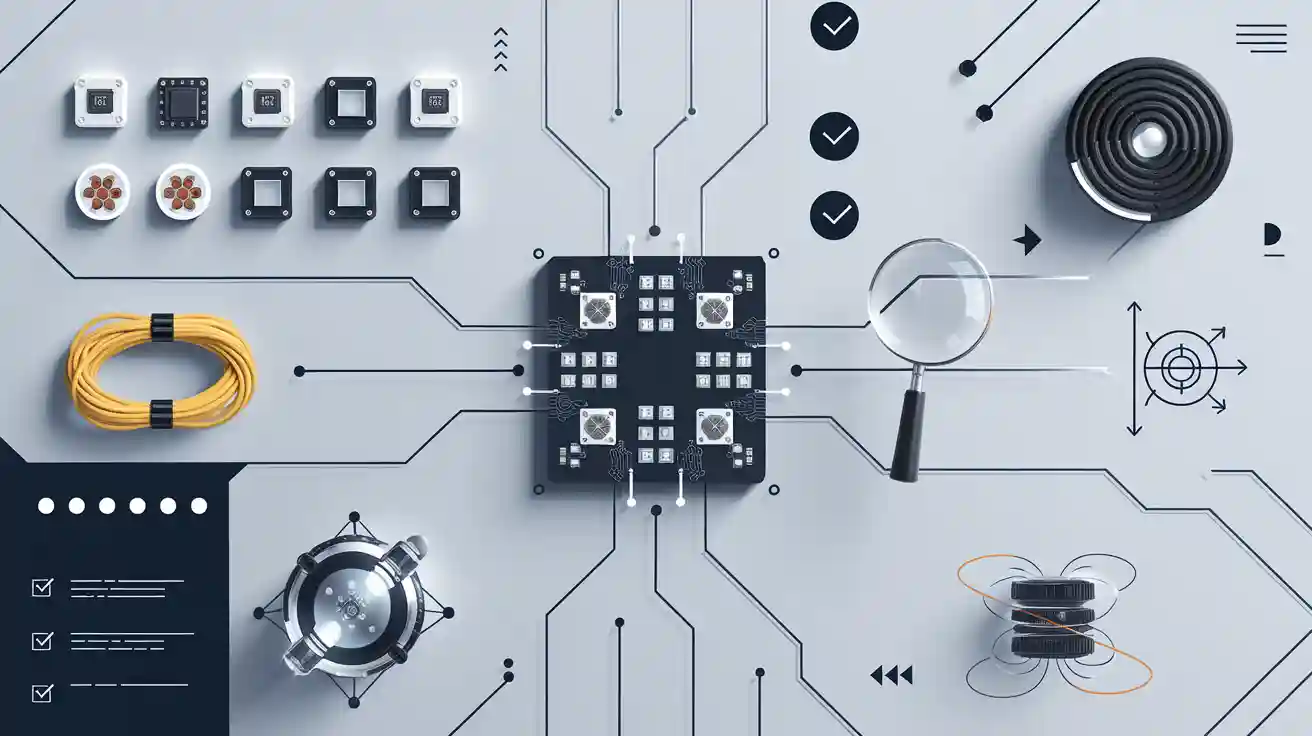
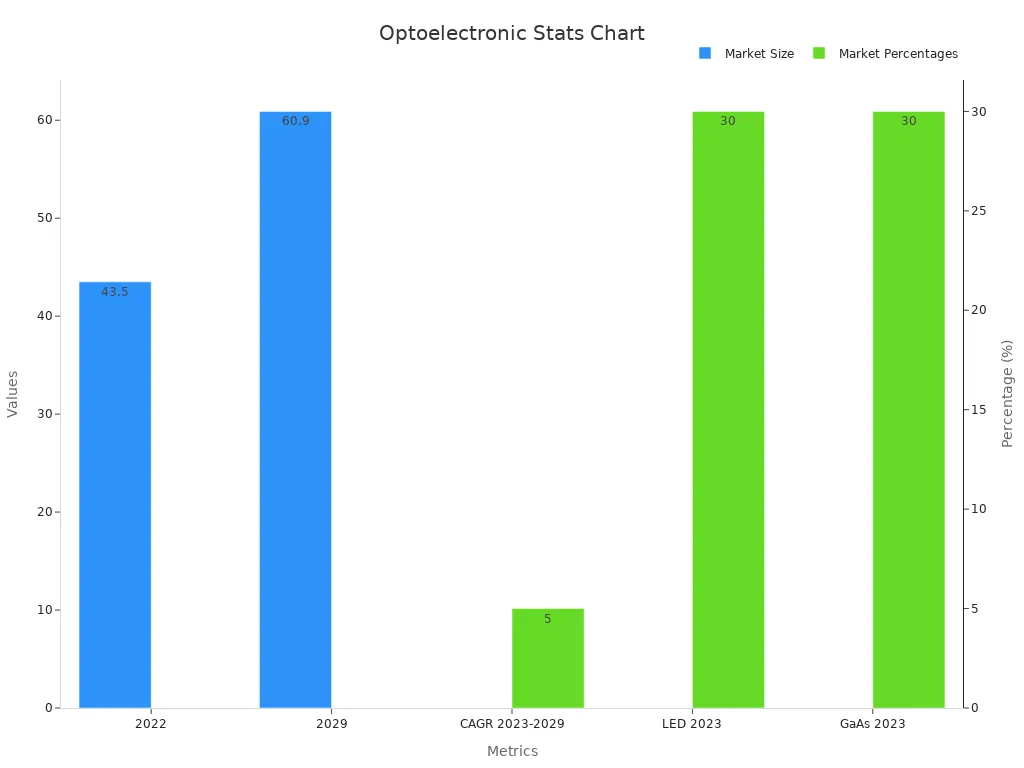
Optoelectronic components let you change light into electrical signals. They also let you change electrical signals back into light. You can find optoelectronics in many places. Your phone screen uses them for light. Sensors that check energy use also use them. In 2023, LEDs made up 30% of the world’s optoelectronic market. LEDs are popular because they save energy and last a long time. Gallium Arsenide is important in devices that use light and energy. The table below shows why these parts matter in today’s technology.
|
Metric |
Value |
|---|---|
|
Global market size (2022) |
USD 43.5 billion |
|
Projected market size (2029) |
USD 60.9 billion |
|
LED market share (2023) |
30% |
|
Gallium Arsenide (GaAs) share |
30% |
|
Highest revenue vertical (2022) |
Consumer electronics |
When you pick optoelectronic components, you must think about light and energy. You also need to choose the right part for your use. Knowing this helps you make good choices in energy, communications, and optoelectronic systems.
Key Takeaways
-
Optoelectronic components change light into electricity and back. They help power things like phones, sensors, and solar panels.
-
There are three main types. Emitting devices include LEDs and lasers. Detecting devices include photodiodes and solar cells. Some other devices help control or move light.
-
Optoelectronics are important in many areas. These include telecommunications, healthcare, energy, industry, and car safety.
-
Picking the right optoelectronic part is important. You need to think about efficiency, durability, and performance. You should also think about the environment and cost for your project.
-
New technologies and materials are improving optoelectronic devices. They are becoming smarter, more flexible, and save more energy for the future.
Optoelectronic Components
Definition
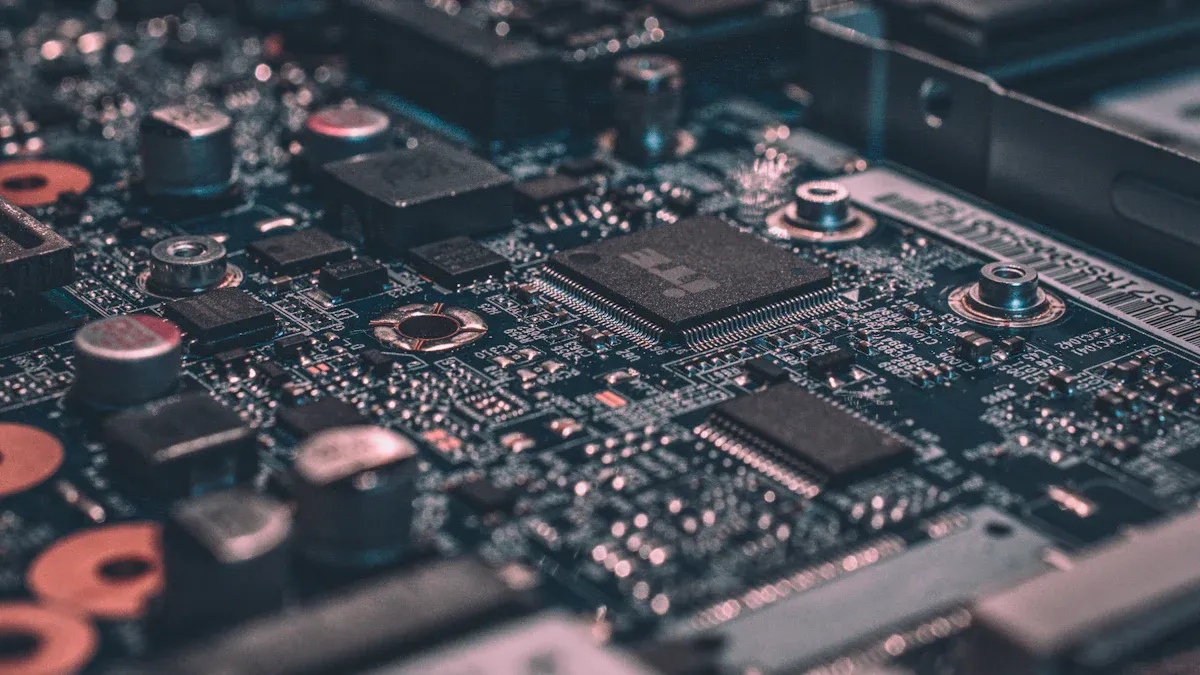
You use optoelectronic components every day, even if you do not notice them. These devices work with both light and electricity. They use semiconductor materials to change electrical energy into light or turn light back into electrical signals. You find optoelectronic devices in many fields, such as photonics, telecommunications, and medical equipment.
Experts say optoelectronic devices use semiconductors. These include LEDs, laser diodes, solar cells, optical fibers, and photodiodes. Each one does something special. A photodiode can sense light. A laser diode makes a strong light beam for cutting or surgery. Optical fiber sends data quickly using light. Solar cells use sunlight to make electricity. These parts help you in many ways, like lighting your home or charging your phone.
Note: Optoelectronic components are very important in today’s technology. You can find them in almost every industry.
Functions
Optoelectronic devices do many important things. You can use them to make, sense, or control light. Some, like LEDs and laser diodes, make light when you give them electricity. Others, like photodiodes and solar cells, take in light and turn it into electricity. Semiconductors help these devices work.
Here are some main things optoelectronic components do:
-
Make light for screens, lamps, and signs.
-
Sense light for sensors, cameras, and alarms.
-
Send light through optical fibers for fast data.
-
Change sunlight into electricity with solar cells.
You use these devices in photonics, where light control matters a lot. Laser devices help with surgery, cutting, and measuring. Photonics and optoelectronics work together to make life brighter, safer, and more connected.
Optoelectronic Devices
Optoelectronic devices let you use, make, and sense light. People use these devices in many areas, like photonics and energy. You can sort these devices by what they do. Some make light, some sense it, and others help move or control light. This part will show you the types of optoelectronic devices and how they work.
Emitting Devices
Emitting devices change electricity into light. You see these in your house, car, and phone. The most common ones are the light emitting diode, laser diode, and infrared emitter.
-
Light Emitting Diode (LED):
A light emitting diode uses a semiconductor to make light when it gets electricity. LEDs are used everywhere. You see them in screens, lamps, signs, and traffic lights. LEDs save energy and last a long time. The led market is growing because they are bright and use less power. You find leds in car lights, displays, and medical tools. -
Laser Diode:
A laser diode makes a strong, focused light beam. You use laser diodes in barcode readers, fiber optic cables, and laser pointers. The laser diode market is growing quickly. You see lasers in car lidar, surgery, and cutting machines. Lasers also help in phone calls and defense. -
Infrared Emitters:
Infrared leds send out light you cannot see. You use them in remote controls, night vision, and security. Infrared leds help in smart sensors and energy-saving devices.
LEDs and laser diodes are popular because they save energy, last long, and work in many fields. Asia-Pacific spends a lot on these, so it leads in optoelectronics.
Here are some main trends for emitting devices: The diode market grows with new tech and more uses in cars, phones, and health. LEDs are liked for saving energy and lasting long. Laser diodes are now smaller, so you can use them in small gadgets. Lasers help in car lidar, surgery, and factories. Asia-Pacific is ahead in using laser and led devices.
|
Classification Criterion |
Categories / Subtypes |
Description |
|---|---|---|
|
Emission and Scattering |
LEDs, Laser Diodes, Infrared Emitters |
LEDs and lasers are the biggest group of emitting devices. LEDs are used for lights, screens, and signals. Laser diodes are used for focused beams in talking, surgery, and lidar. Infrared leds are used for remotes and sensors. |
Detecting Devices
Detecting devices sense light and turn it into electricity. You use these in cameras, solar panels, and safety alarms. The main types are the photodiode, phototransistor, and solar cell.
-
Photodiode:
A photodiode is a semiconductor that senses light. When light hits it, it makes electricity. You use photodiodes in cameras, smoke alarms, and health monitors. Photodiodes work fast and can sense even a little light. -
Phototransistor:
A phototransistor works like a photodiode but senses more light. You use phototransistors in light meters, alarms, and auto lights. -
Solar Cell:
A solar cell is a special photodiode that turns sunlight into electricity. You see solar cells in calculators, solar panels, and satellites. Solar cells help you use clean sun energy.
You can see how experts compare these devices in the table below:
|
Reference No. |
Authors & Year |
Focus / Evidence of Quantified Performance Comparison |
|---|---|---|
|
54 |
J.R. Qualey et al. (2001) |
Compared how fast ionization and photoelectric/heat detectors work |
|
55 |
G. Hyseni et al. (2010) |
Compared infrared thermal detectors: bolometers vs pyroelectrics |
|
56 |
A. Chetia et al. (2022) |
Reviewed photodetector performance using different materials |
|
67 |
D.C. Oertel et al. (2005) |
Studied photodetectors made from CdSe quantum-dot films |
|
68 |
Y. Yao et al. (2007) |
Tested plastic near-infrared photodetectors with special polymers |
Most detecting devices use label-free ways to sense light. This means you do not need extra chemicals to sense light. About 83% of devices use label-free detection because it costs less and gives fewer wrong results. Devices often check light by its wavelength. This helps make sensors for health tests, alarms, and factory controls.
Flexible optoelectronic devices now use thin films to sense near-infrared light. These devices can reach responsivity values from 30 to 60 A/W. This makes them good for flexible sensor arrays and wearable tech. You can use these sensors in smart clothes and health trackers.
Other Devices
Some optoelectronic devices do not fit only in making or sensing light. These devices help move, control, or connect light. You use them in talking, sensing, and energy systems.
-
Optical Fiber:
Optical fibers carry light signals far. You use them for the internet, phones, and TV. Optical fibers help send data fast and with little loss. They are important in photonics and modern talking. -
Optocoupler:
An optocoupler uses light to link two circuits. It keeps them apart for safety. You find optocouplers in power supplies, factory controls, and health devices. -
Fiber Bragg Grating (FBG) Sensor:
FBG sensors use changes in light to measure strain, heat, or pressure. You use them in bridges, planes, and power plants. FBG sensors help you check safety and how things work. -
LiDAR and Optical Encoders:
LiDAR uses laser pulses to map things and measure distance. You see LiDAR in self-driving cars and drones. Optical encoders use light to track movement in machines and robots. -
VCSELs and Micro-LED Displays:
VCSELs are tiny lasers used in networks for fast data. Micro-LED displays use small leds for bright, energy-saving screens.
The table below shows how experts sort optoelectronic devices:
|
Classification Criterion |
Categories / Subtypes |
Description |
|---|---|---|
|
Detecting Techniques |
Label-free, Labelled, Others |
Most detecting devices use label-free ways for cost and ease. |
|
Excitation Monitoring |
Wavelength Interrogation, Angle of Incidence |
Devices often check light by its wavelength. |
|
Optical Interrogation Technique |
Vertical, Horizontal |
Horizontal setups are common. |
|
Variation of Refractive Index |
Real Part (Broadband, Monochromatic, Tunable) |
Most patents use broadband-based ways. |
|
Emission and Scattering |
Fluorescence, Raman/SERS, Absorbance |
Fluorescence and Raman-based devices are smaller groups. |
You see more optoelectronic devices in new things like 5G, photonic chips, and smart sensors. New materials like silicon carbide and gallium nitride make these devices better for fast and strong uses. The optoelectronics market grows as people want faster, safer, and more energy-saving systems.
Tip: When you pick an optoelectronic device, think about what you need it to do. Some make light, some sense it, and others help move or control it. Knowing the types helps you choose the right one for your project.
Applications of Optoelectronics
Optoelectronics help in many parts of your life. They change how you talk, stay healthy, save energy, and work. You also see them in cars and new technology. People keep finding new ways to use light and energy. Let’s see how these devices help you every day.
Telecommunications
You use optoelectronics when you call or text someone. Optical fibers send light signals very far. Laser diodes move data fast and safely. These parts make the internet quick and strong. LED lights show if your device is on. Optoelectronics let you watch videos and share things fast.
The world market for optoelectronics is growing fast. Experts think it will reach $97.8 billion by 2031. This is because people want better and faster ways to talk. Lasers, photodiodes, and optical fibers are important for networks. Space uses these parts for fast links between satellites.
You see more optoelectronics in 5G and space tech. These systems need to move lots of data with little loss. Laser diodes and LEDs help meet these needs.
Healthcare
Optoelectronics help doctors care for you. Light-based tools help find and treat sickness. Laser surgery lets doctors cut very carefully. LEDs help with medical pictures. Photodiodes sense small changes in your body. These devices are used in health bands, dental tools, and cancer care.
|
Healthcare Application |
Clinical Benefits and Findings |
|---|---|
|
Musculoskeletal Disorders |
Light therapy eases pain and helps healing. Wearable devices give targeted help. |
|
Respiratory Therapy |
Phototherapy helps lungs and fights viruses. |
|
Dental Health |
Light heals wounds and removes bad tissue with less pain. |
|
Oncology (Cancer Therapy) |
Light kills cancer cells but saves healthy ones. |
|
Cardiac Therapy |
Light helps fix heart rhythm with fewer problems. |
|
Advanced Wound Healing |
Light makes wounds heal and grow new tissue faster. |
You find these tools in hospitals and homes. Doctors use LEDs and lasers for pictures and care. Telemedicine lets you get help from far away. Space also uses medical optoelectronics for astronauts.
Energy
Optoelectronics help you save and make energy. Solar cells turn sunlight into power. LEDs light homes and streets but use less energy. These devices are in solar panels, smart meters, and bright lights.
|
Parameter |
Proton Fluence (p/cm²) |
Before Annealing (Normalized) |
After Annealing (Normalized) |
|---|---|---|---|
|
Isc |
1 × 10¹² |
0.790 |
N/A |
|
Voc |
1 × 10¹² |
0.767 |
N/A |
|
Pmax |
1 × 10¹² |
0.558 |
N/A |
|
FF |
1 × 10¹² |
0.921 |
N/A |
|
Isc |
5 × 10¹² |
0.697 |
0.782 |
|
Voc |
5 × 10¹² |
0.500 |
0.700 |
|
Pmax |
5 × 10¹² |
0.285 |
0.499 |
|
FF |
5 × 10¹² |
0.817 |
0.912 |
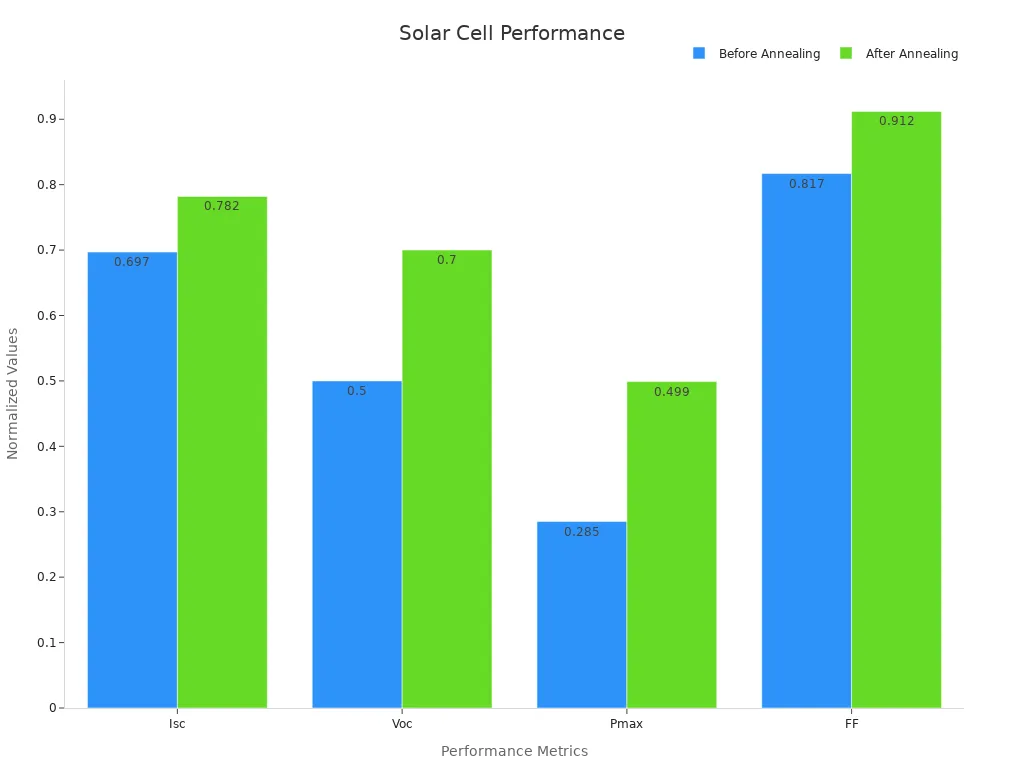
This chart shows how solar cells can get better after damage. Optoelectronic devices last longer with good care. New materials like perovskites make solar cells stronger. Space needs solar cells that work in tough places. Optoelectronics help build power for satellites and stations.
Industrial
Factories use optoelectronics to make work safer and faster. Laser sensors check if products are good. LEDs light up machines and work areas. Optical encoders track robot moves. These devices help with automation, checking, and welding.
Reports say optoelectronics are key in robots and factory work. You see them in sensors and cutting tools. Companies use data to pick the best devices.
Smart factories use more optoelectronics now. These systems use light to run machines and check products. Space also uses these devices to build and fix spacecraft.
Automotive
Cars use optoelectronics to keep you safe. LEDs light roads and make cars easy to see. Laser sensors help with parking and driving. Cameras use light sensors to spot danger. These devices are in headlights, brake lights, and safety systems.
-
Devices like LEDs and image sensors help driver assistance systems.
-
Safety groups want car makers to use these systems.
-
More people want cars with smart lights and cameras.
-
Electric and self-driving cars need laser sensors to map roads.
-
LEDs last longer and use less energy, so they need less fixing.
-
New tech makes these parts better and cheaper, so more cars use them.
You see optoelectronics in all parts of cars today. Space also uses these devices in rovers and space vehicles.
Emerging Technologies
You find new uses for optoelectronics in smart and flexible devices. Scientists use light and lasers in wearables, smart clothes, and printed electronics. These devices are in bendy solar cells, special sensors, and smart optical systems.
|
Category |
Relevant Topics and Highlights |
|---|---|
|
Materials that copy nature, soft optics |
|
|
Nanophotonics |
Tiny materials, special surfaces, and nanomaterials |
|
Advances in Fabrication and Design |
3D printing, flexible devices, laser-made parts |
|
Machine Learning and Autonomous Design |
Machine learning for materials, better ways to use light |
You see solar cells that bend and stretch. These work in clothes, bags, and space suits. Scientists write about new ways to make and test these devices. Space uses flexible optoelectronics for satellites and gear.
Optoelectronics are used more every year. You see them in phones, cars, and even space. Light, energy, and smart devices shape the future.
Selection Criteria
When you use optoelectronic systems, you need to follow rules for picking parts. These rules help you choose the best parts for your project. You have to think about efficiency, durability, performance, environment, and cost. Each thing is important when you pick optical components, especially for space.
Efficiency
You want your optoelectronic parts to use energy well. High efficiency means less waste and longer battery life. Special LEDs and photodiodes can make things work better and use fewer parts. This helps you meet tough rules for space. Tests like photometry and radiometry check how much light or energy each part gives.
Durability
Durability is very important for space and tough places. You need parts that can handle shaking, bumps, and hot or cold weather. Tests and computer checks show if parts last in real life. When you set your rules, always look for strong materials and good designs.
Performance
Performance means how well your part does its job. You check for accuracy, speed, and if it stays steady. Experts say to look at different types of accuracy. In labs, you can control things, but space is harder. Your rules should test camera sharpness, how things work together, and mistakes. Picking high-performance parts gives you better results in important places.
Environment
Space needs special care for the environment. You must pick parts that work in vacuum, with radiation, and big temperature changes. Tests check for wetness, electricity, and other things. Your rules should fit what space needs. Always ask if your part can make the trip and work in space.
Cost
Cost is important for every project. You want good value and still get quality. Custom parts can save money by using fewer pieces and working better. Tools can help you balance cost, efficiency, and durability. When you pick optical parts, always compare the total price with long-term gains, especially for space.
Tip: Make a checklist for picking and testing parts. This helps you meet all the rules and avoid mistakes when choosing optical components for space.
Now you know why optoelectronic components are important in technology. When you learn about the types and how they work, you can pick the best parts for your projects. You can find these components in many things, like energy and healthcare. Always look at the rules for picking parts before you choose. If you want to know more, read guides or ask experts for help. Do not choose parts without making sure they are right for your needs.
FAQ
What are optoelectronic components used for?
Optoelectronic components help you use light in different ways. You can find them in phones, cars, and medical tools. They are also in solar panels. These parts help send data and save energy. They also help keep things safe.
How do you choose the right optoelectronic device?
First, think about what you want the device to do. Look at how well it works and how long it lasts. Check the price too. Think about where you will use it. Always test the part before using it in your project.
Can optoelectronic devices work in harsh environments?
Some optoelectronic devices are made for tough places. They can work in space or under water. Some work in very hot or cold spots. You need to pick strong materials. Test them to make sure they fit your needs.
What is the difference between LEDs and laser diodes?
LEDs shine light in many directions. You use them for lights and screens. Laser diodes make a narrow, strong beam. You use them for cutting, surgery, and sending data in cables.
Where do you see structural health monitoring with optoelectronics?
You find structural health monitoring in bridges and buildings. It is also in airplanes. Optoelectronic sensors look for cracks, strain, or heat. These sensors help keep things safe and working well.