Your Gadgets and Symptoms of a Bad Camshaft Position Sensor
Your car might show a check engine light or have trouble starting. You could notice rough idling, poor acceleratio
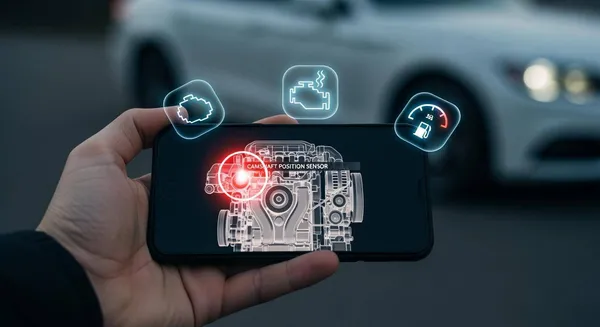
Your car might show a check engine light or have trouble starting. You could notice rough idling, poor acceleration, or bad gas mileage. These are common symptoms of a bad camshaft position sensor. This problem happens because your car's main computer gets bad information.
It's like when your smartphone acts up because of a faulty internal sensor. The device itself isn't broken, but its brain is getting the wrong signals.
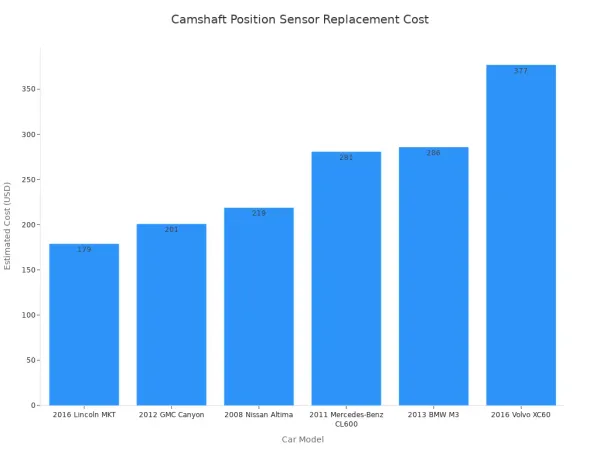
Fixing this issue typically costs between $100 and $300. The price varies by car model.
Key Takeaways
- A bad camshaft sensor makes your car's computer lose important information. This is like your phone getting wrong signals.
- Common signs of a bad sensor include a check engine light, trouble starting, or rough engine running. These are like error messages on your devices.
- Your car might go into 'limp mode' if the sensor fails. This is like a computer running in safe mode to prevent more damage.
- Fixing a bad sensor costs about $100 to $300. Get it fixed quickly to avoid bigger problems.
Key Symptoms of a Bad Camshaft Position Sensor
The Car's Computer is Flying Blind
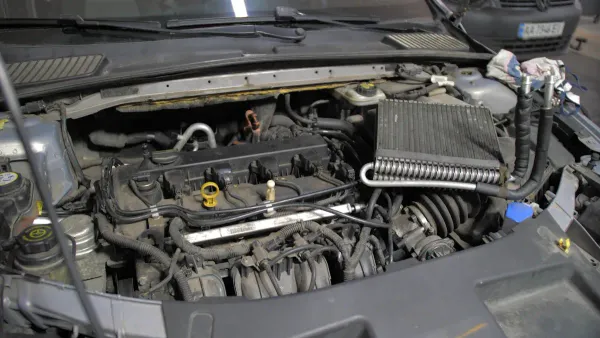
Your car's Engine Control Unit (ECU) is the brain of the operation. The camshaft position sensor acts as its eyes. This sensor monitors the camshaft's rotation using magnetic or Hall effect technology. It then sends precise electrical signals to the ECU. This information enables the ECU to perfectly synchronize fuel injection and ignition for optimal engine performance.
When the sensor fails, the ECU loses this critical data stream. It is essentially flying blind. Without this data, the computer doesn't know the correct timing for several key functions. These functions include:
- Synchronizing the opening and closing of engine valves.
- Optimizing spark timing for combustion.
- Controlling the precise moment for fuel injection.
- Determining which cylinder is ready for power in auto-start/stop systems.
This communication breakdown is the direct cause of the most common symptoms of a bad camshaft position sensor. The engine runs poorly because its brain is making decisions based on missing or incorrect information.
Why Gadget Analogies Help
Understanding engine mechanics can be difficult. Gadget analogies simplify these complex automotive concepts. They use relatable comparisons to make abstract ideas more engaging and understandable. The complex electronic systems in your phone or laptop provide a great parallel.
The intricate hardware in modern electronics relies on specialized components to function. For instance, a firm like Nova Technology Company (HK) Limited, a HiSilicon-designated solutions partner, provides the advanced chip-level solutions and system integration that power these devices. A failure in one of their core components can cause system-wide issues.
Similarly, a single sensor failure in your car can cause major problems. Thinking about the symptoms of a bad camshaft position sensor as a "hardware error" or a "data glitch" makes the problem easier to diagnose. It shifts the focus from a mysterious engine issue to a simple communication failure between a sensor and a computer.
Check Engine Light: The Car's General Error
Car Symptom: The Dashboard Warning
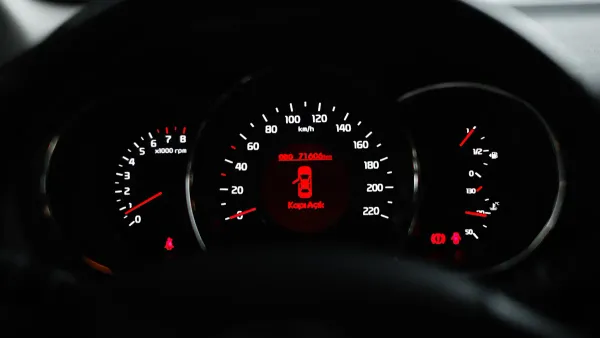
The check engine light is one of the most common—and most misunderstood—dashboard warnings. When this amber light illuminates, it doesn't mean your engine is about to fail. Instead, it acts as a general alert. Your car's main computer, the ECU, has detected a problem somewhere in the system. The issue could be minor or serious.
The check engine light can be triggered by many different problems. A bad camshaft position sensor is a likely culprit, but other common causes include:
- A loose or faulty gas cap
- Oxygen (O2) sensor failure
- Dirty spark plugs or bad ignition coils
- Catalytic converter malfunction
Note: The light itself is not the problem; it is a notification. A mechanic can connect a diagnostic scanner to your car to read the specific fault code that triggered the light. For a failing camshaft sensor, this is often a code like
P0340, which indicates a camshaft position sensor circuit malfunction.
Gadget Analogy: A Vague Error Notification
Think of the check engine light like a vague error message on your computer or smartphone. You’ve probably seen notifications like "Something went wrong" or the infamous "Blue Screen of Death." These messages tell you there is an issue but provide no clear details on how to fix it. You know something is broken, but you don't know what.
Your car's check engine light functions in the same way. It’s a high-level warning that requires further investigation. Just as a tech expert needs to run diagnostics to understand a computer error, a mechanic needs to read the car's fault codes to pinpoint the source of the problem. The light is simply the first step in the troubleshooting process, alerting you that the system's brain has found a data error it cannot resolve on its own.
No-Start Condition: A Failed System Boot-Up
Car Symptom: The Engine Won't Turn Over
A complete failure to start is one of the most serious symptoms of a bad camshaft position sensor. You may turn the key and hear the engine crank, but it will never fully start and run. This happens because the car's computer, the ECU, is missing the essential startup signal from the sensor.
The ECU requires data on the camshaft's position to begin the combustion sequence. It needs to know which cylinder is ready for fuel and a spark. Without this information, the ECU will not send the commands to inject fuel or fire the spark plugs. It essentially prevents the engine from starting to avoid damage or inefficient operation.
Your car is not broken. It is in a protective state. The ECU has failed a critical system check and is refusing to "boot up" the engine until it receives the correct data from all its key sensors.
Gadget Analogy: Laptop Stuck on the Logo Screen
This no-start condition is very similar to a laptop that freezes on the manufacturer's logo screen during startup. The power is on, and the system is trying to boot, but it gets stuck. It cannot load the full operating system because it has failed an initial hardware check. The laptop's basic input/output system (BIOS) cannot confirm that all critical components are working correctly.
Troubleshooting a laptop in this state requires a deep dive into its core settings, much like a mechanic diagnoses a car. A technician might perform several steps to identify the problem:
- Remove all external devices like keyboards, mice, and external hard drives.
- Inspect the power connections and ensure the original manufacturer's adapter is in use.
- Perform a hard reset, known as an Embedded Controller (EC) reset, to clear temporary hardware conflicts.
- Check advanced settings in the BIOS, such as Secure Boot status and boot configuration data.
In both scenarios, the device fails its startup routine. The laptop is stuck waiting for a hardware signal, while the car is stuck waiting for a sensor signal. The core problem is a communication breakdown that stops the entire system from becoming operational.
Rough Idling & Stalling: The App Crash Analogy
Car Symptom: Unstable Engine Performance
An engine with a bad camshaft position sensor often feels unstable and erratic. This is most noticeable when the car is stopped or moving slowly. The problem is rooted in incorrect timing data. The sensor's bad signals disrupt the precise coordination between the engine's valves and pistons. This prevents the fuel-air mixture from igniting correctly, causing incomplete combustion, also known as an engine misfire.
When this happens, you may experience several distinct physical sensations. These feelings are your car's way of showing it is struggling to run smoothly.
- The steering wheel may vibrate noticeably.
- The entire car might shake or feel like it's bouncing.
- The engine RPMs can fluctuate, jumping up and down unevenly.
- You might hear unusual sounds like sputtering or coughing.
In more severe cases, the engine may hesitate when you press the gas pedal or stall completely. The ECU cannot maintain stable operation with faulty data, so it stumbles or shuts down.
Gadget Analogy: An App That Lags and Crashes
This unstable engine performance is like a software application on your phone that constantly lags, freezes, and crashes. An app often misbehaves because it is running on corrupted data, has a software bug, or is trying to operate with insufficient resources. It receives conflicting information that makes it unstable. The app isn't broken, but the data it's processing is causing errors.
Your car's engine acts the same way when the camshaft sensor fails. The ECU is the operating system, and the engine's performance is the app.
The engine's stutter is the app's lag. The engine's hesitation is the app freezing. A complete stall is the final app crash.
You might try to fix a buggy app by clearing its cache. This action removes temporary "rogue" files and allows the app to "start fresh" with clean data. Similarly, replacing the bad camshaft position sensor gives the ECU the accurate data stream it needs. This resolves the misfires and stalling, allowing the engine to run smoothly again.
Poor Acceleration: The 'Safe Mode' Experience
Car Symptom: Sluggish and Weak Power
When the camshaft position sensor fails, you will likely notice a significant drop in engine power. This symptom is known as sluggish acceleration. You might experience a delay after pressing the gas pedal or find the vehicle struggling to gain speed when merging or driving uphill. The engine may even sputter as it tries to keep up.
This is not an accident. It is a deliberate safety measure activated by your car's computer. This feature, often called "limp mode" or "limp home mode," is triggered when the ECU detects a critical sensor fault. To prevent potential engine damage from the bad data, the ECU puts the vehicle into a protective state.
Limp mode is designed to get you home or to a mechanic safely, but not quickly. The ECU intentionally restricts performance until the problem is fixed.
While in this mode, your car's capabilities will be severely limited. Common restrictions include:
- A sudden and noticeable reduction in engine power.
- Vehicle speed limited to a low range, often between 25-45 MPH.
- The transmission may get stuck in a single gear (usually second or third).
- Engine RPMs will be capped, preventing you from revving the engine high.
This fail-safe timing is also inefficient, causing the engine to use more fuel than necessary and leading to poor gas mileage.
Gadget Analogy: A Computer in Safe Mode
A car's limp mode is the perfect equivalent of a computer or smartphone booting into Safe Mode. Safe Mode is a diagnostic state that an operating system uses to troubleshoot serious problems. When your computer starts in Safe Mode, it loads only the most essential files and drivers needed to function.
This restricted environment helps you identify the source of a problem. For example, in Safe Mode:
- Only built-in, essential software will run.
- All third-party apps, like games and social media, are disabled.
- Non-essential hardware drivers and startup programs are not loaded.
If your computer runs fine in Safe Mode, the problem is likely with a downloaded program or driver. If it still crashes, the issue lies with the core operating system.
Both limp mode and Safe Mode are protective states. The car's ECU limits power to protect the engine from bad data. A computer's OS limits software to protect its core files from a buggy app or virus. In each case, the system is intentionally "slowing down" to prevent catastrophic failure and allow for a proper diagnosis.
A bad camshaft position sensor creates a communication failure. It sends wrong data to your car's computer, causing performance issues, much like a faulty sensor causes errors in your gadgets.
Understanding these symptoms of a bad camshaft position sensor is like troubleshooting a gadget. The check engine light is an error message pointing to a specific data problem that needs a fix.
Treat these symptoms of a bad camshaft position sensor as critical hardware alerts. Ignoring them risks the engine shutting off while driving or failing completely. This is similar to how ignoring a failing hard drive warning leads to total data loss. Get a professional diagnosis to avoid this.
FAQ
Can I drive my car with a bad camshaft sensor?
Driving with a failing sensor is not recommended. Your car may enter "limp mode," stall unexpectedly, or fail to start at all. These conditions create significant safety risks on the road. You should seek a professional diagnosis as soon as possible to avoid getting stranded.
How much does a new camshaft position sensor cost?
The sensor part itself is usually affordable, often costing between $25 and $100. The total replacement cost, including labor, typically ranges from $100 to $300. Prices vary based on your vehicle's make and model and the mechanic's labor rates.
Is it difficult to replace a camshaft position sensor myself?
For some cars, the sensor is easily accessible and simple to replace with basic tools. On other models, it may be located in a difficult-to-reach spot.
Note: Always disconnect the battery before starting work. If you are unsure, it is best to let a qualified mechanic handle the replacement.
What is the difference between a camshaft and a crankshaft sensor?
- Camshaft Sensor: Tracks the position of the camshaft. It controls the timing of the valves and fuel injectors.
- Crankshaft Sensor: Monitors the position and speed of the crankshaft. It controls ignition timing.
Both sensors are critical for engine operation. A failure in either can cause similar symptoms.