Cost-Effective Solutions for Choosing the Right Op Amp for Your Project
Expert guide on Cost-Effective Solutions for Choosing the Right Op Amp for Your Project. Technical specs, applications, sourcing tips for engineers and buyers.
Introduction
Operational amplifiers (op amps) are pivotal components in a wide range of electronic circuits, serving functions from signal amplification to filtering and beyond. As the electronics industry continues to evolve, selecting the right op amp becomes increasingly crucial for ensuring optimal performance while managing costs. With global semiconductor revenue projected to reach $595.2 billion by 2026, the demand for efficient, cost-effective solutions is higher than ever. This article aims to guide you through the process of choosing the right op amp for your project, focusing on feature comparison, performance analysis, and selection criteria.
Technical Overview
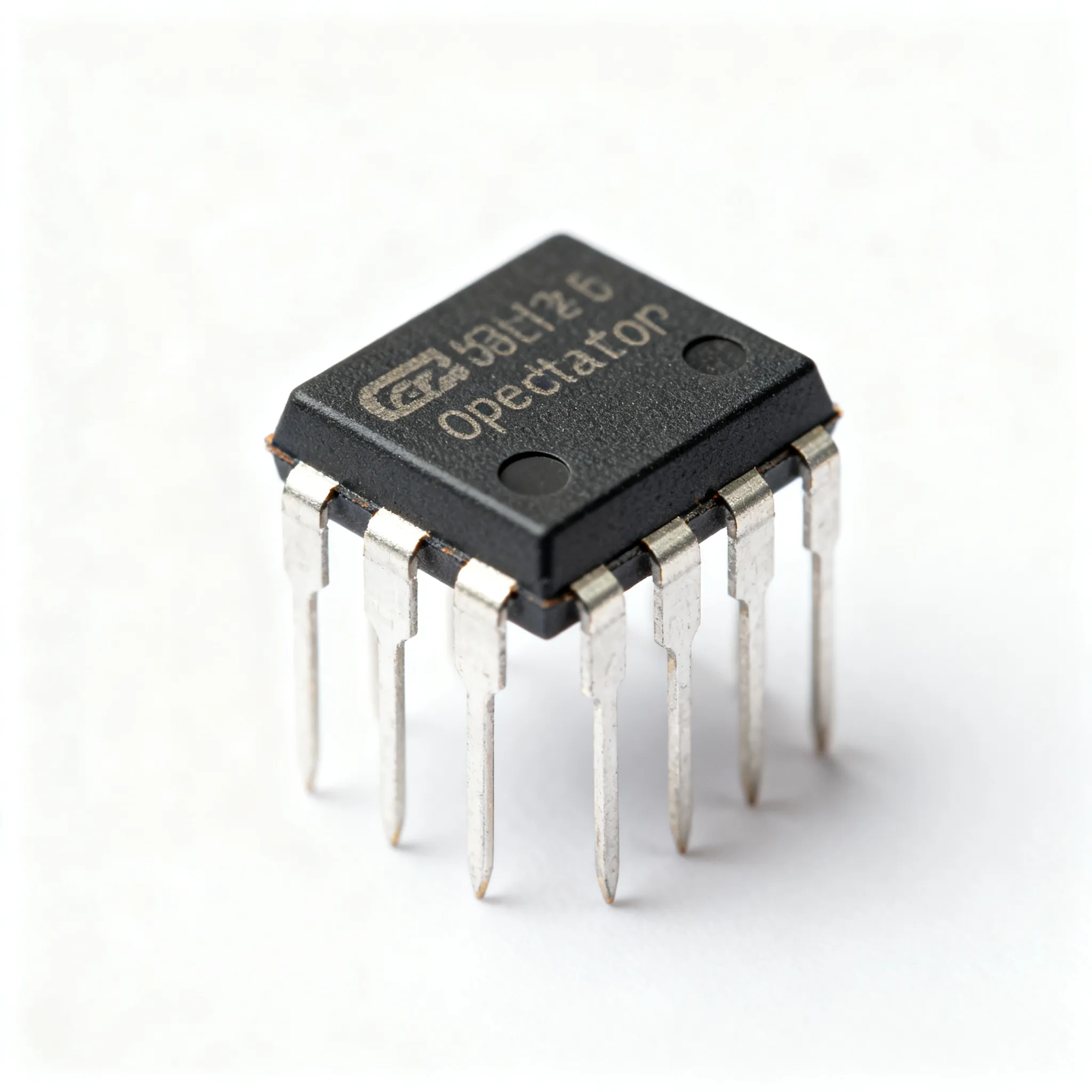
Op amps are versatile ICs that amplify voltage signals, characterized by high input impedance and low output impedance. They are integral to analog computing, audio processing, and signal conditioning applications. Understanding the core functions of an op amp, such as inverting and non-inverting amplification, is essential. The key parameters to consider include gain bandwidth product, slew rate, input offset voltage, and power supply rejection ratio (PSRR). Each of these factors influences the performance and suitability of an op amp for specific applications.
In an ever-growing market, engineers must balance performance requirements with cost constraints. The selection process involves comparing features and performance metrics, considering design constraints, and sourcing components cost-effectively. Familiarity with the latest market trends and component availability is also crucial, as highlighted by resources such as EE Times and TrendForce Market Research.
Detailed Specifications
The following tables provide a comprehensive comparison of features, performance metrics, and cost considerations for popular op amps.
| Feature | Model 1: OPA2134 | Model 2: LM358 | Model 3: TL072 | Units/Notes |
|---|---|---|---|---|
| Supply Voltage | ±2.5V to ±18V | 3V to 32V | ±5V to ±15V | Volts (V) |
| Input Offset Voltage | 0.5mV | 2mV | 3mV | Millivolts (mV) |
| Gain Bandwidth Product | 8MHz | 1MHz | 3MHz | Megahertz (MHz) |
| Slew Rate | 20V/μs | 0.5V/μs | 13V/μs | Volts per microsecond (V/μs) |
| PSRR | 100dB | 65dB | 80dB | Decibels (dB) |
| CMRR | 110dB | 70dB | 100dB | Decibels (dB) |
| Output Current | 35mA | 20mA | 25mA | Milliamps (mA) |
| Input Bias Current | 5nA | 45nA | 30nA | Nanoamps (nA) |
| Performance Metric | Model 1: OPA2134 | Model 2: LM358 | Model 3: TL072 | Units/Notes |
|---|---|---|---|---|
| Noise Density | 8nV/√Hz | 40nV/√Hz | 18nV/√Hz | Nanovolts per root Hertz (nV/√Hz) |
| THD+N | 0.00008% | 0.02% | 0.003% | Total Harmonic Distortion plus Noise (%) |
| Bandwidth | 8MHz | 1MHz | 3MHz | Megahertz (MHz) |
| Phase Margin | 60° | 45° | 75° | Degrees (°) |
| Open Loop Gain | 120dB | 100dB | 110dB | Decibels (dB) |
| Settling Time | 0.5μs | 1.5μs | 0.8μs | Microseconds (μs) |
| Temperature Range | -40°C to 85°C | -40°C to 85°C | -40°C to 85°C | Degrees Celsius (°C) |
| Power Consumption | 5mW | 1mW | 3mW | Milliwatts (mW) |
| Model | Cost | Availability | Distributor |
|---|---|---|---|
| OPA2134 | $2.50 | In Stock | DigiKey |
| LM358 | $0.30 | In Stock | IC Online |
| TL072 | $1.00 | Limited Stock | DigiKey |
| NE5532 | $1.20 | In Stock | IC Online |
| AD797 | $5.00 | Out of Stock | DigiKey |
Design Considerations
When selecting an op amp, several factors must be taken into account to ensure that the final choice aligns with the project's requirements. First, consider the supply voltage range, as this will dictate the compatibility with existing power supplies in your design. Models like LM358 offer a wide range, making them versatile for various applications.
Input offset voltage is another critical parameter, particularly for precision applications. Lower offset voltages, such as those found in OPA2134, are ideal for maintaining signal integrity. Additionally, the gain bandwidth product will determine the frequency range over which the op amp can operate effectively; hence, higher values are preferable for high-speed applications.
Slew rate is crucial for applications involving fast signal transitions. Models like TL072 with higher slew rates are better suited for these tasks. Moreover, consider the noise density and THD+N values to ensure minimal signal distortion, especially in audio applications. Power consumption is also a key consideration, particularly for battery-powered devices.
Finally, evaluate the cost and availability of the op amp. While high-performance models like AD797 offer excellent specifications, their cost and availability might not be feasible for all projects. It's essential to balance these factors to achieve a cost-effective solution.
Step-by-Step Guide
Choosing the right op amp involves a systematic approach. Here are the steps to guide you:
- Define the Application Requirements: Determine the specific needs of your project, including the required bandwidth, precision, and power constraints.
- Identify Key Parameters: Based on the application, identify the critical parameters such as supply voltage, input offset voltage, and gain bandwidth product.
- Research Available Models: Utilize resources like DigiKey and IC Online to explore available op amp models that meet your criteria.
- Compare Features: Use feature comparison tables to assess the specifications of different models. Consider factors like slew rate, noise density, and power consumption.
- Evaluate Performance: Analyze performance metrics such as THD+N and phase margin to ensure the op amp will perform adequately in your application.
- Consider Cost and Availability: Check the cost and availability of the shortlisted models. Ensure that the chosen op amp fits within your budget and is readily available from distributors.
- Prototype and Test: Once a model is selected, prototype the circuit and test its performance under various conditions to verify its suitability.
- Make Final Selection: Based on the testing results, make the final selection of the op amp that best meets your project's requirements.
Common Issues & Solutions
Even with careful selection, you may encounter issues when working with op amps. Here are some common problems and solutions:
- Oscillation: If the op amp oscillates, check the feedback network for stability issues. Adding a compensation capacitor may help stabilize the circuit.
- Offset Voltage Drift: Temperature variations can cause offset voltage drift. Use op amps with low drift specifications or implement temperature compensation techniques.
- Power Supply Noise: If power supply noise affects performance, improve the PSRR by using decoupling capacitors close to the op amp's power pins.
- Excessive Power Consumption: For battery-powered applications, choose op amps with low quiescent current ratings to minimize power consumption.
- Signal Distortion: If distortion is an issue, ensure that the op amp operates within its linear range and check for overloading conditions.
- Component Availability: If a chosen op amp is unavailable, consider alternative models with similar specifications and consult distributors for lead times.
Applications & Use Cases
Op amps are used in various applications, from audio processing to instrumentation and control systems. For example, OPA2134 is popular in high-fidelity audio applications due to its low noise and distortion characteristics. Meanwhile, LM358 is often used in cost-sensitive applications like sensor interfacing and basic amplification tasks, thanks to its affordability and wide supply voltage range.
In industrial settings, op amps like TL072 are employed in signal conditioning circuits, where their high slew rate and low noise make them suitable for processing fast-changing signals. These examples illustrate the diverse applications of op amps and the importance of selecting the right model for the job.
Selection & Sourcing Guide
When selecting and sourcing op amps, it's essential to work with reputable distributors to ensure quality and availability. Resources like IC Online offer a wide range of components, competitive pricing, and fast delivery, making them a reliable choice for sourcing your op amp needs.
FAQ
- What is the most important parameter to consider when selecting an op amp? It depends on the application, but common critical parameters include gain bandwidth product, input offset voltage, and slew rate.
- How do I minimize noise in op amp circuits? Use op amps with low noise specifications, and implement proper grounding and shielding techniques in your circuit design.
- Can op amps be used in digital applications? While op amps are primarily analog components, they can be used in mixed-signal applications for tasks like filtering and signal conditioning.
- What is a rail-to-rail op amp? A rail-to-rail op amp can output voltages very close to the supply rails, increasing the dynamic range of the circuit.
- How do I address temperature-related issues in op amps? Choose op amps with low temperature coefficients and consider using heat sinks or other temperature management techniques.
- What is the difference between single-supply and dual-supply op amps? Single-supply op amps operate with a single positive voltage supply, while dual-supply op amps require both positive and negative voltage supplies.
- Why is the slew rate important? The slew rate determines how quickly the op amp can respond to rapid changes in input signals, affecting the circuit's ability to handle high-frequency signals.
- How can I improve the PSRR of an op amp circuit? Use decoupling capacitors and consider using op amps with inherently high PSRR specifications.
- Is it possible to use multiple op amps in a single circuit? Yes, multiple op amps can be used in cascade to achieve desired amplification levels or to implement complex functions like filters or oscillators.
- How do I choose between different op amp packages? Consider the available space on your PCB, thermal dissipation needs, and ease of assembly when choosing between different op amp packages.
Conclusion
Selecting the right op amp is crucial for achieving the desired performance in your electronic projects. By understanding the key parameters, comparing features, and considering cost and availability, you can make informed decisions that balance performance with budget constraints. Leveraging resources like DigiKey and IC Online, along with the guidelines provided in this article, will help you navigate the complexities of op amp selection and ensure success in your designs.