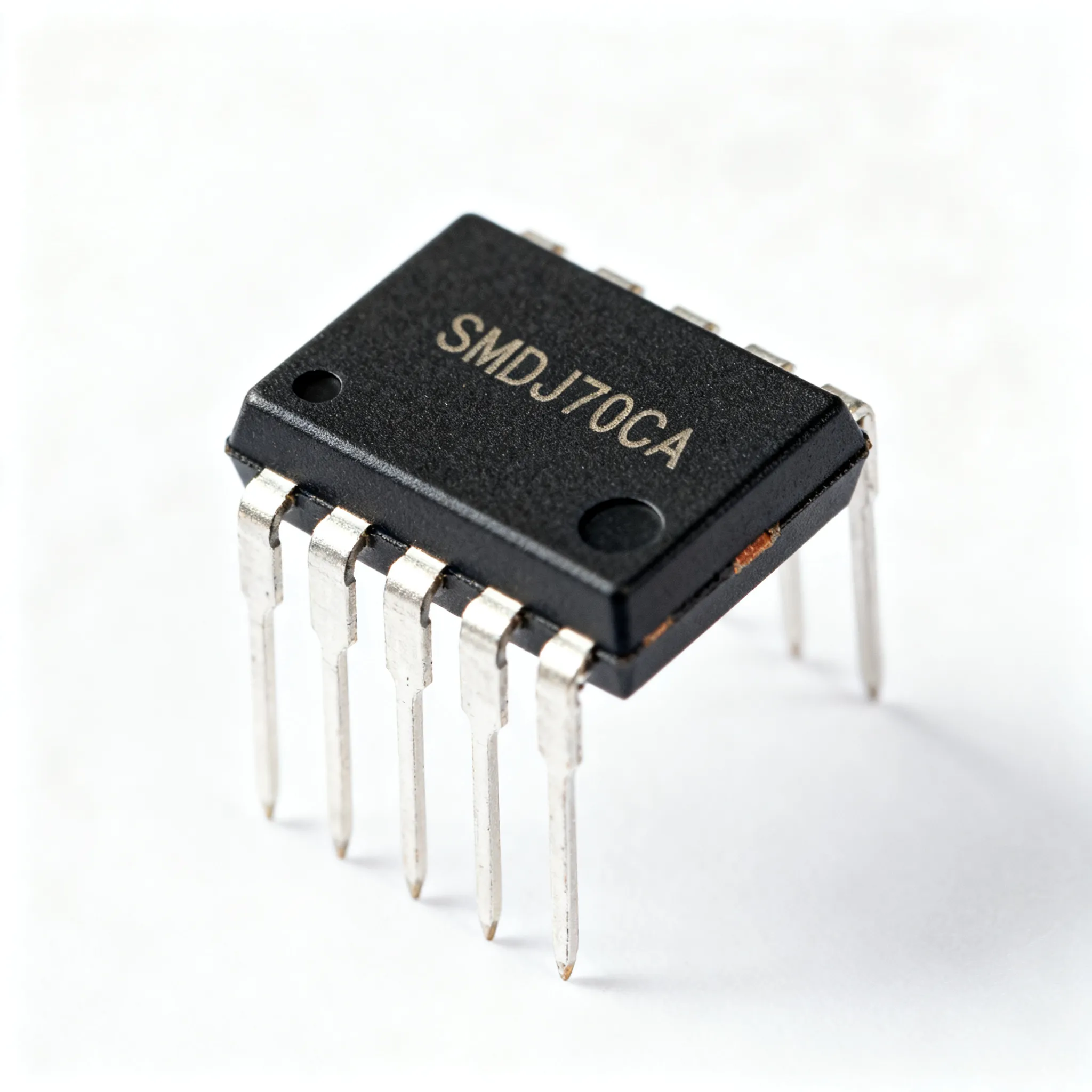
Prepare for AI-Driven Semiconductor Supply Chain Shortages 2026: Strategic Sourcing Tactics for OEM Buyers
Practical guide for buyers and engineers: Prepare for AI-Driven Semiconductor Supply Chain Shortages 2026: Strategic Sourcing Tactics for OEM Buyers. Sourcing, risk, and selection notes.

Why AI Training Clusters Are Stretching Lead Times Beyond 40 Weeks
AI infrastructure build-outs are no longer just a GPU story. As hyperscalers and cloud providers race to deploy next‑generation training clusters, they are absorbing entire wafer starts, packaging lines, and optical component inventories at a rate the supply base cannot match. The result is a cascade of availability constraints that touches far more than the headline H100 or MI300X shipments. GlobX warns that 800 G optical transceiver lead times have already passed 40 weeks, and electro‑absorption modulated lasers (EMLs) are effectively booked through 2027 without priority contracts. Meanwhile, automotive‑grade MCUs remain in allocation at 26–55 weeks depending on supplier, as confirmed by a parallel industry alert.
For OEM procurement professionals, this translates into a market where demand‑side pull is so aggressive that traditional spot‑buying and sequential sourcing approaches break down. As Quettor observed, buyers are already accepting higher prices and longer waits not because of individual supplier failures, but because supply‑driven delays and price increases have become a market‑wide condition. Setting realistic expectations with engineering and management—and resetting customer delivery promises early—is now a core competency, not a courtesy.
Tip: If your team is still using the same sourcing timelines it used in 2020, you are already behind. The AI‑fueled demand shock is structurally different from the pandemic‑era MCU famine; it originates at the most advanced nodes and at the optical networking layer, and it propagates outward from there.
The New Anatomy of an AI-Driven Shortage: Wafers, Memory, and Optical Interconnects
Understanding the 2026 shortage requires looking at three tightly coupled domains: advanced logic (foundry capacity at 5 nm and below), high‑bandwidth memory (HBM) and DDR5, and high‑speed optical interconnects (800 G transceivers and EML lasers). These are not isolated; a bottleneck in one quickly starves the others because AI training clusters demand all three layers simultaneously.
Randtech highlights that HBM integrated with GPUs has become the gold standard for AI workloads, but the technology remains severely supply‑constrained due to packaging and yield challenges. DDR5 production is scaling faster, yet it cannot fully substitute for HBM in training applications. At the same time, Altium notes that capacity expansions across the semiconductor supply chain are lagging the explosive AI demand, with long lead times, manufacturing constraints, and raw material shortages creating persistent bottlenecks.
The table below distils the most sensitive component categories into a constraint overview that OEM buyers can use to prioritize RFQ efforts.
| Component Category | Constraint Mechanism | Procurement Impact |
|---|---|---|
| HBM (HBM2e, HBM3) | TSV stacking and CoWoS packaging yields limit output; capacity booked by hyperscalers | Ask supplier for allocation-backed lead times; expect multi-quarter commitments and price premiums |
| DDR5 DRAM | Scaling faster than HBM but still subject to wafer-level competition from logic and HBM | Track memory market pricing weekly; verify whether supplier can allocate to AI-specific server DIMMs |
| 800 G Optical Transceivers | EML laser availability and advanced photonics packaging; lead times already >40 weeks | Secure capacity via priority long-term agreements now; single-source risk must be verified with distributor documentation |
| EML Lasers | Limited epitaxial growth capacity; effective unavailability beyond 2027 without contracts | Evaluate alternative optical architectures; require 12‑month forward capacity confirmation from laser vendors |
| Automotive‑grade MCUs | Legacy node allocation shifted to favor high‑margin AI infrastructure; 26–55 week allocation windows persist | Confirm allocation status per supplier; evaluate GD32/APM32-class families as candidates, verifying pinout and firmware compatibility |
| Advanced Logic (5 nm, 3 nm) | Single‑foundry concentration; wafer starts dominated by a few large customers | Verify single-source risk; use Altium’s multi-source inventory location to identify alternate packages |
Bisinfotech underscores that these constraints are not superficial: by reconstructing the lineage of critical components back to substrate, wafer, and tool maker through customs filings and equipment manifests, procurement teams can validate whether a supplier’s claimed shortage is structurally real or a negotiating maneuver. If your EMS partner cannot provide that level of transparency, you are operating blind.
Parallel vs. Sequential Sourcing: A Decision Framework for OEM Buyers
One of the clearest tactical shifts recommended by GlobX is to source networking and optical parts in parallel with compute, not after the GPU and memory contracts are already signed. In a tight market, sequential sourcing lets competitors lock up the optics and memory while you are still negotiating compute. The table below contrasts the two approaches and adds the dimension of contractual commitment versus spot‑market tactics.
| Comparison Metric | Parallel Sourcing (All Critical Categories Simultaneously) | Sequential Sourcing (One Category After Another) | Selection Criteria & Failure Boundary |
|---|---|---|---|
| Risk exposure | Lower: capacity reservations can be made across the full BOM before allocation windows close | Higher: optics and memory may already be allocated by the time compute is secured | Adopt parallel sourcing when lead-time data indicates any critical category will exceed 30 weeks |
| Contractual leverage | Stronger: negotiating compute, memory, and optics together creates volume leverage and priority clauses | Weaker: each negotiation happens under time pressure with limited alternatives | Bundle correlated component families in RFQs; require a single, allocation-backed delivery schedule |
| Lead‑time impact | Can shorten project timelines | Sequential delays compound; program delays can be substantial | Confirm allocation-backed lead time for each category; do not rely on standard published lead times |
| Memory market agility | Allows weekly tracking of DDR5/HBM pricing and re‑allocation of budget between memory types | Memory is treated as afterthought; spot prices often spike by the time procurement acts | Implement Randtech’s weekly memory market discipline and assign an owner |
| Long‑term firm orders vs. spot | Firm orders with priority clauses (GlobX) secure capacity; spot buys are fallback for buffer stock | Reliance on spot market leads to premium pricing and erratic availability | Commit to a majority of forecast demand via firm orders; use spot for unexpected upside |
The framework is not theoretical. Randtech emphasizes that companies must balance short‑term reliance on DDR4 with long‑term HBM and DDR5 planning. A procurement team that treats memory as a single‑category decision will miss the weekly windows when foundries and packaging houses release fresh allocation slots. Treat your memory strategy as a dynamic portfolio—track it weekly, rebalance quarterly.
What OEM Buyers Can Do Right Now to Lock in 2026 Capacity
The window for passive observation has closed. Following the insights from our research partners, OEM buyers can implement several concrete measures today that will materially affect their ability to ship AI‑enabled products in 2026. These actions span contractual, tool‑based, and design‑oriented strategies.
- Negotiate priority long‑term agreements with penalty‑backed capacity clauses. As GlobX advises, secure optical and networking components as early as compute. Require quarterly capacity confirmation reports and contractual recourse if a supplier fails to honor reservations.
- Deploy BOM intelligence tools for multi‑source inventory location and early EOL warnings. Altium’s supply chain resilience platform aggregates stock data across regions, enables filtering for lead times and compliance, and flags allocation shifts before they become public. Use its free BOM tool to map single‑source risks and identify smart substitutions.
- Track the memory market weekly with a designated owner. Randtech’s recommendation to track DDR4, DDR5, and HBM pricing and lead times weekly should be operationalized with an internal dashboard. When HBM packaging yields improve, you need to know within days—not quarters.
- Audit supplier capacity claims with customs‑based lineage reconstruction. Bisinfotech describes how customs filings and equipment manifests can be used to trace a component back to its substrate and wafer origin. This data separates genuine structural constraints from allocation gaming; request it in every RFQ where lead‑time spikes are unexplained.
- Invest R&D effort in chiplet architectures and reduced‑dependency designs. Quettor explicitly recommends R&D investment in alternative architectures and chiplet‑based designs that decouple functionality from a specific process node. Even partial swaps can lower exposure to the most constrained single‑node components.
The following mitigation timeline translates these actions into a phased plan that aligns with the 2026 product delivery horizon.
| Action | When to Use | Trade‑off |
|---|---|---|
| Long‑term order negotiation with priority clauses | Now – Q3 2025, before 2026 allocation windows are fully consumed | Requires forecast commitment and financial guarantee; reduces flexibility but guarantees capacity |
| BOM intelligence deployment and single‑source risk mapping | Immediately; update quarterly | Upfront time to upload all BOMs, but reveals substitution opportunities before shortages hit |
| Weekly memory market tracking | Ongoing, starting today | Demands dedicated staff time or automated feeds; cost of inaction is missed allocation slots |
| Supplier capacity audits via customs data | During every major RFQ and quarterly for existing suppliers | May slow initial negotiation but uncovers inflated capacity claims and reduces supply chain surprise |
| Chiplet architecture R&D | For new product variants and next‑generation platforms | Engineering effort and potential IP integration cost; lowers dependence on a single foundry node |
These steps are not aspirational. They are the operational difference between a procurement team that secures 2026 capacity and one that scrambles on the spot market. Each action item ties directly to a data source or tool that already exists—the task is to integrate them into the standard RFQ and new product introduction (NPI) process.
What Procurement and Engineering Teams Ask About the 2026 AI Supply Crunch
Q: How can we distinguish genuine lead-time extensions from supplier allocation gaming?
A: Cross-reference lead-time claims with multiple sources using Altium’s BOM intelligence for early warnings and EOL shifts. Supplement that with the deep‑tier visibility approach described by Bisinfotech: leverage customs filings and equipment manifests to reconstruct lineage back to substrate and wafer. If a supplier cannot provide fabricator‑level evidence of a constraint, the declared lead‑time spike may be a negotiating posture rather than a physical reality.
Q: When is the cutoff to lock in EML laser capacity before it becomes unavailable?
A: According to GlobX and the archived industry alert, 800 G optical transceiver lead times have already passed 40 weeks, and EML lasers may be de facto unavailable past 2027 without priority contracts. The practical cutoff for OEMs to negotiate and secure priority long‑term agreements is now. Waiting until mid‑2025 risks finding that all remaining capacity has been absorbed by hyperscalers and networking equipment giants. If your product depends on EML‑based 800 G links, treat the contracting process as a 2024‑priority, not a 2025 planning item.
Q: Should we stick with DDR4, shift to DDR5, or push for HBM allocation?
A: Randtech highlights that HBM remains bottlenecked by packaging and yields, while DDR5 production is scaling faster. For AI training workloads, secure as much HBM as possible via firm contracts with priority clauses. For inference and edge nodes, DDR5 is the pragmatic choice today, balancing cost and performance. DDR4 should be retained as a fallback for legacy designs where performance demands permit, but do not plan new AI‑heavy products around it. Crucially, track memory market pricing and lead times weekly, as the balance between HBM, DDR5, and DDR4 availability can shift in days.
Q: How do we diversify advanced logic supply beyond a single foundry?
A: Quettor recommends investing in chiplet architectures that decouple function from a specific process node. By partitioning a design into chiplets, you can source the most advanced logic block from multiple fabs or use different process technologies for different functions. In parallel, use Altium’s multi‑region inventory location and smart substitution tools to identify second sources and compatible packages when a single foundry’s wafer allocation tightens. This dual approach—architectural diversification plus sourcing flexibility—is the most robust shield against foundry concentration risk.
Q: Is it too late to redesign around chiplets for products shipping in 2026?
A: A full platform redesign may not meet 2026 deadlines, but incremental chiplet adoption for new product variants or next‑generation designs can still reduce dependency risk. Quettor explicitly advises R&D investment now in alternative architectures. Even partial swaps—for example, moving a high‑compute accelerator to a chiplet that can be sourced from a less constrained node—can ease pressure on the most tightly allocated single‑node components. If your team begins the architecture exploration immediately and targets a phased integration, it is possible to ship initial chiplet‑based variants in the 2026 window.
References & Further Reading
- AI-Driven Semiconductor Supply Chain Shortages 2026 – GlobX
- AI Chip Crunch 2026: Shortages Beyond GPUs (Archived Alert)
- Supply Chain Resilience in the Age of AI Demand Semiconductor Shortage – Altium
- Semiconductor Shortage: Buyers Accept Higher Prices & Delays – Quettor
- Why AI Is Driving Semiconductor Shortages and How to Prepare – Randtech
- AI-Powered Supply Chain Resilience: Navigating the Global Semiconductor Shortage – Bisinfotech
- IC-Online: RFQ and BOM Upload for Mixed, Flexible MOQ Procurement
Conclusion and next step: The 2026 AI‑driven semiconductor supply crunch is already unfolding in the optical, memory, and advanced logic segments. OEM buyers who move now to negotiate priority long‑term agreements, deploy BOM intelligence, audit supplier capacity, and invest in chiplet architectures can protect their product roadmaps. Those who wait for spot‑market availability will find scarce allocation and punitive pricing. Turn the insight in this analysis into a concrete sourcing advantage: upload your bill of materials to IC-Online and request a consolidated RFQ. Our team will work with you to verify allocation‑backed lead times, identify substitution candidates, and structure a procurement package calibrated for the 2026 market.