RS8452XK Supply Risk Assessment: What to Ask Before You Buy
Assess RS8452XK sourcing risks before you buy. RFQ questions on traceability, date codes, testing, alternatives, and supply continuity for procurement teams.
When a Tiny Op-Amp Can Trigger a Product Recall
Product recalls are rarely about the system architecture that passed design review. They most often trace back to a single field replacement, an unverified second source, or a batch of components that weren’t what the label claimed. Browse the public records on the CPSC site and you’ll find medical devices, industrial sensors, and consumer electronics pulled from the market because a counterfeit or mislabeled semiconductor drifted out of spec over temperature or time. FDA safety alerts document similar cascades in patient‑connected equipment, while Amazon product safety alerts show how even consumer‑grade gadgets fail when one op‑amp in the BOM isn’t genuine. The common thread: a low‑cost signal‑chain part inserted into the supply chain without traceability, and no pre‑shipment checks to catch it.
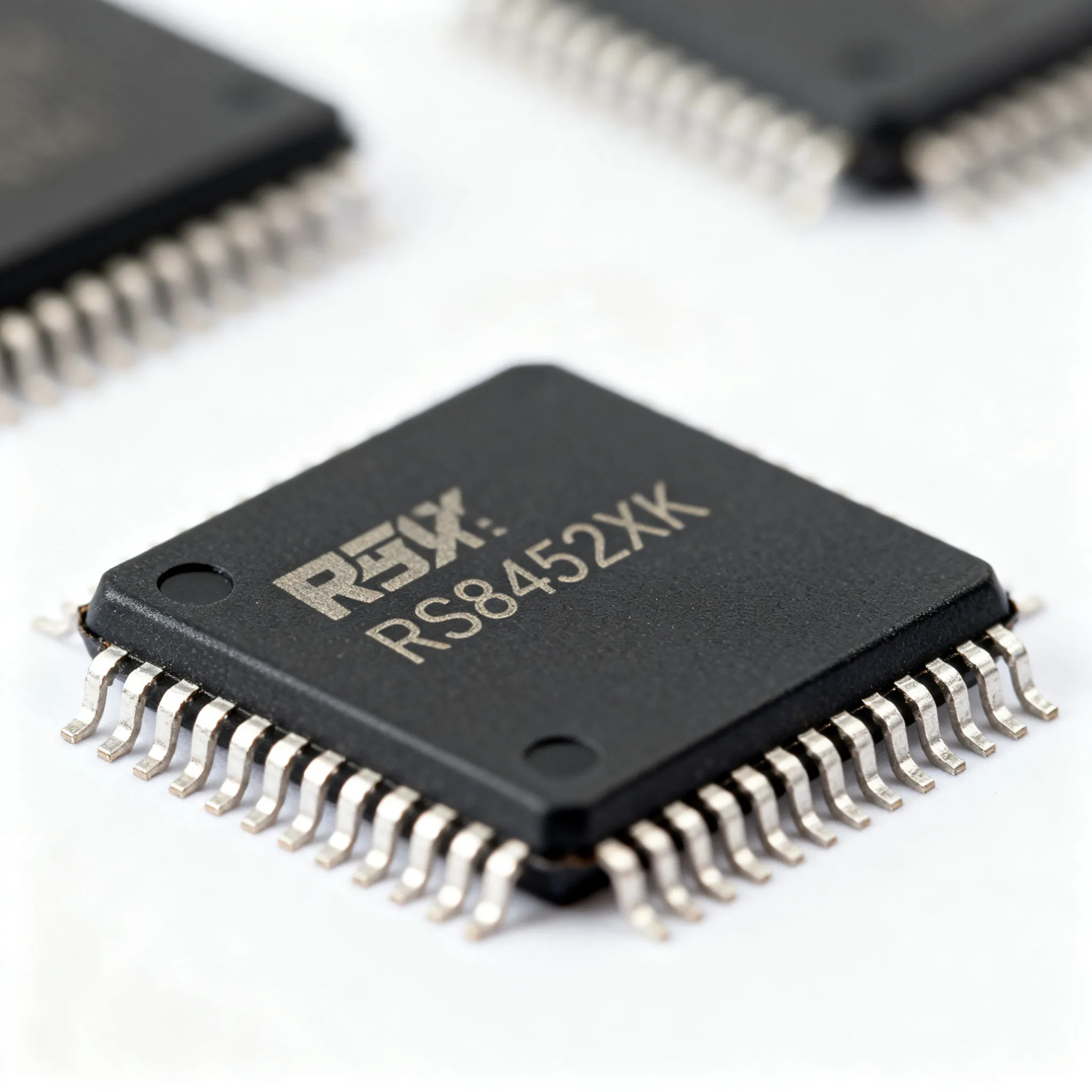
Key takeaway: The risk isn’t the datasheet spec — it’s the supply channel. The RS8452XK from Runic Technology is a workhorse rail‑to‑rail output dual op‑amp that fills exactly that role in data‑acquisition front‑ends, ADC drivers, and industrial current‑sensing circuits. As demand for wide‑supply, low‑noise building blocks has grown, so has the scramble to find stock outside the authorized channel. That makes the RS8452XK a perfect case study for supply risk assessment: a mature, well‑defined device where the difference between a genuine lot and a relabeled one can mean field failures that trigger a recall.
This article gives engineers and procurement buyers a practical framework to evaluate RS8452XK sourcing decisions — before the parts arrive on the loading dock. We’ll walk through the technical anchor points that let you verify authenticity, compare the real costs of authorized versus independent channels, and arm you with specific questions that expose a supplier’s risk profile.
What Makes the RS8452XK a Go-To Signal Chain Building Block
Before you can assess supply risk, you need to know exactly what you’re supposed to be buying. The RS8452XK is a dual, low‑noise op‑amp with a supply voltage range that spans from 5 V to 36 V, rail‑to‑rail output, and a compact footprint — typically an SOIC‑8 or MSOP‑8 package. According to the Runic datasheet and the independent summary from Ovaga Technologies, its combination of low quiescent current, moderate gain‑bandwidth, and low 1/f noise makes it a natural fit for sensor interfaces, signal conditioning ahead of ADCs, and DSP front‑ends that need to swing close to the rails without saturating.
If you’re holding a test report from an incoming inspection, the parameters below are your first filter. A genuine RS8452XK will cluster around these typical values; any lot that shows gross deviations — especially in quiescent current or offset voltage — deserves a deeper forensic look before you accept it.
| Parameter | RS8452XK (Dual) | RS8451 (Single) | RS8454 (Quad) | What the Number Tells You About Supply Integrity |
|---|---|---|---|---|
| Channels per package | 2 | 1 | 4 | Match the physical mark to the declared part number. A dual marked as a quad is an obvious relabel. |
| Supply voltage range | 5 V – 36 V | 5 V – 36 V | 5 V – 36 V | Wide‑supply family; all share the same process core. A narrower upper limit in test suggests a different die. |
| Gain‑bandwidth product (typ) | 8 MHz | 1.2 MHz | 1.2 MHz | Differences >20% often indicate a pin‑compatible but unqualified substitute. |
| Slew rate (typ) | 0.45 V/µs | 0.45 V/µs | 0.45 V/µs | A faster slew rate may be a relabeled higher‑speed part with different stability margins. |
| Input voltage noise (1 kHz) | 25 nV/√Hz | 25 nV/√Hz | 25 nV/√Hz | Lower noise from a suspect lot can mask a wrong process — verify against the datasheet histogram. |
| Quiescent current per channel (typ) | 150 µA | 150 µA | 150 µA | Significantly higher current draw usually points to a different silicon or a damaged ESD structure. |
Tip: The RS8452 family (single/dual/quad) all share the same core specifications; they differ only in channel count and pinout. Use that uniformity as a baseline. When you receive a batch of RS8452XK, a quick side‑by‑side electrical comparison against a known‑good RS8451 or RS8454 sample — all documented via datasheet archive references — can expose a lot that drifts outside the family envelope.
Because the RS8452XK operates from a single‑supply rail up to 36 V, it’s often placed on the cold‑side of isolated sensor pods or directly on a 24 V industrial bus. In those positions, a parameter shift that isn’t caught in a quick bench‑test may go unnoticed until the prototype hits a temperature chamber or a return‑to‑factory‑run. The next time you approve an alternate source, baseline your incoming inspection limits against this table and require the supplier to provide a signed CoC that references the original Runic lot number.
Authorized, Independent, or Gray: The Real Cost of Your Sourcing Channel
Every RS8452XK you buy arrives with an invisible price tag: the cost of recovering from a bad lot. The channel you choose — factory‑authorized distribution, a vetted independent broker, or a gray‑market platform — determines how much of that risk you underwrite yourself. The supplier evaluation framework developed by component‑quality specialists warns that a risky supplier almost always fails on traceability depth, documentation consistency, or transparency during audits. The OEM components sourcing checklist goes further: more accurate sourcing decisions come from comparing total risk‑adjusted cost, not quote price alone. That perspective is essential for a part like RS8452XK, where the bill‑of‑materials cost is modest but the consequences of a field failure can cascade into a recall.
The table below distills the risk‑indicator differences across the three main supply paths. Use it to challenge any quote you receive.
| Comparison Metric | Factory‑Authorized Distribution | Vetted Independent Broker | Gray‑Market Platform | Selection Criteria & Failure Boundary |
|---|---|---|---|---|
| Traceability depth | Full batch pedigree to wafer lot, backed by manufacturer CoC | Partial chain‑of‑custody; may include broker’s own test records | Typically unknown; “sourced from open market” is the only warranty | Without factory‑linked lot numbers, you cannot confirm the die inside the package. |
| Test documentation | Manufacturer’s parametric test data per reel; date‑code‑matched | In‑house visual inspection and sample parametric checks; supplier CoC varies | Rarely provided; if present, reports may be generic and cross‑lot | Require a supplier‑generated incoming QC report that shows at least offset voltage and quiescent current for that specific lot. |
| Lead‑time consistency claims | Allocation‑backed; you confirm actual lead time via RFQ with the authorized source | Subject to spot‑market dynamics; verify allocation‑backed lead time with the broker | Advertised as “in stock,” but fulfillment often fails on large orders | Treat any published lead time as an estimate; require the distributor to confirm allocation is in place before you commit. |
| Audit openness | Transparent; on‑site audits welcomed per supplier quality agreements | Varies strongly; quality‑focused independents welcome virtual audits | Rarely offered; anonymity is a feature of the platform | A refusal to allow a visual inspection of physical storage and ESD controls is a hard stop. |
| Counterfeit / relabel risk | Negligible when purchased directly from authorized inventory | Low if the broker provides full test reports and dry‑pack integrity evidence | High; re‑marking and batch mixing are common in unverified consignment stock | Always validate markings against the Runic package drawing under 10x magnification. |
| Qualification lead‑time risk | None; parts are factory‑certified | Non‑zero: any failed incoming test requires re‑sourcing, which burns engineering time | High: the time to qualify an alternative once a bad lot is discovered can exceed the original project timeline | As noted by the critical material supply risk analysis, qualification lead time is itself a supply‑chain risk — factor it into your cost model. |
The Q3 2026 market report from IC‑Online reinforces that AEC‑Q qualifications or the absence of a formal second source do not mean a part is immune to substitution. There are often pin‑compatible alternatives from different vendors that share the same qualification envelope, but they demand engineering validation time — time that must be built into your sourcing schedule. For RS8452XK, the worst‑case scenario is easy to map: a gray‑market batch that passes a simple go/no‑go functional test but drifts months later in a high‑impedance sensor input stage, tripping a safety interlock. The cost of that recall will dwarf any per‑piece savings on the original buy.
The 5 Questions That Reveal a Trustworthy RS8452XK Supplier
You don’t need a semiconductor forensics lab to filter out risky suppliers. You need a disciplined set of questions that force a seller to prove, not just claim, that the RS8452XK they’re shipping is factory‑fresh and traceable. The questions below map directly to risk indicators highlighted in the supplier evaluation sources earlier and reflect the kind of vendor assessment rigor described in the Micron Supplier Requirements Standard, which tier‑1 OEMs use to rate upstream partners. Start every RS8452XK inquiry with these five challenges.
- Can you supply full batch traceability back to the Runic factory wafer lot? Ask for the original manufacturer’s Certificate of Conformance with the lot number that ties directly to the reels you will receive. If the supplier can only provide a generic distributor CoC without a Runic‑issued lot identifier, treat the lot as unverified.
- What are the exact date codes on the physical reels, and can you provide high‑resolution photos of the moisture‑barrier bag before it is opened? Compare the date code to the supplier’s inventory aging report. Inconsistencies — or reluctance to share photos that show the sealed bag and MSL label — are early warnings of repackaging.
- How do you store and handle moisture‑sensitive parts, specifically parts rated MSL 3? The RS8452XK typically carries a moisture sensitivity level that demands dry‑pack storage and proper handling. Request a second photo showing the part’s reel label sealed inside the original vacuum bag, with desiccants and humidity indicator card visible. A supplier that cannot produce that image has likely broken the factory seal.
- What is your sample‑testing policy before shipment, and can we reserve a small sacrificial lot for decapsulation or parametric verification? A trustworthy supplier will allow you to pull a few pieces from the shipment to run offset, input bias current, and quiescent current measurements — or to send to a lab for die‑mark verification. If they resist, the risk of a relabeled batch rises sharply.
- Are you open to a virtual or on‑site audit of your inspection benches, ESD controls, and humidity‑controlled storage? Per the supplier assessment models adopted by leading OEMs, periodic assessments are used to determine a supplier’s overall risk profile. Even a 30‑minute video walk‑through can reveal whether bins are properly labeled, whether bake‑out ovens are logged, and whether the operation treats quality as a business requirement or a marketing bullet point.
These questions are not adversarial — they are a filter that separates suppliers with documented quality management from those who rely on trust alone. To make the filter actionable, the table below pairs each question with the specific evidence you should demand and the red flag that signals a stop order.
| Supplier Question | Red Flag if Missing or Refused | Required Document / Evidence |
|---|---|---|
| Batch traceability to Runic factory | Only a distributor‑generated CoC, no manufacturer lot number | Runic‑issued Certificate of Conformance with original lot number |
| Date‑code alignment and reel photos | Date codes that don’t match quoted “fresh” inventory; blurry or cropped photos | High‑resolution image of reel label AND moisture‑barrier bag seal |
| MSL‑3 dry‑pack integrity | Opened bag with generic silica gel; no humidity indicator card | Photo of original vacuum bag showing MSL label over the part date code |
| Sample‑testing allowance | “All sales final” or refusal to ship sample quantities first | Procedure document for sample QTY release; previous QC lab report for that lot |
| Audit openness | Excuses, delays, or “proprietary” claims about the storage floor | Agreement to a live video walk‑through with date‑coded screenshots |
Tip: Integrate this checklist into your purchase order terms for RS8452XK. If a supplier cannot meet all five evidence points, price the part with an added engineering‑validation buffer that covers a potential lot rejection and re‑procurement cycle.
RS8452XK Supply Risks: What Senior Engineers and Buyers Need to Know
Q: How can I tell if an RS8452XK lot has been relabeled or is counterfeit?
Look for inconsistent date codes — for example, a 2025 date code on a reel claimed to be “fresh” that shows 2021‑era marking font. Under 10x magnification, compare laser‑etched top marks to the package drawing in the Runic datasheet; relabeled parts often have gritty surfaces from chemical wiping or ink‑jet overprints that don’t align with the original laser marking. Check that the moisture‑sensitive bag has a factory‑applied MSL label, not a hand‑written one. Ask for full lot traceability documents, and if possible, test a sacrificial sample for quiescent current and offset voltage against the values in our earlier spec table. Any mismatch — especially a current consumption 30% higher than the typical 150 µA per channel — is a strong indicator of a different die.
Q: Does the RS8452XK's moisture sensitivity level (MSL) matter when buying from an independent distributor?
Yes. The RS8452XK’s moisture sensitivity rating requires dry‑pack storage to prevent popcorn cracking during solder reflow. Independent distributors sometimes break factory bags to split reels and then repack without proper desiccants or humidity indicator cards. Before accepting a shipment, request a photo of the original moisture‑barrier bag with the manufacturer’s MSL label clearly visible, and a second photo showing that the sealed bag is folded over the part’s date‑code label. If those photos aren’t available, treat the lot as floor‑life expired and bake it according to the recommended profile before production use — or reject it.
Q: What paperwork is non-negotiable before accepting an RS8452XK shipment?
At minimum, you must receive the manufacturer’s Certificate of Conformance that references the original Runic run number, not merely a distributor‑generated certificate. You also need full chain‑of‑custody records from the factory to the seller, and a copy of the supplier’s incoming QC test report for that specific lot. The test report should show, at the very least, measured values for input offset voltage and quiescent current on a sample of the lot, both within the datasheet limits. A supplier who cannot produce this trio of documents is asking you to carry the qualification risk alone.
Q: How do I weigh a low independent‑broker price against the cost of qualifying an alternative part?
Start with a risk‑adjusted cost calculation. Add up the engineering hours needed to re‑characterize the op‑amp in your amplifier chain, the lab time for reliability testing (temperature cycling, bias‑stress), and the potential cost of a field recall if a marginal lot escapes detection — including logistics, regulatory reporting, and brand damage. If that total exceeds the price difference between the independent broker’s quote and an authorized channel or a pre‑validated alternative pin‑compatible part, the “savings” are an accounting illusion. In the industrial signal‑chain world where the RS8452XK sits, a single late‑cycle deviation usually costs more than the entire component buy. Build the qualification lead‑time risk into your purchasing decision, not into the hope that the untraceable parts will hold.