Understanding NPN and PNP in Everyday Electronic Devices
Npn and pnp transistors control current flow in electronic devices. Understand their roles, differences, and how to spot them in standard hardware.
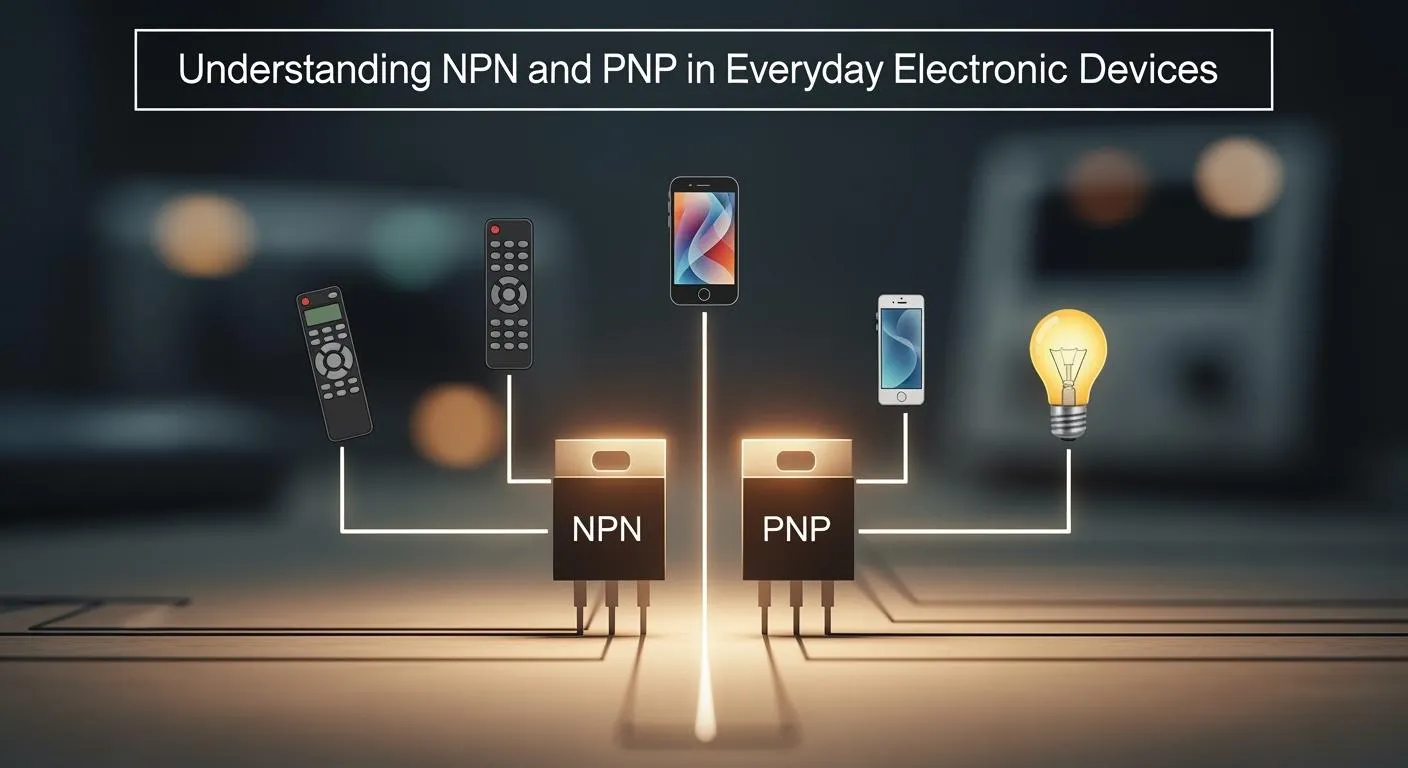
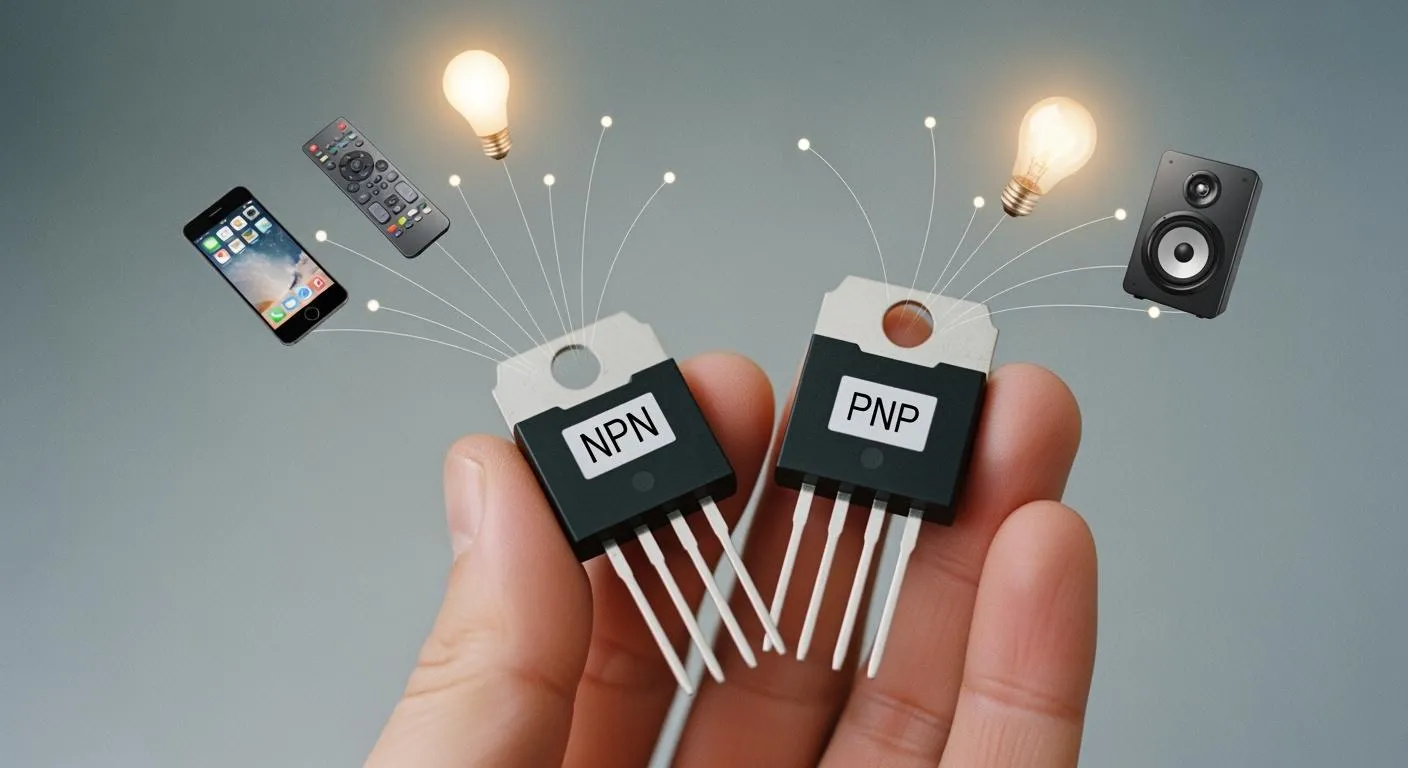
Imagine you open a remote control or a smartphone. You see tiny black components soldered onto the circuit board. These parts help your device turn on, respond to buttons, and manage power. When you understand npn and pnp transistors, you boost your chances of fixing common electronic issues yourself.
- NPN transistors switch on with a positive current, letting electricity flow from collector to emitter.
- PNP transistors need a negative current to work, moving electricity from emitter to collector.
- NPN types appear more often in modern devices because they operate faster and fit ground-referenced designs.
Curious about how these components work or how to spot them? You will find that knowing the difference helps you diagnose problems and build efficient circuits. Check the table below to clear up common misconceptions:
| Type | Structure |
|---|---|
| NPN | N-P-N |
| PNP | P-N-P |
Key Takeaways
- NPN transistors allow current to flow from collector to emitter with a positive base voltage. They are faster and commonly used in modern devices.
- PNP transistors require a negative base voltage to activate, allowing current to flow from emitter to collector. They are ideal for high-side switching applications.
- Understanding the differences in current flow and activation methods helps you troubleshoot and design circuits effectively.
- You can identify transistor types by checking the arrow direction on their symbols. NPN arrows point out, while PNP arrows point in.
- Use a multimeter to test transistors in-circuit. This method helps confirm their functionality and identify issues quickly.
NPN and PNP Basics

What Are NPN and PNP?
You often hear about npn and pnp when you learn how transistors work. These two types belong to the family of bipolar junction transistor devices. Both play a key role in switching and amplifying signals in electronic circuits. The main difference comes from their structure and the way they control current.
Here is a table that shows the basic characteristics of each type:
| Characteristic | NPN Transistor | PNP Transistor |
|---|---|---|
| Current Flow | Collector to Emitter | Emitter to Collector |
| Biasing | Base positive vs. Emitter | Base negative vs. Emitter |
| Majority Charge Carriers | Electrons | Holes |
| Emitter Arrow Direction | Points outward | Points inward |
You can remember the arrow direction with a simple trick. For npn, think "Not Pointing iN." The arrow on the symbol points away from the base. For pnp, the arrow points toward the base.
The structure of a npn transistor has a layer of p-type material sandwiched between two n-type layers. A pnp transistor has the opposite: an n-type layer between two p-type layers. This arrangement changes how each transistor handles current and voltage.
How NPN and PNP Work
To understand how transistors work, you need to look at what happens inside. In a npn transistor, electrons move from the emitter to the collector. These electrons act as the main charge carriers. When you apply a small positive voltage to the base, it allows a much larger current to flow from the collector to the emitter.
In a pnp transistor, holes serve as the majority charge carriers. Holes are spaces where an electron could exist. When you make the base more negative than the emitter, holes move from the emitter to the collector. This movement lets the transistor control current in the opposite direction compared to npn.
Here are some key points about how npn and pnp transistors work:
- NPN transistors use electrons as charge carriers. They work well in circuits that need high electron mobility.
- PNP transistors use holes as charge carriers. They fit applications that require inverted current flow.
- The difference in charge carrier movement affects how each transistor performs in a circuit.
The materials and doping process also matter. Manufacturers use polycrystalline silicon for the emitter region of a pnp transistor. Both npn and pnp transistors use heavily p-doped semiconductor material for connections. The base region of a pnp transistor connects through a monocrystalline layer. The collector region of a npn transistor uses n-doped semiconductor material.
PNP Transistor Activation
You activate a pnp transistor by making the base voltage lower than the emitter voltage. This step is different from a npn transistor, where you make the base voltage higher than the emitter. Both types need about 0.6 to 0.7 volts between the base and emitter to turn on.
Here is a table that shows the activation details:
| Transistor Type | Activation Voltage | Control Polarity |
|---|---|---|
| PNP | 0.6–0.7 V | Base < Emitter |
| NPN | 0.6–0.7 V | Base > Emitter |
When you use a pnp transistor, you connect the emitter to a positive voltage. You then pull the base lower than the emitter to switch it on. This method lets current flow from the emitter to the collector. You see this setup in circuits where you need to control power on the high side.
Tip: Always check the arrow direction on the transistor symbol. For pnp, the arrow points in. For npn, the arrow points out.
Understanding how transistors work helps you troubleshoot circuits and design your own projects. You now know the basics of npn and pnp, their structure, and how to activate them.
NPN vs PNP: Key Differences
Structure and Symbol
You can spot the difference between npn and pnp transistors by looking at their physical structure and schematic symbol. The structure of each transistor affects how it handles current and how you use it in a circuit.
| Feature | NPN Transistor | PNP Transistor |
|---|---|---|
| Structure | Negative-Positive-Negative (N-P-N) | Positive-Negative-Positive (P-N-P) |
| Internal Structure | P-layer between two N-layers | N-layer between two P-layers |
When you check the schematic symbol, you see a clear distinction:
- NPN transistor symbol: The arrow on the emitter points outward, away from the base.
- PNP transistor symbol: The arrow on the emitter points inward, toward the base.
This arrow direction helps you remember how current moves through each device. You can use the mnemonic “Not Pointing iN” for npn and “Points iN” for pnp.
Current Flow and Activation
Understanding current flow and activation is essential when you compare npn vs pnp transistors. Each type controls current in a unique way.
| Feature | NPN Transistor | PNP Transistor |
|---|---|---|
| Current Direction | Collector → Emitter | Emitter → Collector |
| Base Activation | Positive voltage to base relative to emitter | Negative voltage to base relative to emitter |
You activate an npn transistor by applying a positive voltage to the base compared to the emitter. This action allows current to flow from the collector to the emitter. In contrast, you activate a pnp transistor by making the base more negative than the emitter. This step lets current flow from the emitter to the collector.
| Transistor Type | Current Flow Direction | Activation Method |
|---|---|---|
| NPN | Collector to Emitter | Base to Emitter |
| PNP | Emitter to Collector | Emitter to Base |
You often use npn transistors as low-side switches, which sink current. Pnp transistors work as high-side switches, which source current. Both types offer high current gain and simple circuit configurations. However, you must consider temperature effects. The base-emitter voltage (VBE) decreases by about -2 mV per degree Celsius for both npn and pnp. This change can affect current gain and circuit stability.
Note: Pnp transistors undergo reliability tests with thermal cycling from -55°C to +125°C. These tests show how temperature changes can impact performance, especially in aerospace and industrial applications.
Speed and Performance
You need to consider speed and performance when you choose between npn and pnp transistors. The switching speed affects how quickly a device responds to signals.
| Transistor Type | Switching Time | Speed Comparison |
|---|---|---|
| NPN | Lesser | Faster |
| PNP | Higher | Slower |
Npn transistors switch faster than pnp transistors. You find npn transistors in high-frequency applications, such as radio circuits and fast digital devices. Pnp transistors perform better at low frequencies, where switching speed is less critical.
- Npn transistors suit high-frequency circuits and fast switching.
- Pnp transistors fit low-frequency circuits and high-side switching.
When you compare npn vs pnp, you see that npn and pnp transistors both play vital roles in electronic devices. You must choose the right type based on current requirements, speed, and circuit design. Understanding these differences helps you build reliable and efficient circuits.
NPN and PNP in Devices

Everyday Electronics Examples
You interact with devices powered by transistor circuits every day. When you press a button on your TV remote, a transistor circuit helps send the signal. In your smartphone, transistor circuits manage power and process signals. You also find these circuits in computers, audio amplifiers, and even kitchen appliances.
A pnp transistor often appears in analog circuits, such as vintage guitar pedals or older audio equipment. You may notice that some automotive electronics use a pnp transistor for reverse polarity protection. On the other hand, an npn transistor is common in digital logic circuits, microcontrollers, and high-frequency amplifiers. These devices rely on the fast switching and efficient current handling of an npn transistor.
Tip: If you open a device and see a circuit board, you will likely spot both types of transistors working together to control different parts of the system.
Circuit Roles
Each transistor type plays a unique role in a transistor circuit. You use a pnp transistor when you need to control current on the high side of a load or when your design requires negative ground. This makes the pnp transistor ideal for specialty circuits in industrial control systems and power supply units. In contrast, you use an npn transistor for low-side switching, digital logic, and high-frequency amplification.
Here is a table showing typical application scenarios for each type:
| Transistor Type | Application Scenarios |
|---|---|
| NPN | Digital logic circuits, high-frequency amplification, power switching, modern amplifiers |
| PNP | Analog circuits, legacy designs, specialty industrial circuits, reverse polarity protection |
You often use a transistor as a switch in both types of circuits. For example, a pnp transistor as a switch can turn on a motor or light when the control signal goes low. An npn transistor as a switch can connect a device to ground when the control signal goes high. This switching action forms the backbone of many automated systems.
Nova Technology Company (HK) Limited stands out as a HiSilicon-designated solutions partner. The company specializes in chip-level solutions and system integration for the IC industry. You will find their expertise in advanced transistor circuit design, supporting applications from consumer electronics to industrial automation.
Determine NPN vs PNP
Visual Identification
You can identify transistor type by looking at the circuit board and using a transistor tester. Insert the three leads into the tester in any order. The tester lights up LEDs to show the base lead and the type of transistor.
- A single LED shows the base.
- If the LED is green, you have an npn transistor.
- If the LED is red, you have a pnp transistor.
You may also spot markings on the package. Many transistors have labels for emitter (E), collector (C), and base (B). Packages like TO-92 and SOT-23 use standard pin arrangements. The direction of the emitter arrow in the symbol helps you determine npn vs pnp. Surface-mount devices use short codes, so check the pinout before installation.
Tip: Use the arrow direction mnemonic. For npn, the arrow points out. For pnp, the arrow points in.
Using a Multimeter
You can use a multimeter or ohmmeter to identify transistor type. Follow these steps:
| Step | Description |
|---|---|
| 1 | Set up the ohmmeter or multimeter in continuity or resistance mode. |
| 2 | Find the base terminal by checking continuity with the other pins. |
| 3 | Place probes to determine npn vs pnp. |
| 4 | Confirm readings to verify the transistor type. |
If you use an ohmmeter, connect the positive lead to the base and negative to the emitter and collector. For npn, you see low resistance. For pnp, reverse the leads. You see low resistance when the negative lead touches the base.
Note: Always check the readings twice to avoid mistakes.
Reading Part Numbers
Manufacturers label transistors with part numbers and pin names. You see E, C, and B on many packages. The part number helps you look up the datasheet and identify transistor type.
- TO-92 and SOT-23 packages have standard pinouts.
- The emitter arrow direction in the symbol shows npn or pnp.
- Surface-mount devices use short codes, so verify the pinout before use.
You can determine npn vs pnp by combining visual clues, ohmmeter tests, and part number checks. This process helps you identify transistor type and troubleshoot circuits with confidence.
Troubleshooting NPN and PNP
Common Issues
You often face problems when working with NPN or pnp transistor circuits. If your device stops responding or shows erratic behavior, you should check for these common issues:
- Loose or incorrect connections can disrupt the flow of current. You might see a circuit fail to turn on or operate inconsistently.
- Insufficient base current prevents the transistor from conducting. If you notice weak or no output, you should verify the base drive.
- Overheating can damage the transistor. Make sure the device stays within its thermal limits. Consider using a heat sink if you see signs of excessive heat.
- Incorrect installation causes the transistor to malfunction. If you place a pnp transistor in reverse, it will not work as intended.
You can spot these issues by inspecting the circuit board and checking the orientation of each pnp transistor. Look for burn marks, cracks, or signs of overheating. If you see any physical damage, you should replace the affected component.
Practical Fixes
You can fix most problems with NPN and pnp transistor circuits using simple tools and techniques. Here are steps you can follow:
- Visual inspection helps you find obvious damage. Check for burn marks or cracks on the pnp transistor.
- Use a multimeter to test the base-emitter and base-collector junctions in diode mode. This tool lets you confirm if the pnp transistor conducts properly.
- Test the transistor in-circuit by measuring voltage drops while the device is powered on. If you see abnormal readings, you may need to replace the pnp transistor.
- Substitute the suspected faulty transistor with a known good one. If the circuit works, you have found the problem.
- Carefully remove and replace the faulty pnp transistor. Make sure you match the pinout and orientation.
You can also use a transistor tester for quick checks. Beginners find this tool helpful because it shows the type and condition of the pnp transistor. Off-circuit testing with a multimeter gives you accurate results for both NPN and pnp transistor types.
Tip: Always double-check the orientation and connections before powering up your circuit. This step prevents damage and saves time during troubleshooting.
You now understand how NPN and PNP transistors differ in structure, current flow, and circuit roles. You can spot each type using visual clues, a multimeter, or part numbers. Try these skills on real devices to boost your troubleshooting confidence. If you want to learn more or build simple projects, explore these resources:
- Getting Started in Electronics by Forrest Mims
- LTSpice and Falstad Circuit simulation tools
- 2N3904 datasheet
- According to Pete video series
FAQ
What is the main difference between NPN and PNP transistors?
You see the main difference in current flow. NPN transistors let current move from collector to emitter. PNP transistors let current move from emitter to collector. The arrow on the symbol shows this direction.
Can you use NPN and PNP transistors in the same circuit?
Yes, you can use both types together. Many circuits use NPN and PNP transistors to create push-pull stages or complementary outputs. This setup improves performance and efficiency.
How do you test if a transistor is NPN or PNP with a multimeter?
Set your multimeter to diode mode. Touch the red probe to the base and the black probe to the emitter or collector. If you see a reading, you have an NPN transistor. Reverse the probes for a PNP transistor.
Why do most modern devices use NPN transistors?
NPN transistors switch faster and handle higher electron mobility. You find them in digital circuits and high-speed applications. Their structure fits ground-referenced designs, which are common in today’s electronics.